


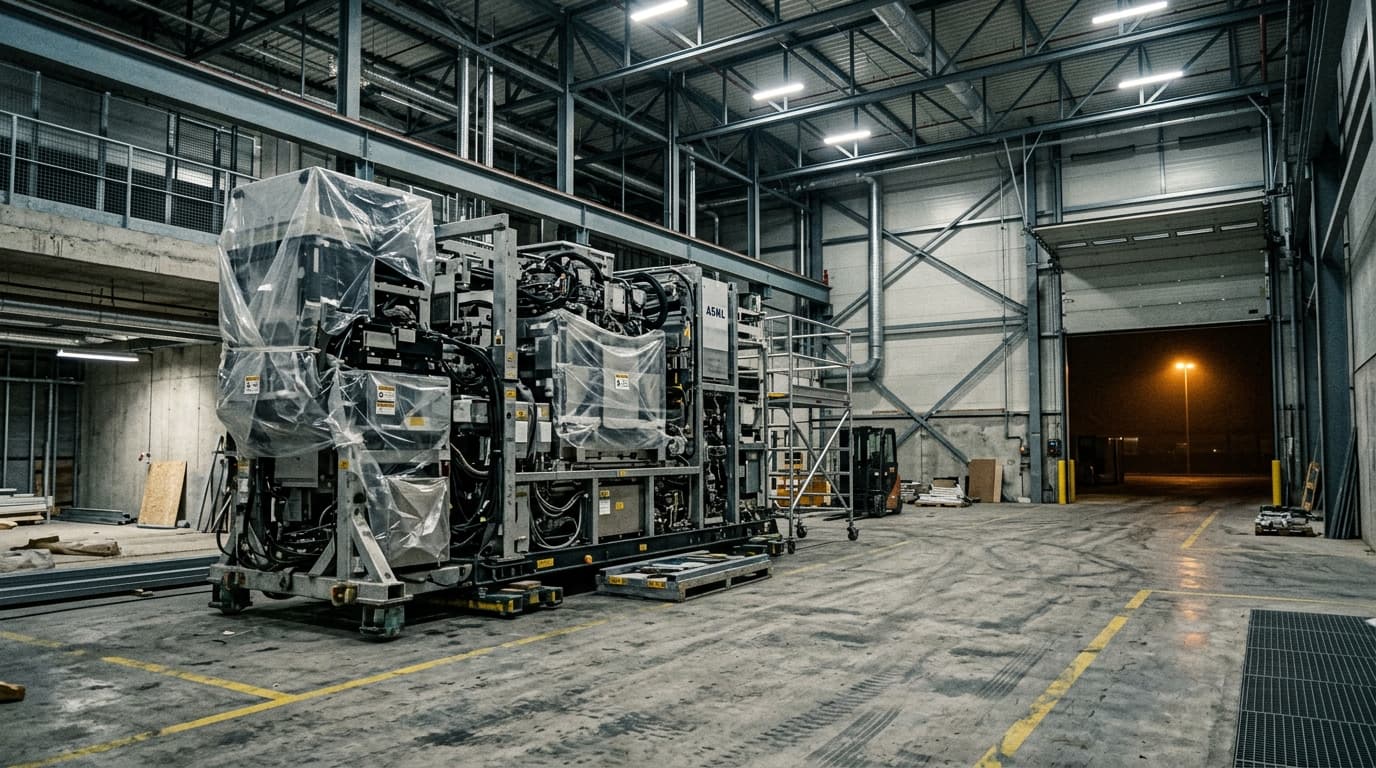

TSMC spent years telling investors that High-NA EUV was the inevitable next step in chipmaking. Then, on April 22nd, the company quietly revised that story: it can produce its next generation of smaller, faster chips without deploying ASML's High-NA EUV tools — and won't be using them in production through at least 2029, according to Bloomberg. The reason is cost. High-NA EUV machines run somewhere north of $350 million per unit. TSMC apparently decided the physics doesn't require them yet.
That's a significant technical claim. It's also, depending on how you read the export control situation, a significant geopolitical one.
The Tool Nobody Needs Anymore Is Also the Tool Nobody Can Sell to China
The U.S. export control framework has been built, in part, around the assumption that advanced chipmaking requires advanced tools — and that restricting those tools restricts capability. High-NA EUV was supposed to be the clearest example: a machine so expensive and so technically demanding that controlling its export would create a hard ceiling on what China could build.
TSMC just demonstrated that the ceiling is higher than the tool. If the world's leading foundry can reach next-generation nodes without High-NA EUV, then the absence of that machine from Chinese fabs matters less than the policy framework assumed. The physics still limits alternatives — but the specific chokepoint shifts.
This lands in the middle of a genuinely active policy fight. Reuters reported on April 3rd that the U.S. was proposing new export restrictions targeting ASML and others, aimed at Chinese chipmaking. And the House Foreign Affairs Committee has since advanced what it's calling the largest export control markup in congressional history — 20 measures including the Match Act, which would pressure U.S. allies like the Netherlands and Japan to align their restrictions on selling ASML's DUV immersion lithography tools to China, per South China Morning Post's coverage of the committee vote.
DUV, notably, is the older technology. The Match Act is focused on the tools China can already partially access — not the High-NA EUV machines that TSMC just deprioritized. The policy is tightening around yesterday's chokepoint while the industry moves the frontier.
SMIC's Iran Disclosure Complicates the Enforcement Picture Further
Last week's issue covered BIS's enforcement backlog. This week added a new data point. Reuters reported in late March that senior Trump administration officials alleged SMIC — already under heavy U.S. sanctions — supplied chipmaking tools to Iran's military. The disclosure raises two questions that the sources don't answer: what specific tools, and how did they move?
The pattern matters more than the specifics here. SMIC operating under sanctions while allegedly transferring equipment to a third-party military customer is exactly the enforcement failure mode that critics of the current control regime have flagged. Sanctions create pressure; they don't create hermetic seals. The question the SMIC-Iran disclosure forces is whether the proposed Match Act expansion addresses the actual leakage vector, or whether it tightens the front door while the side door stays open.
What to Watch: The Match Act's Allied Alignment Problem
The Match Act still has to clear the full House, then the Senate, then survive the inevitable lobbying from ASML, Tokyo Electron, and every U.S. chipmaker with Dutch or Japanese supply chain exposure. Industry players on both sides of the Atlantic have already flagged alarm over the bill's scope, and some provisions were reportedly rolled back before the committee vote — including a proposed ban on cryogenic etching tools.
The more interesting near-term test is whether the Netherlands and Japan actually align. The Match Act's theory of change depends on allied compliance. But TSMC's High-NA EUV announcement just reduced the commercial urgency for ASML's most advanced product, which paradoxically might make the Dutch government more willing to restrict DUV sales — the revenue hit is smaller if the frontier has moved past those machines anyway.
Watch for ASML's next earnings call for any guidance revision on High-NA EUV order volume. If TSMC's decision triggers other foundries to delay adoption, the commercial argument against export restrictions weakens considerably. That's the moment the Match Act's allied alignment problem either gets easier — or gets replaced by a different argument entirely.
The gap between the policy being written and the technology being built is widening. That's not unusual in semiconductor policy. It is, however, the gap where enforcement failures live.