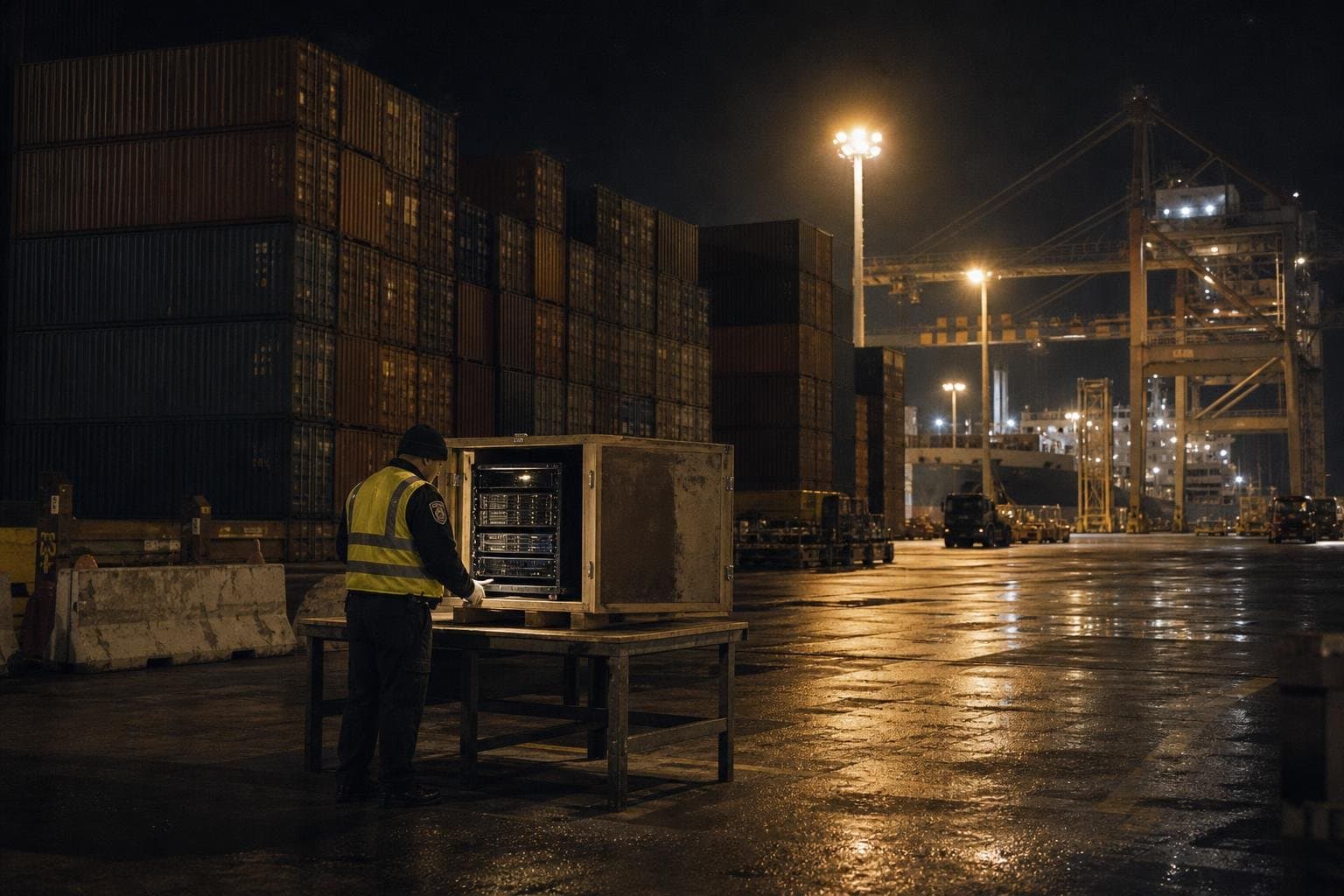

A customs seizure in Keelung changed the calculus. Earlier this month, Taiwanese authorities found roughly 50 AI servers loaded with high-end Nvidia chips, allegedly routed through Japan and Hong Kong toward mainland China. The smuggling case was brazen enough to accelerate a policy shift that had been building for months — and this week, the walls started closing from multiple directions simultaneously.
The question isn't whether the export control regime is tightening. It clearly is. The question is whether the architecture being assembled can actually hold.
The Loophole That Wasn't Quite Closed
Two weeks ago I wrote about the loophole that wasn't closed — the gap between policy announcement and enforcement reality. The BIS guidance issued on May 31 is the direct response to that gap, and it's worth being precise about what it actually does.
BIS clarified that a license is required to export advanced computing items to any entity worldwide if that entity is headquartered in — or has an ultimate parent headquartered in — mainland China or Macau. This isn't a new restriction invented from scratch; it's a reaffirmation of a rule that dates to November 2023, which the Trump administration's May 2025 announcement about not enforcing the AI Diffusion Rule had left in ambiguous limbo. The guidance closes the ambiguity. Chinese tech companies that set up data centers in Malaysia, Singapore, or the UAE to access Nvidia's top-tier silicon through the side door now face the same licensing requirement as if they were buying in Shenzhen.
But as South China Morning Post reported, trade lawyers noted the guidance is more clarification than new restriction — and experts flagged that at least one additional loophole remained unaddressed even after the May 31 document. The architecture has gaps. The question is how fast they get patched.
Taiwan Moves to Criminalize What Washington Couldn't Fully Prevent
The Keelung seizure did something the BIS guidance couldn't: it made the enforcement problem viscerally concrete for Taiwanese policymakers. Bloomberg reported that Taiwan authorities are now considering much stricter export controls that would restrict AI chip sales to all customers in China — a significant departure from the existing approach, which targeted specific blacklisted entities like Huawei rather than the entire mainland market.
The escalation in scope matters. Pandaily reported that unauthorized shipments could be classified as criminal offenses under the proposed framework, and that the move is being positioned partly as a conciliatory gesture toward Washington during ongoing trade negotiations. TSMC shares fell roughly 5% on the news — a market signal that investors see real commercial risk, not just regulatory theater.
Beijing's response was calibrated and fast: China's Ministry of Commerce placed eight Taiwanese entities on its export control lists. That's not a sanction designed to cripple Taiwan's semiconductor industry overnight. It's a message about what escalation looks like if Taipei proceeds.
The Foundry Problem That Senators Are Naming Out Loud
Meanwhile, a bipartisan pair of U.S. senators urged the Trump administration to tighten rules specifically on contract chipmakers — companies like TSMC — to prevent them from manufacturing advanced AI chips for overseas subsidiaries of Chinese firms. This is the manufacturing-side complement to the export-side guidance BIS issued. The BIS rule addresses who can receive chips. The senators' letter addresses who can make them on behalf of Chinese-parented entities.
The distinction matters because TSMC's business model is foundry-first: it makes chips for whoever designs them. If a Chinese company's overseas subsidiary contracts with TSMC to manufacture an AI accelerator, the current framework's coverage of that transaction is precisely what the senators want tightened. The letter signals that Congress sees the BIS guidance as necessary but not sufficient.
What the Next 60 Days Actually Reveal
The enforcement architecture being assembled — BIS clarification, Taiwan criminalization proposal, congressional pressure on foundries — is more comprehensive than anything in place six months ago. But comprehensiveness on paper and enforcement in practice are different things, as I've tracked in this space repeatedly.
Three specific developments will tell us whether this round of tightening has teeth: whether Taiwan's proposed criminal penalties survive Beijing's counterpressure and actually reach a legislative vote; whether BIS issues follow-on guidance addressing the remaining loophole that experts flagged after May 31; and whether the senators' foundry letter produces any Commerce Department response before the summer recess.
The Keelung seizure was a useful reminder that smuggling routes exist precisely because legal channels are closing. Tighter rules shift the economics of evasion — they don't eliminate it. The real test isn't the announcement. It's the next seizure, and whether the framework catches it.


