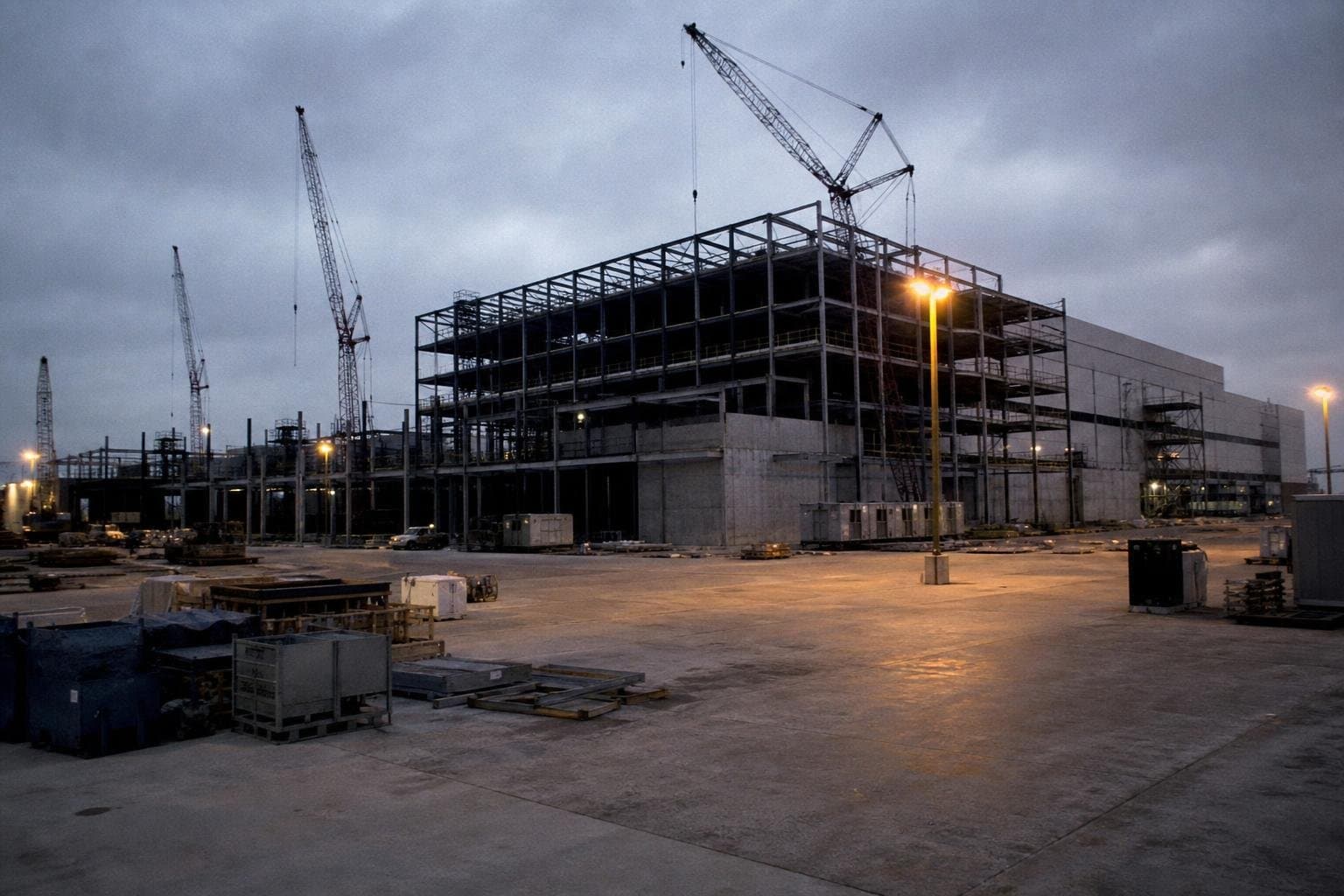

The U.S. is building fabs faster than it can staff them. That sentence should appear in every CHIPS Act progress report, and it doesn't.
This week's news cycle handed us three distinct threads — tariff diplomacy, R&D funding collapse, and a new capacity deal in Vermont — that look unrelated until you pull the through-line: the domestic semiconductor buildout is running into constraints that money alone cannot fix, and the policy apparatus is still pretending otherwise.
157,000 Missing Workers Is a Construction Problem, Not a Pipeline Problem
Start with the number that deserves more attention than it's getting. The U.S. faces a shortage of up to 157,000 semiconductor workers by 2030, according to a McKinsey and SEMI Foundation report — and the gap is already visible on the ground. Samsung's Jon Taylor, executive vice president of the company's semiconductor division in Austin, told CNBC directly: "We just don't see that there's enough technical people in the pipeline."
The structural problem is stark. Only 3% of U.S. engineering graduates enter the semiconductor industry each year, and 73% of chip employers report significant difficulty filling engineering roles — figures drawn from the same McKinsey and SEMI Foundation research. Samsung's Taylor, Texas fabs are part of a $35 billion buildout expected to start production later this year and create roughly 3,500 jobs. Those jobs need bodies with specific skills, and the U.S. higher education system is not producing them at anything close to the required rate.
Arizona State University is trying. ASU president Michael Crow told CNBC the school is already the largest producer of college graduates for Intel globally and is now working to replicate that pipeline for TSMC. Purdue is spending similarly. These are real efforts — and also four-year programs feeding into a shortage that arrives in 2030. The math is tight even if everything goes right.
The compensation problem compounds it. U.S. chip jobs pay significantly less than equivalent roles in South Korea, where the roles are highly sought after and culturally prestigious in ways that American manufacturing work simply isn't. No CHIPS Act funding tranche fixes that differential.
The R&D Half of CHIPS Is Already Broken
While the fab construction headlines continue, the GAO has quietly documented a different kind of failure. The Department of Commerce has disbursed only about $506.8 million of its allocated R&D total, while the new administration has canceled $7.8 billion in R&D funding outright.
I covered the R&D collapse in August ("The CHIPS Act's R&D Half Is Quietly Collapsing"). The GAO report confirms the trajectory hasn't changed. Manufacturing investment and research investment were supposed to be complementary — you build the fabs, you fund the science that keeps them competitive in the next process generation. Canceling $7.8 billion from the R&D side while celebrating fab groundbreakings is how you build yesterday's technology at great expense.
The GAO summary available is brief, so I won't overstate what it contains. But the headline figures — $506.8 million disbursed against a much larger allocation, $7.8 billion canceled — are specific enough to track. Watch for the full report to surface; those numbers will matter for anyone modeling long-term U.S. fab competitiveness.
The Tariff Delay Is a Tell About How Much Leverage Washington Actually Has
Meanwhile, the administration has delayed announcing new tariffs on China — including a proposed 7.5% tariff on Chinese goods tied to excess capacity concerns — until after the upcoming Xi-Trump summit. Bloomberg reported the delay, noting the administration had intended to release a trade report recommending those tariffs before the meeting.
The stated reason for the postponement is unclear. The operational logic, though, is familiar: tariff threats are more useful as negotiating leverage than as enacted policy. Once you pull the trigger, you lose the threat. Trump has repeatedly used tariff warnings to press trading partners for concessions — holding them in reserve is the move, until it isn't.
For semiconductor policy specifically, this matters. Export controls and tariff pressure are the two main tools Washington has used to constrain China's chip ambitions. Holding tariffs in reserve for summit diplomacy signals that the administration views them as bargaining chips — which means they may never land, or may land in diluted form after concessions are traded. That's not necessarily wrong as diplomatic strategy. It does mean the "excess capacity" problem the tariffs were designed to address remains unaddressed.
What to Watch
Three specific milestones worth tracking in the next 60 days: Samsung's Taylor, Texas fab production start date (promised for later this year — any slip will be visible in hiring announcements and equipment delivery filings); the full GAO CHIPS Act report when it clears the summary stage; and whatever trade framework, if any, emerges from the Xi-Trump summit that touches semiconductor supply chains.
The GlobalFoundries-Marvell silicon germanium capacity expansion in Burlington, Vermont is a quieter data point worth noting — a multi-year agreement to increase SiGe production for AI data center optical networking. GlobalFoundries shares rose around 4% on the news, with Marvell up 6.3%. That's the kind of incremental, unglamorous capacity expansion that actually moves supply chains. No ribbon-cutting ceremony required.
The fabs are going up. The workers aren't there yet. The research funding is being cut. And the tariff threat is being saved for later. That's the state of U.S. semiconductor policy in September 2026 — not a crisis, but a set of compounding constraints that the announcement cycle consistently underweights.


