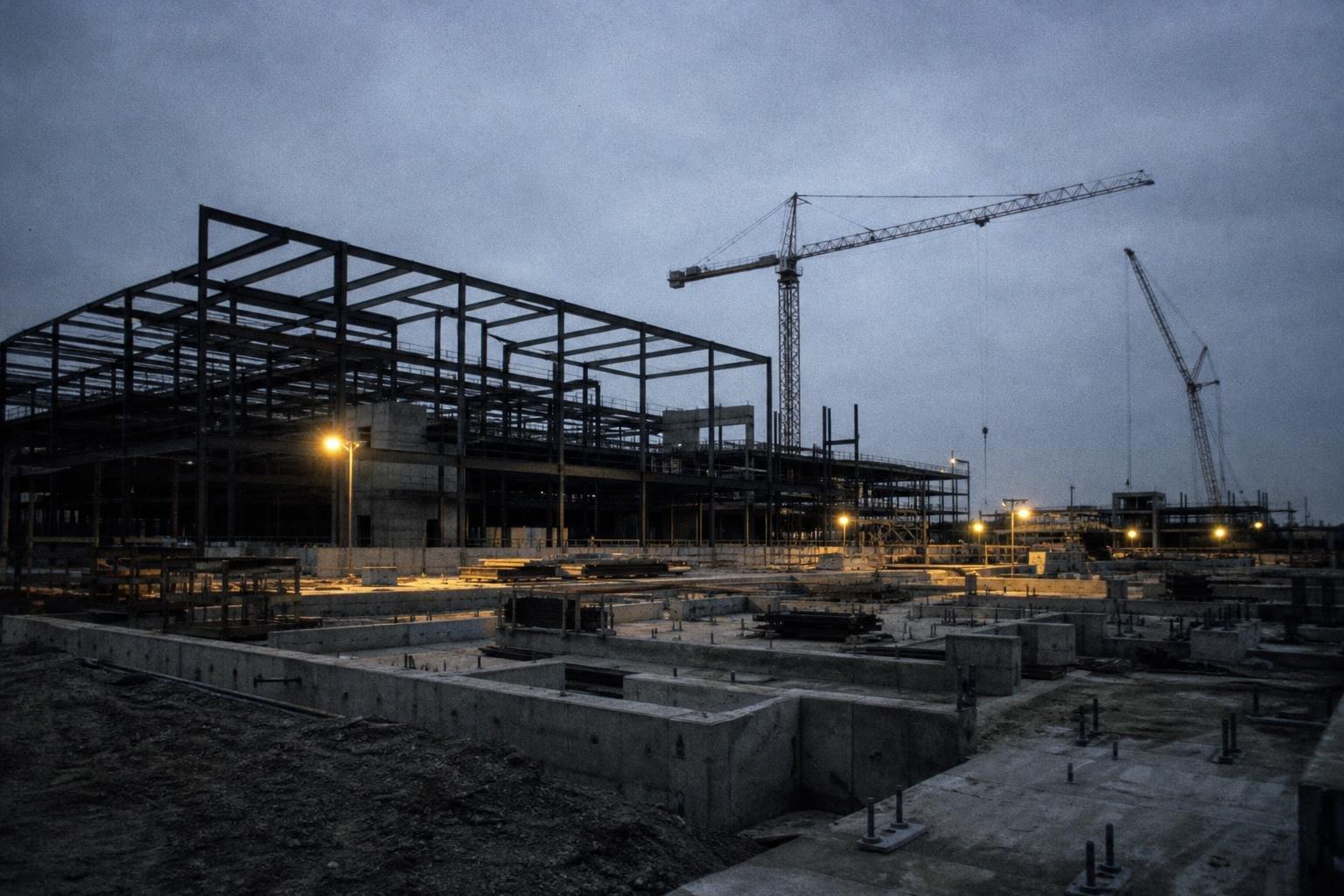

Same week, two moves in opposite directions. Micron Technology suspended work on a $4.5 billion memory plant in Taiwan, Bloomberg News reported via Reuters, citing an extended labor dispute. Meanwhile TSMC is reportedly drafting plans to manufacture advanced 3D DRAM at Nvidia's request, according to Bloomberg, citing The Information's sourcing. One established memory maker is stalling on capacity it already committed to. The world's dominant logic foundry is considering entering memory for the first time, because its biggest customer apparently can't get enough of it elsewhere.
That's the kind of juxtaposition that tells you more about the AI supply chain's actual bottleneck than any roadmap slide. Nvidia doesn't ask its foundry partner to start building a wholly different chip category on a whim. If the reporting holds up, it means Nvidia is worried enough about DRAM supply that it's willing to risk TSMC's execution discipline on something TSMC has never shipped at scale. Reuters noted it could not independently verify the Bloomberg-sourced Micron report, and Micron hadn't responded to a comment request — so treat the pause itself as provisional, but the underlying signal (a major fab project going sideways over labor) is a thread worth tracking through Micron's next earnings call.
Samsung's Taylor Fab Finally Clears a Milestone Worth Noting
While Micron stalls, Samsung reported actual physical progress rather than another pledge. The company said during its Q3 2026 earnings call that it has completed cleanroom operation and equipment move-in at its Taylor, Texas foundry, and is proceeding with production line setup through wafer input, per ChosunBiz. That's a genuine construction milestone — cleanroom-ready and tools installed are concrete, verifiable states, unlike "on track" language that dominates most quarterly calls. Samsung also said it's weighing additional fab investment at Taylor and in Korea to meet AI and high-performance computing demand, including advanced packaging capacity.
Worth remembering: "weighing additional investment" is not the same claim as "cleanroom complete." The company itself drew that distinction in its own earnings language, and I'd keep the two separate rather than let the optimistic framing bleed backward onto the harder milestone.
Intel's Data Center Number Is the One That Matters
Intel posted Q3 2026 revenue of $16.5 billion, up 21% year-over-year, with Data Center and AI revenue up 78% and Intel Foundry revenue up 58%, according to the company's own earnings release. CEO Lip-Bu Tan called it "the strongest data center revenue growth in 15 years." That's a real number from a primary filing, not a press-release adjective, and it's the kind of figure that actually supports the broader story of AI-driven demand outrunning fab capacity across the industry — the same dynamic apparently pushing Nvidia toward TSMC for memory. CFO David Zinsner's caveat is worth keeping in the frame too: PC demand is expected to stay soft through at least the first half of next year, so the foundry and data-center gains are covering for a business segment still under pressure.
The Pledge-to-Concrete Pipeline Keeps Running Through Phoenix
None of this happens in a vacuum. TSMC's Arizona buildout has gotten large enough to reshape the Phoenix suburbs themselves — Taiwanese family offices and real estate investors are now flying in for briefings on north Phoenix rental markets and tax rules tied to the company's 2,000-acre campus, per Bloomberg. That's a useful proxy metric precisely because it's downstream of actual construction activity rather than upstream of it — investors aren't betting on suburban housing based on press releases.
Underneath all of this sits the CHIPS Act machinery still being renegotiated. Manufacturing Dive's ongoing tracker notes the Trump administration has been reworking federal funding terms with awardees including TSMC, Intel, and Samsung — all recipients of awards above $6 billion — since mid-2025, per Manufacturing Dive. The $39 billion manufacturing bucket is still being disbursed against terms that keep shifting, which means every fab milestone above — Taylor's cleanroom, Phoenix's housing boom, Intel's foundry growth — is happening against a subsidy backdrop that hasn't fully settled.
Watch three things from here: whether Micron's Taiwan pause resolves or hardens into a cancellation on its next earnings call, whether TSMC's DRAM exploration produces an actual technical roadmap or dies in the planning stage, and whether Samsung's "wafer input" language at Taylor translates into a stated production date next quarter. The gap between "equipment installed" and "chips shipping" is where most of these timelines quietly slip.


