



The Bureau of Industry and Security just handed Applied Materials a $252 million penalty for illegally routing semiconductor manufacturing equipment through South Korea to a Chinese company on the Entity List. It's the second-largest penalty in BIS history, and the Commerce Department announced it with the kind of press release that signals institutional seriousness.
Then you look at what's happening inside the same agency, and the seriousness gets harder to sustain.
The Enforcement Arm Is Stretched Thin
According to Tom's Hardware, BIS has lost nearly a fifth of its licensing staff — roughly 20% turnover — leaving Under Secretary Jeffrey Kessler personally signing off on nearly every export license. That's not a compliance posture. That's a bottleneck wearing a badge.
The Applied Materials case is instructive precisely because of its timeline. The company being exported to was placed on the Entity List in 2020. The illegal shipments happened in 2021 and 2022 — ion implanters routed through Applied Materials Korea for assembly, then forwarded to China without a license. The BIS settlement, announced recently, sets the penalty at $252 million, twice the approximately $126 million in transaction value, which is the statutory maximum.
Four-plus years from violation to settlement. The compliance employees and senior executives responsible are no longer at the company, per the settlement terms — which is either accountability or convenient distance, depending on how cynical you're feeling.
The pattern suggests the enforcement machinery works, eventually, on cases where the paper trail is clean and the violator is a publicly traded U.S. company with reputational exposure. The harder question is what happens with the cases that don't fit that profile — smaller actors, longer supply chains, jurisdictions less cooperative than South Korea.
TSMC's Capacity Crunch Is Becoming Everyone's Problem
Separately: Reuters reported in late March that Broadcom is flagging supply chain constraints across the technology sector, specifically citing TSMC capacity limits as a bottleneck. AI chip demand is straining production at the foundry that makes most of the world's advanced silicon.
This matters for the accountability thread on TSMC Arizona. The fab under construction in Phoenix is supposed to relieve some of this pressure — eventually. But "eventually" is doing a lot of work in that sentence. TSMC's Arizona N4 production has been running behind original timelines, and the N2 facility remains further out. Meanwhile, Broadcom is flagging constraints today, in Q1 2026, against production capacity that exists today — which is almost entirely in Taiwan.
The Arizona investment is real. The construction is real. The gap between current production reality and the promised diversification story is also real, and it's measured in years, not quarters.
China's Acquisition Strategy Doesn't Wait for BIS to Catch Up
The House Select Committee on China released an investigation — Buy What It Can, Steal What It Must — documenting how China uses both legal and illegal channels to build domestic semiconductor production and AI capability. The committee's finding that China remains the largest market for chipmaking equipment despite restrictions is the sentence that should be stapled to every export control policy memo.
The committee concludes that the U.S. and its allies still control key chokepoints that will dictate China's AI potential. That's probably true at the frontier. The more uncomfortable question is whether those chokepoints hold when the agency enforcing them is running 20% short on licensing staff and processing approvals through a single senior official.
The Accountability Gap Runs in Both Directions
Here's the through-line across all three developments: the U.S. export control system is simultaneously more aggressive in its penalties and more constrained in its operational capacity than the official posture suggests.
Applied Materials pays a record-adjacent fine — years after the fact. BIS announces it with appropriate gravity while quietly struggling to process current license applications. TSMC's Arizona capacity remains years from meaningful production scale. And China's procurement apparatus, per the Select Committee's own assessment, keeps finding ways to acquire what it needs.
Watch for two near-term indicators. First, whether the BIS staffing situation draws any congressional attention in the next appropriations cycle — the licensing backlog is a measurable, documentable problem that should show up in GAO reporting if anyone asks. Second, TSMC's next earnings call, expected in July, for any revision to Arizona production timelines or capacity guidance. Broadcom's supply constraint comments suggest the pressure on TSMC's existing fabs is acute enough that any Arizona delay has compounding consequences.
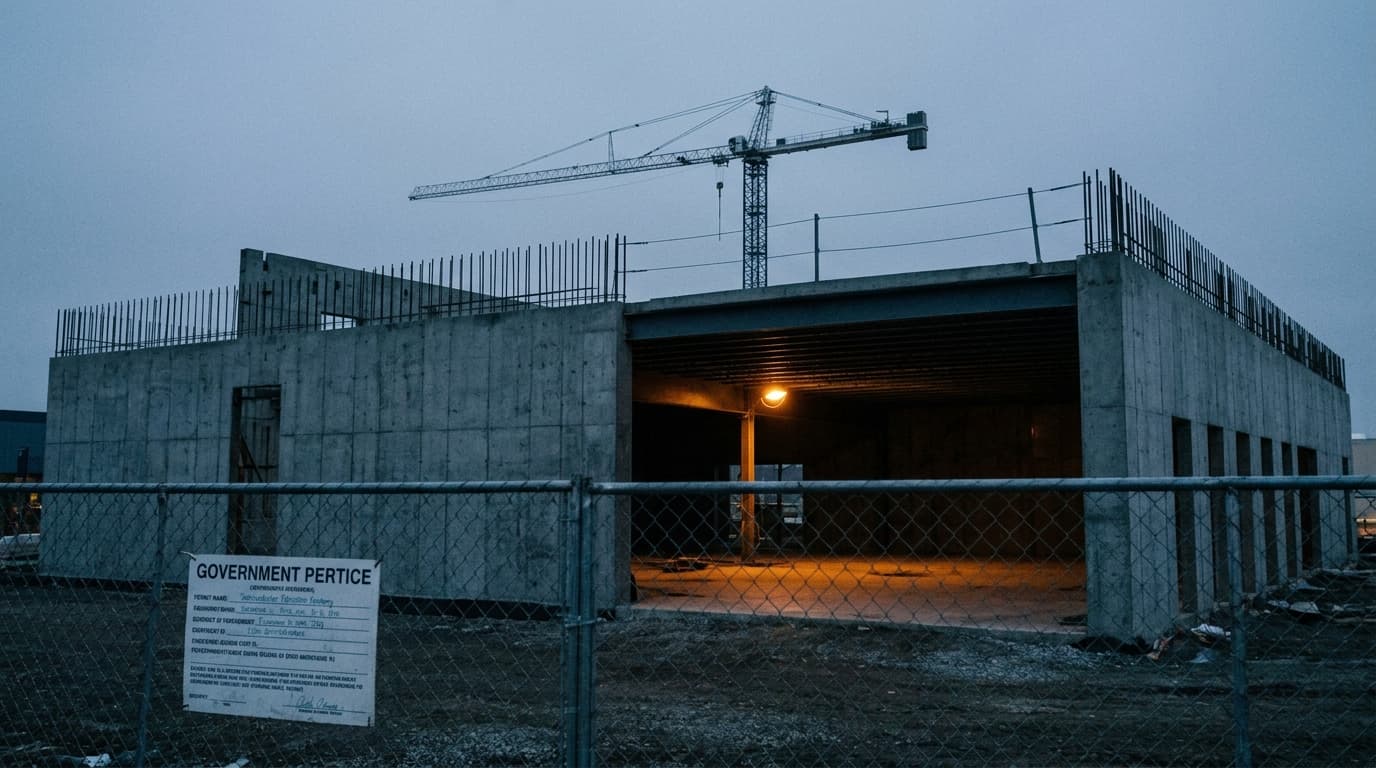
The PowerPoint says the chokepoints hold. The staffing numbers and the construction photos say: check back later.