



Everyone's chasing the Texas headline this month. Nobody's reading the prospectus.
Buried in Anthropic's IPO filing is a line that matters more than any site-selection rumor: the company told investors that disruptions to Taiwan Semiconductor Manufacturing Co.'s operations could hurt its business, joining a growing list of AI companies that have put TSMC concentration risk in writing for regulators. That's a sharper signal than a "we sent a team to look at Texas" quote, because it's a legal disclosure, not a hopeful aside on an earnings call. Even Amazon and Google, which design their own AI silicon, told Anthropic's lawyers (or Anthropic told itself) that the chips still have to go through TSMC to become physical objects, per Bloomberg. When the dependency shows up in a risk-factor section instead of a press release, you know it's real.
What Wei Actually Said, Versus What Got Written About It
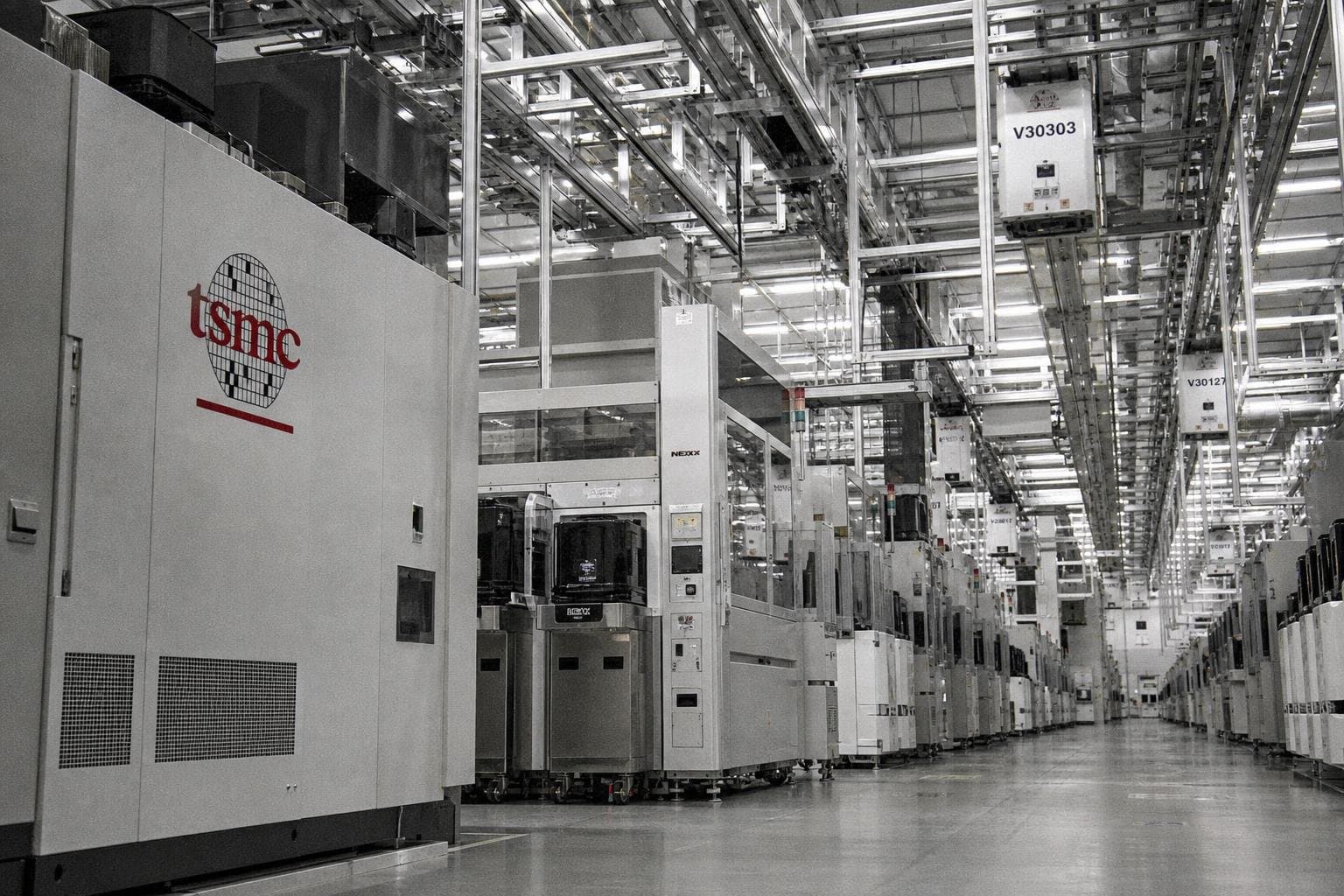
Compare that to the Texas story everyone's been running with. On TSMC's October 15 earnings call, CEO C.C. Wei confirmed the company has sent teams to Texas to assess conditions for expansion, citing pressure from a large U.S. customer base and support from Washington, according to TrendForce. That's it. "Sent a team to assess" is not a groundbreaking, not a permit filing, not a capex line item. It's due diligence, the same stage Arizona passed through years before any concrete got poured.
Wei also addressed the Terafab speculation directly, and the detail is more interesting than the Texas line itself. Elon Musk said on October 7 that his companies would build and operate Terafab, with TSMC potentially subleasing space, per Reuters reporting cited by TrendForce. Wei's response: TSMC is in talks, but any fab it's involved with has to be operated by TSMC. That's not a minor clarification — it's TSMC drawing a line that directly contradicts the framing Musk put out publicly. Two parties are talking about the same project and describing different outcomes for who runs it. That gap is worth watching more closely than whichever state gets the next ribbon-cutting.
Vietnam Is the Control Group for What "Groundbreaking" Actually Means
If you want a preview of how the gap between announcement and execution plays out when a government with less leverage tries to force the same trick, look at Vietnam. State-run Viettel held a groundbreaking ceremony in January for the country's first chip fab, targeting a 2027 trial production run. A Reuters site visit this month found the location still covered in wild vegetation, with satellite imagery from January and October confirming no buildings exist, and no deal yet reached with ASML for the lithography equipment the plant would need, per Reuters. Viettel's own statement said the project is "progressing in line with the established plan and schedule." Compare that language to the satellite photo. This is what a nine-month gap between ceremony and construction actually looks like when nobody's forced to show their work.
Who's Actually Spending, Right Now
The honest capital is showing up a layer down the supply chain, where the money has to be spent before the chips can ship. Murata said it will add another ¥15 billion ($100 million) to expand capacitor production, stacking onto a series of expansion announcements made in recent months to keep pace with data-center demand, after posting September-quarter operating profit of ¥147.5 billion on revenue of ¥588.5 billion — both ahead of analyst estimates, according to Bloomberg. Meanwhile Samsung's first Taylor, Texas fab is on track for full operation by the end of 2026, with construction on a second, larger fab beginning next month and targeted for 2030, per MySA. That's actual tooling going in, not a team doing site visits.
The lesson isn't that Texas won't happen eventually — TSMC has grown Arizona from a $12 billion pledge into a far larger commitment over six years by exactly this pattern of incremental, demand-driven expansion. It's that the Anthropic filing and the Murata capex line are telling you where the real pressure sits right now, while the Texas story is still at the stage where a CEO's noncommittal quote gets reported as a plan. Watch whether TSMC's next earnings call upgrades "assessing" to anything resembling a permit application. Until then, the risk-factor section is the more reliable document.