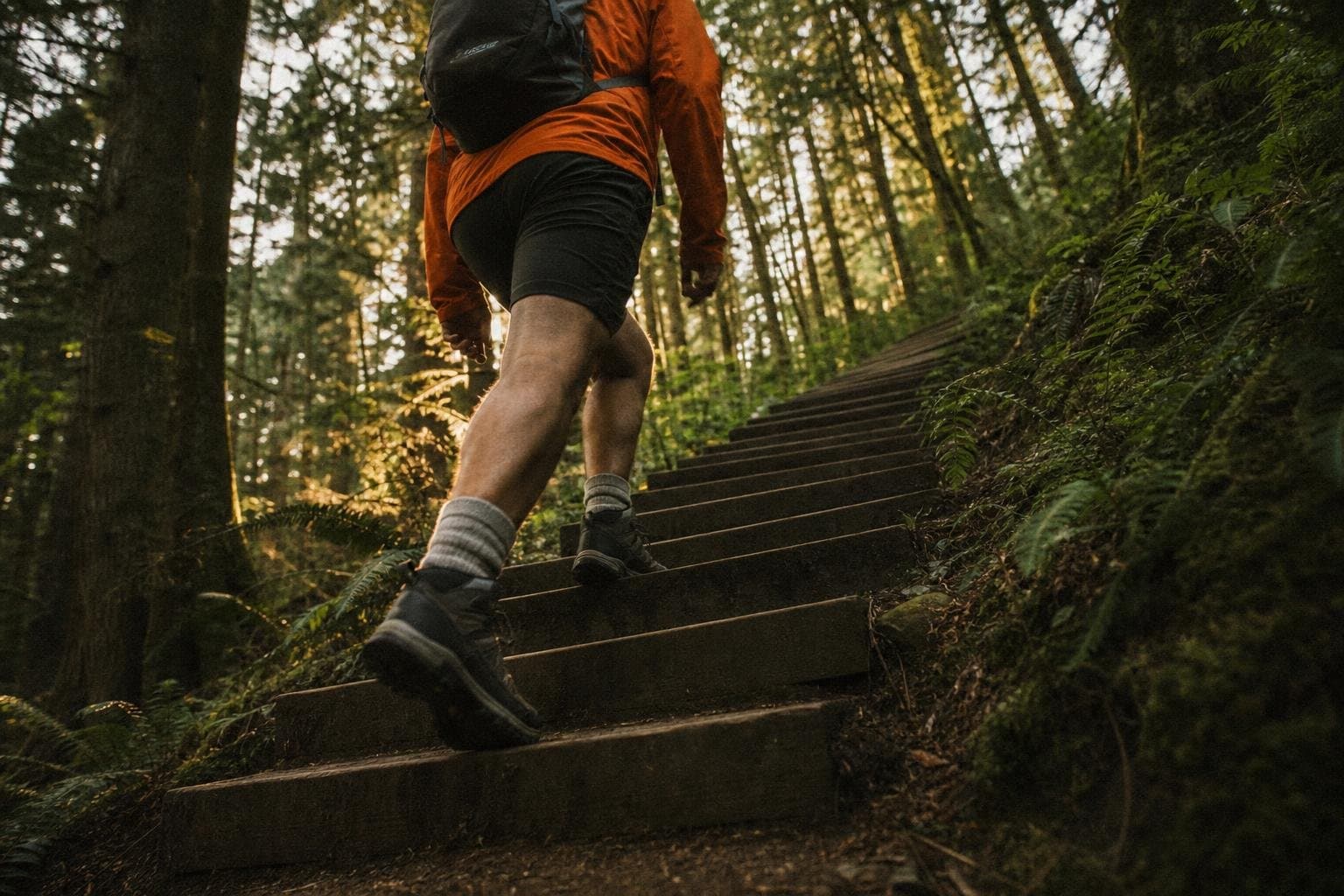

Most people treat the Grouse Grind like a fitness test — something to suffer through and screenshot. And sure, it's a legitimate suffer-fest: 2,559 feet of elevation gain, rocks and roots and wooden steps, a third quarter that AllTrails describes as the steepest section on the whole climb. Average completion time is up to an hour and a half, and for newer hikers, AllTrails recommends budgeting more than two hours for the ascent alone.
But here's what the fitness-test framing misses: the moment you crest that final steep section and the city opens up below you, you're not in Vancouver anymore. You're somewhere that required something from you to reach. That feeling — earning a view — is the whole point of hiking near a city, and Metro Vancouver is genuinely stacked with places that deliver it.
September is the window. Trails are dry, the summer crowds are thinning, and the light has that low amber quality that makes everything look like a film still. Here's how to actually use it.
The Grind Is Worth It — But Know What You're Getting Into
The Grouse Grind sits just north of the city and is probably the most-attempted trail in the region, which means it's also the most-misunderstood. People show up in Converse and run out of water by the first quarter marker. BC AdventureSmart has a whole safety video specifically for this trail because the injury and search-and-rescue rate is high enough to warrant it.
The trail is rated hard on AllTrails, and that rating is honest. Bring more water than you think you need. Wear actual hiking shoes. If you're struggling at the first quarter mark, the trail description is blunt about it: turn around. There's no shame in that — the mountain will be there next weekend.
The payoff at the top is real, though. The summit area has views, food, and a bar. Critically: you can buy a gondola ticket to ride back down, which means you don't have to destroy your knees on the descent. The gondola costs money (check current pricing at the Grouse Mountain website before you go — it changes seasonally), so factor that into your budget before you commit to the "free hike" framing. The ascent is free; the descent might not be.
Difficulty: Hard | Elevation gain: 2,559 ft | Time: 1.5–2+ hours up | Cost: Free to hike up; gondola down is paid
Golden Ears If You Want to Go Bigger
If the Grind is a sprint, Golden Ears Provincial Park is a whole different conversation. It's one of BC's largest parks, sitting just over an hour east of Vancouver, and it runs the full range from easy lakeside walks to serious backcountry routes through mountainous terrain that BC Parks describes as "extremely rugged."
The park requires a day-use pass (paid, bookable through BC Parks), so this one has a cost attached — check the BC Parks booking system before you drive out, because day-use passes can sell out on weekends. The campgrounds are popular enough that they book up weeks in advance, but day hiking doesn't require overnight reservations.
One thing worth knowing before you go: BC Parks actively updates trail condition reports, and Golden Ears has been hit by extreme weather events in recent years that have affected access. The trail conditions PDF on the BC Parks site is worth checking the morning you plan to go. The park is also bear country, which means standard food storage rules apply — don't leave anything scented in your pack unattended.
Difficulty: Varies by route | Drive: ~1 hour east of Vancouver | Cost: Day-use pass required (paid) | Check before you go: BC Parks trail conditions report
The September Timing Argument
Here's the scout's read on why right now beats July: the trails are drier, the air is clearer, and you're not competing with the peak-summer crowd for trailhead parking at 7am. September in Vancouver is genuinely one of the better months to be outside — the city's own events calendar is packed, which means the trails are slightly less so.
The flip side: days are getting shorter. If you're planning a longer route at Golden Ears, start early. Losing light on an unfamiliar trail is how a good day becomes a bad story.
The other thing September does is remind you that this window closes. By late October, some of these trails are wet, slippery, and genuinely technical in ways that change the difficulty rating in practice. The two-hour radius from downtown Vancouver is one of the better geographic accidents in North America — mountains close enough to reach after work, big enough to feel real. Use it while the conditions are good.
Check BC Parks active advisories before any trip. As of the most recent update, the advisory page showed zero active closures — but that changes, and it's a thirty-second check that can save a wasted drive.


