


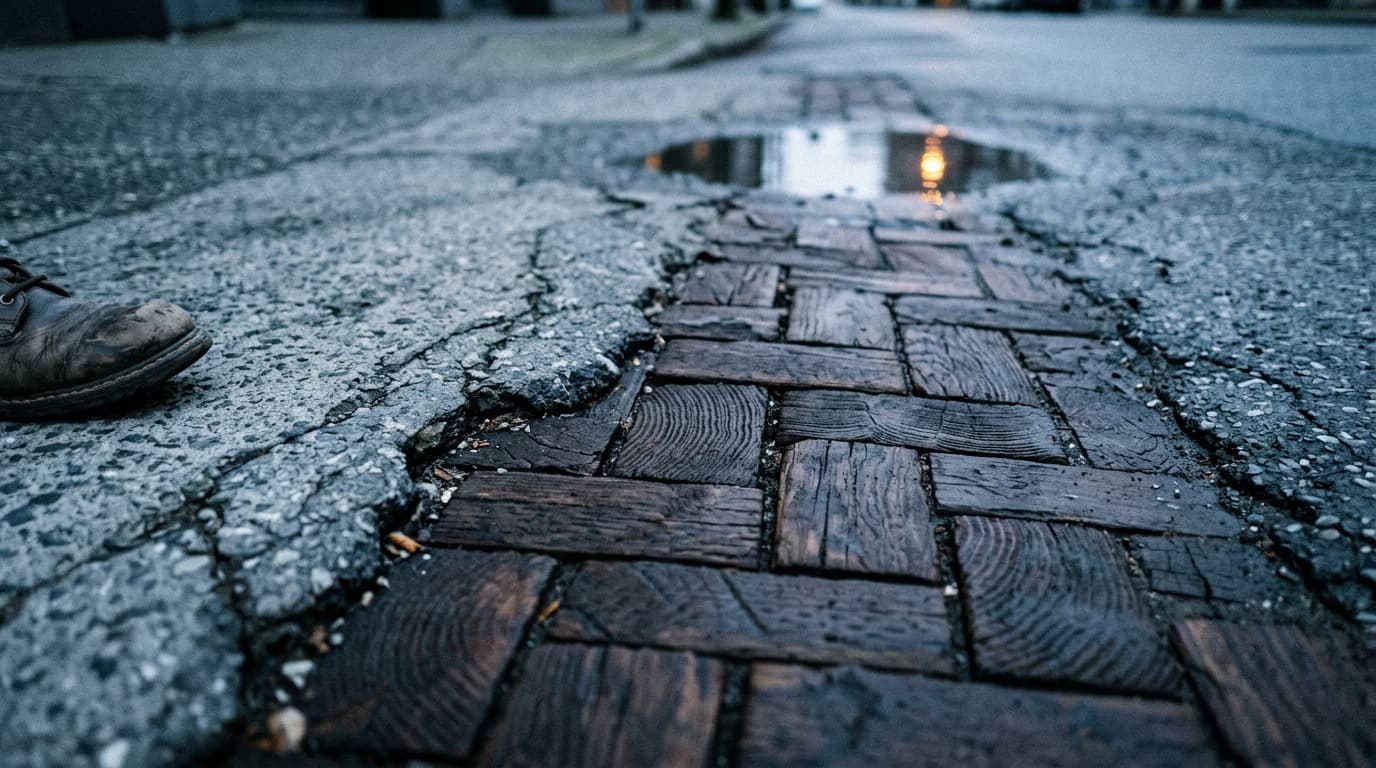

You've probably walked down Water Street a dozen times without knowing you were stepping over wood. Not old wood — ancient wood, by Vancouver standards. Underneath the asphalt and brick of Gastown's most-photographed street, there are wooden paving blocks that predate most of what you can see above ground. The city built over its own skeleton and kept walking.
That's Gastown in a sentence, honestly.
City Pulse — What's On This Week
The Georgia Straight's events listings have a few things worth flagging for the next week:
Opera Unbound: The Fox runs April 17–19 at ANNEX (823 Seymour St). This is a new opera by Roan Shankaruk — small venue, live performance, the kind of thing that's genuinely interesting and not a stadium show. Check the ANNEX box office for ticket prices and exact showtimes; transit-wise, it's a short walk from Granville Station.
Palestine '36 is currently screening at VIFF Centre (1181 Seymour St). Documentary programming at VIFF is consistently worth your time, and this one has a clear point of view. Tickets typically run $14–16 for general admission; student pricing is usually available at the door.
The Hang-Up: A BYO Art Show (Vol. 2) — a bring-your-own-art group show. Dates and exact venue weren't confirmed in the listing, so check the Georgia Straight events page directly before you go. Free to attend, which is the right price.
Urban Exploration — What's Under Your Feet
Here's the thing about Gastown that most people miss: the neighborhood's whole identity is a kind of historical performance. As the BCIT Evolution piece on Gastown's history notes, the "cobblestone" streets are actually masonry brick, the Steam Clock was installed in 1977, and most of the "Victorian" architecture is modern interpretation. Gastown was largely rebuilt after the Great Vancouver Fire of 1886 leveled the original wooden city, then revitalized again in the 1970s when activists fought off a freeway demolition plan.
So what's actually old? That's where it gets interesting.
A local house historian's blog documented wooden paving blocks surfacing on Union Street — visible where asphalt had worn away near a construction site — remnants of an era when Vancouver paved its streets with wood rather than stone. The blocks are a direct artifact of the post-fire rebuild: the city that rose from the 1886 fire used the materials it had, and it had a lot of timber.
Water Street is the place to look for this. Walk it slowly and pay attention to where the surface texture changes, especially near older building foundations or spots where the pavement has been patched. You're not going to find exposed wood blocks on a tourist stroll — but knowing they're down there changes how the street feels. You're walking on layers.
This is all fully public and legal, by the way. No fences to climb, no trespassing required. Just eyes open and a willingness to look at the ground instead of the Steam Clock.
Nature Adventures — Burnaby Mountain Before the Crowds
Burnaby Mountain Conservation Area Difficulty: Easy–Moderate | Time: 2–3 hours | Transit-accessible
If you want a nature hit without a car, Burnaby Mountain is genuinely underrated. The trail network through the conservation area connects forest paths with views over Burrard Inlet and the Port of Vancouver — container ships moving slowly below you while you're standing in second-growth forest. It's a strange, good combination.
The Velodrome Trail and Pandora Trail loop is a solid 2–3 hour option. Bring layers — the summit gets wind even when downtown is calm. The area is accessible via SFU bus routes from Production Way–University Station on the Millennium Line.
What to bring: water, snacks, something waterproof. April in Vancouver means the trails are wet but passable. Mud shoes or trail runners beat anything with flat soles.
Elsewhere — The Bloedel Conservatory, But Make It Weird
Bloedel Conservatory, Queen Elizabeth Park, Vancouver
Okay, technically still Vancouver — but hear me out. The Bloedel Conservatory sits at the top of Queen Elizabeth Park in a geodesic dome that looks like it was designed for a 1970s science fiction film, because it basically was. Inside: tropical birds flying loose, over 500 plant species, and the particular sensory experience of stepping from a grey April afternoon into something that smells like a rainforest.
It costs a few dollars to enter (check the City of Vancouver parks page for current pricing), it's genuinely strange in the best way, and it's the kind of place that photographs like you went somewhere far more exotic than Little Mountain. Bus 15 from downtown gets you close.
The wooden blocks under Water Street, the dome on the hill, the Steam Clock that isn't Victorian — Vancouver keeps hiding its best details in plain sight. You just have to stop walking past them.