


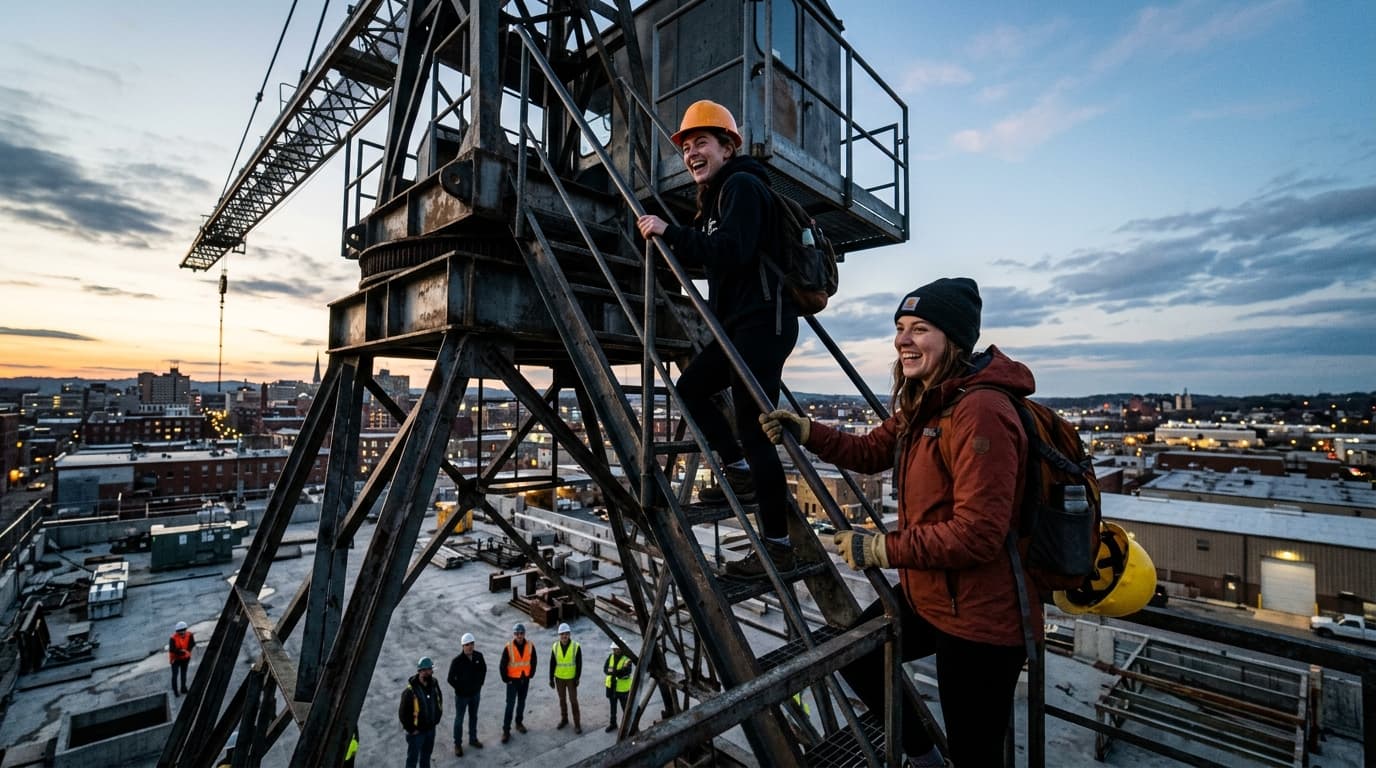

Most urbex content online is basically a highlight reel of trespassing — dramatic footage, zero context about the arrest that happened afterward. Here's the thing nobody mentions: the legal version of urban exploration is genuinely more interesting, because someone who actually knows the history is usually involved.
This Month: Find a Guided Ruins or Industrial History Tour Near You
Before anything else, the honest logistics: urban exploration is not automatically legal, and the rules vary by location, ownership, and access conditions. Police in Lancaster recently issued warnings that trespassing into abandoned properties carries real criminal consequences — and that's not an outlier. So this issue is specifically about the legal path in.
The good news: most mid-sized cities have at least one local history organization, preservation society, or architectural group that runs occasional access tours of buildings that would otherwise be off-limits. Think decommissioned power stations, old rail depots, shuttered mills. These tours exist because the people who own or steward these spaces want someone to care about them.
How to find one in the next 2–4 weeks:
- Search "[your city] + preservation society + tours" or "[your city] + architectural history + open buildings"
- Check Eventbrite for "industrial history," "historic preservation," or "behind the scenes" events
- Local historical societies often post these quietly — worth a direct email if their website looks dormant
Cost: Usually $10–25, sometimes free
Time commitment: 2–3 hours
Accessibility: Varies significantly — ask ahead, because some sites involve uneven floors or no elevator access
Why bother: You'll leave with actual stories. A guide who spent years researching a building will hand you details that no amount of solo wandering produces.
Bookmark These for Later
Urbex mapping platforms as research tools (not trespass guides)
Platforms like UrbexObsession exist to help explorers find and document abandoned places worldwide. Used responsibly, they're genuinely useful for identifying what's in your region — then doing the follow-up work of figuring out whether legal access exists. Some listed sites are on public land, some have open-access policies, some are actively seeking visitors. The map is the starting point, not the permission slip.
The "legal ruin" category you're probably ignoring
I'd argue most people overlook a whole tier of accessible abandoned-adjacent spaces: decommissioned military sites turned parks, industrial waterfronts with public trail access, and preserved ghost towns on federal land. These don't require any special permission — just the awareness that they exist. A structured search combining satellite imagery with verified location data is the most efficient way to surface them. Google Maps satellite view plus a local history forum will get you surprisingly far.
Gear worth having even for legal visits
If you do get access to a historic industrial site or older building, sturdy boots, a good flashlight, and gloves are worth having regardless of legality. These spaces are often unlit and uneven. Coming prepared also signals to tour organizers that you're a serious visitor — which sometimes opens doors to future access.
Community Spotlight
A reader in the Pacific Northwest mentioned that their local watershed district runs annual tours of a century-old pump station that's still partially operational. Tickets go fast and it's not heavily advertised — they found it through a neighborhood email list, not any events platform.
That's the pattern worth replicating: the best legal access often travels through hyper-local channels. If you've found something similar — a preservation tour, an open-doors industrial site, a historic building with a surprisingly accessible public program — send it in. That's exactly the kind of intel this community runs on.