


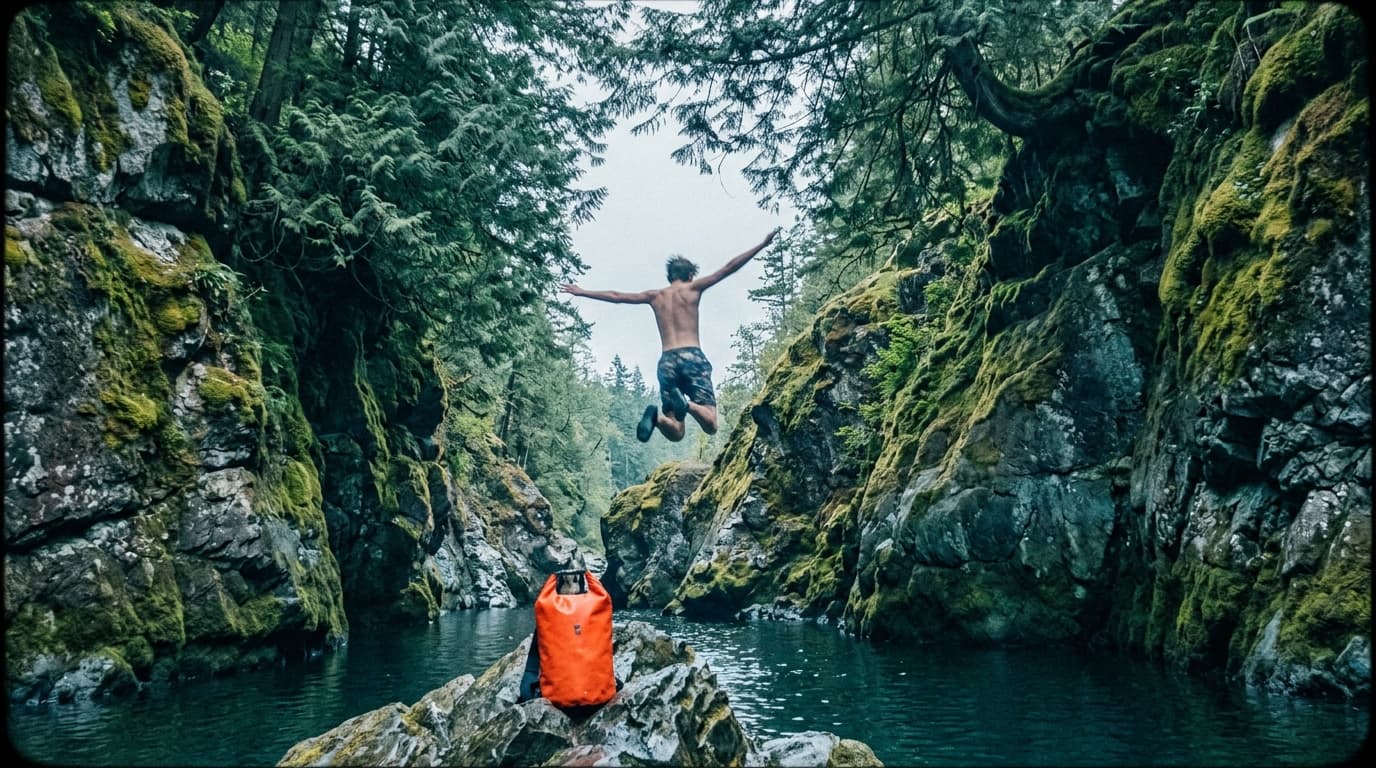

Late April in Vancouver means one thing for anyone paying attention: the swimming holes are technically open, the water is absolutely freezing, and that's exactly why you should go now, before every trail in the Lower Mainland turns into a guided tour of other people's Instagram shoots.
Here's what's actually accessible, what's worth the trip, and one spot that'll make you question why you ever paid for a gym membership.
City Pulse — FIFA Is Coming and Transit Is Already Changing
The big logistical news this week: TransLink is actively preparing for FIFA World Cup 2026 Vancouver, with full transit details arriving "this spring." That matters for anyone planning summer adventures — expect route changes, crowding on key lines, and potentially useful new service to spots you already use. Worth bookmarking the TransLink visitor page now so you're not caught off guard when the announcements drop.
In the meantime: BC Parks is reporting zero active advisories province-wide as of this week, which is genuinely good news for anyone planning day trips. No closures, no emergency alerts. The window is open.
Urban Exploration — The Suspension Bridge Nobody Charges You For
Lynn Canyon Park in North Vancouver has a suspension bridge that gets a fraction of the foot traffic of Capilano — because it's free. But the real reason to go isn't the bridge. It's the canyon swimming hole underneath it.
The pools at Lynn Canyon are cold, clear, and surrounded by the kind of mossy rock walls that make you feel like you've stumbled into a different province. The swimming area is accessible and well-documented, but the canyon itself has enough scramble routes, rope swings (use your judgment — these are not maintained), and hidden ledges that it rewards exploration beyond the main trail.
Getting there without a car is straightforward: take the SeaBus to Lonsdale Quay, then the #228 Lynn Valley bus. Get off at Lynn Valley Road and Peters Road, walk 15 minutes down Peters Road to the park. Total transit time from downtown: roughly 45-50 minutes. Parking costs $3/hour if you drive, but honestly, transit is easier on weekends when the lot fills fast. The Ecology Centre is free (donation-based) and worth a quick stop for trail maps.
Difficulty: Easy to moderate depending on how far into the canyon you go. Bring: Water shoes — the rocks are slippery. A dry bag for your phone. Layers, because the canyon stays cool even when it's warm above.
Nature Adventures — Porteau Cove and the Art of the Cold Plunge
If Lynn Canyon is the accessible option, Porteau Cove Provincial Park on the Sea-to-Sky Highway is the one that feels like a reward. The water is colder — this is Howe Sound, not a sheltered lake — but the setting is dramatic in a way that makes the cold feel intentional.
The Swim Wild Squamish community runs regular group dips at Porteau Cove, and their event notes are worth reading even if you're going solo: gradual beach entry at low tide, stairs at high tide, rocky bottom, occasional dive boat traffic. No lifeguards. The swim-around-the-dive-buoys route runs 500m–1km depending on how many loops you do — that's a real open-water swim, not a splash.
What to bring, per people who actually do this regularly: a brightly-coloured tow float (makes you visible to boats), a dry-robe or large towel for changing, and loose clothing you can pull on with numb fingers. Skip the button-up flannel for the drive home. Water temperature in late April is cold — think 8-10°C. A wetsuit makes it comfortable; without one, you're doing a plunge, not a swim. Both are valid.
Getting there: This one requires a car or a ride. Head north on the Sea-to-Sky Highway from Vancouver, watch for the Porteau Cove turnoff. Parking is free. About 40 minutes from downtown.
Elsewhere — Victoria's Lakes Are Warmer Than You Think
If you're considering a ferry day trip to Victoria, the swimming intel from locals is worth knowing: skip the ocean beaches unless you're doing a polar bear plunge (ocean temps hover around 8°C in winter, barely warmer in summer). The lakes around Victoria are the move — significantly warmer, cleaner on most days, and far less crowded than the ocean-facing spots.
The practical note: check water quality alerts before you go, especially after hot stretches when algae blooms can close swimming areas. The Victoria beach guide linked above has the relevant monitoring sites. A Victoria day trip — ferry, lakes, ferry back — is a solid 12-hour adventure that costs roughly the price of a Canucks ticket and leaves you with better stories.
The cold water is never as bad as you think it'll be. It's always exactly as good as you remember afterward.