


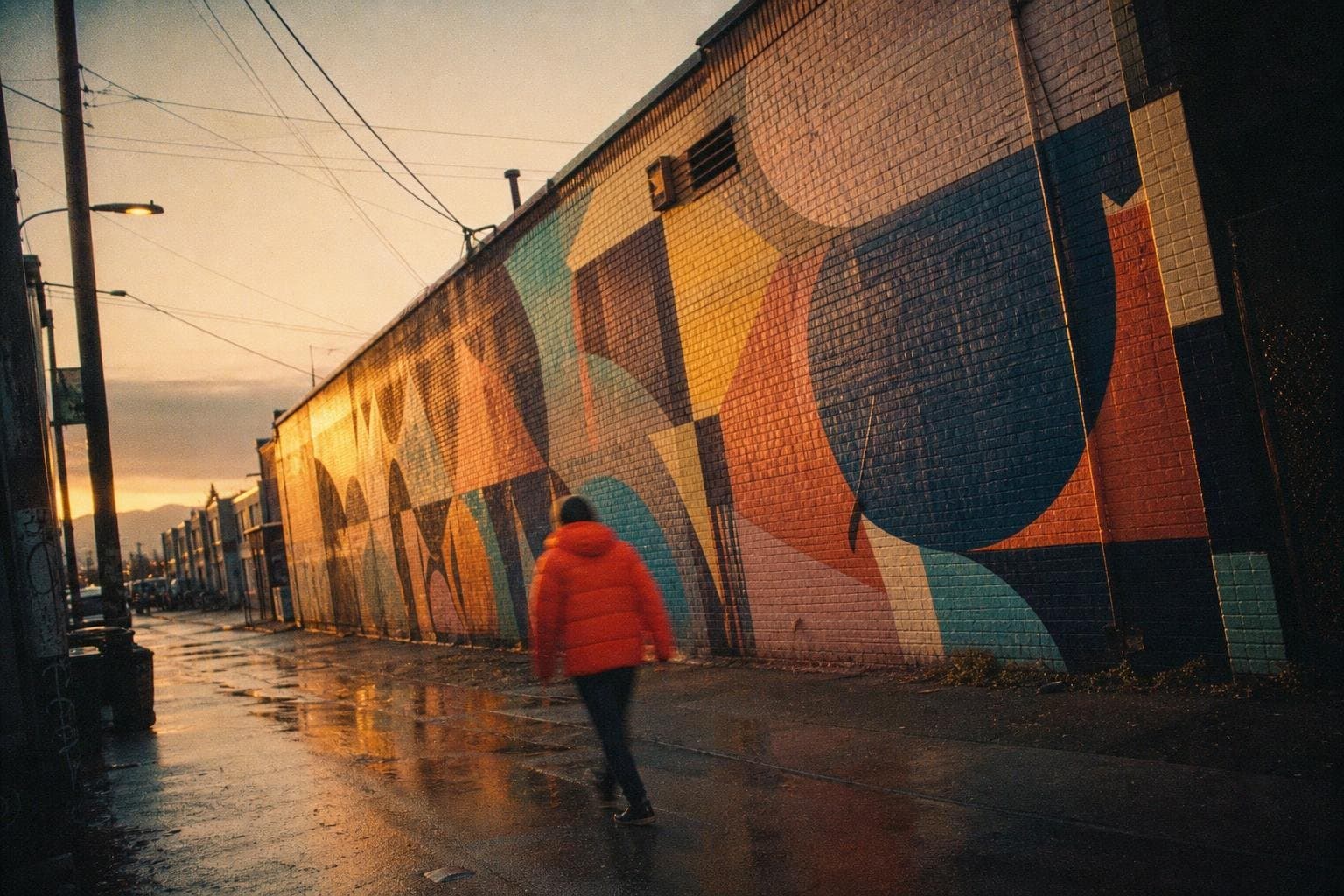

Mount Pleasant has always been the answer when someone asks where Vancouver's murals actually live. That's still true. But something shifted this spring — and if you've been walking those blocks recently, you may have already felt it without knowing why.
The short version: the city's creative infrastructure just got a name, a new building, and a reason to pay attention again.
Why Mount Pleasant Keeps Winning
The neighbourhood's reputation for public art isn't accidental. It's the product of decades of artists actually living and working there — not just painting there for a weekend festival and leaving. That distinction matters more than people realize. When artists have studios in a neighbourhood, the walls around them become something different: less curated, more alive, more likely to change.
That dynamic just got a formal structure. David Duprey, who's been quietly converting empty Vancouver buildings into artist studios for 20 years, officially launched Artopia this spring — a public umbrella for what was previously just the Narrow Group's background operation. The newest project under that umbrella is Cosmo, a 10,000-square-foot former industrial building in Mount Pleasant that's being converted into 32 studios for 50-plus artists, with below-market rents and natural light.
Why does this matter for street art specifically? Because studios create density. When 50 artists are working within a few blocks of each other, the surrounding walls don't stay blank for long. The City Centre Artist Lodge on Main Street — another Artopia building — is one of the most visually distinct blocks in the city, and it didn't get that way by accident. Cosmo is the same bet, placed again in the same neighbourhood.
The practical upshot: Mount Pleasant's mural corridor is about to get denser. Keep an eye on the blocks immediately around the new Cosmo building as artists move in and start making the space their own.
The Granville Street Wildcard
Here's the other thing happening right now that nobody's quite framing as a street art story, but should be.
As of June 11, five blocks of Granville Street between West Georgia and Davie are fully closed to vehicles for the FIFA World Cup — a 39-day pedestrian zone that Downtown Van (the local business improvement association) is programming and operating. The setup includes "ample decoration, art and patio installations," per Daily Hive's on-the-ground coverage from opening day.
This is temporary public art at scale, and it's free to walk through. The Granville Entertainment District doesn't usually get described as a street art destination — it's more neon signs and lineups — but for the next five weeks, it's been physically transformed into something worth actually walking. The tournament runs through mid-July, so the window is open right now.
Worth noting: the pedestrian zone is a FIFA activation, not a grassroots mural project. The aesthetic will reflect that. But large-scale public installations in unexpected urban locations are exactly the kind of thing worth showing up for, even when they're corporate-adjacent. Judge it when you get there.
How to Actually Scout Street Art (The Scout Method)
Three things worth knowing before you go:
Timing beats planning. The best murals in Mount Pleasant appear on walls that were blank last month. Following local artists on Instagram — specifically ones who tag their location when they post new work — is more reliable than any static map. The Street Art Cities platform (mentioned at Glasgow's Yardworks Festival this year by one of its founders) documents both commissioned and unsanctioned work, and it's community-updated, which means it's more current than most guides.
Legal vs. not legal is a real distinction. The murals on designated walls and building exteriors in Mount Pleasant are sanctioned — property owners commissioned them or gave permission. Random tags and pieces in alleyways are a different category with different legal status. This newsletter isn't going to tell you where to find the latter, but it's worth understanding that what you're looking at on any given wall has a different story depending on where it is.
Cost: free. All of it. Walking is free. The Granville pedestrian zone is free to enter. The Artopia buildings have public-facing exteriors you can photograph without going inside. The only thing that costs money is if you want to buy something from one of the artists — which, if you find work you love, is worth considering.
The through-line here is that Vancouver's street art scene is most interesting not as a static map of murals to photograph, but as a living system — studios producing artists, artists producing work, empty buildings becoming something. Artopia just made that system more visible. The Granville pedestrian zone made it temporarily bigger. Both are worth your time before they change again.