



The city changes at 9pm. The tourist buses are gone, the light goes blue-grey and cinematic, and the spots you've walked past a hundred times suddenly feel like they belong to you. You don't need a fake ID or a trust fund to have a good night in Vancouver — you need a transit card and a willingness to stay out past when most people head home.
City Pulse: One Night, Multiple Moves
The most interesting thing happening this weekend isn't a concert — it's a scavenger hunt through Uptown Village on Saturday, May 30, noon to 5pm. The Seek & Sip Downtown Social turns a stretch of local bars and landmarks into a passport-stamp trail, with secret cocktails and pop-up vendors at each stop. It's 21+ and costs $5 to pick up your passport at Shanahans or Cellar 55 — proceeds go to the neighbourhood's flower basket program, which is a genuinely good cause dressed up as a very fun afternoon. Not technically after dark, but it's the kind of thing that slides naturally into an evening if you keep the momentum going.
For the under-21 crowd: Stanley Park's seawall hits differently after 8pm when the joggers thin out and the city lights start reflecting off the water. It's free, it's always accessible, and the view of the downtown skyline from the north end of the seawall is the kind of thing you forget to appreciate until you're showing it to someone from out of town.
Urban Exploration: The Night Shift at Point Grey
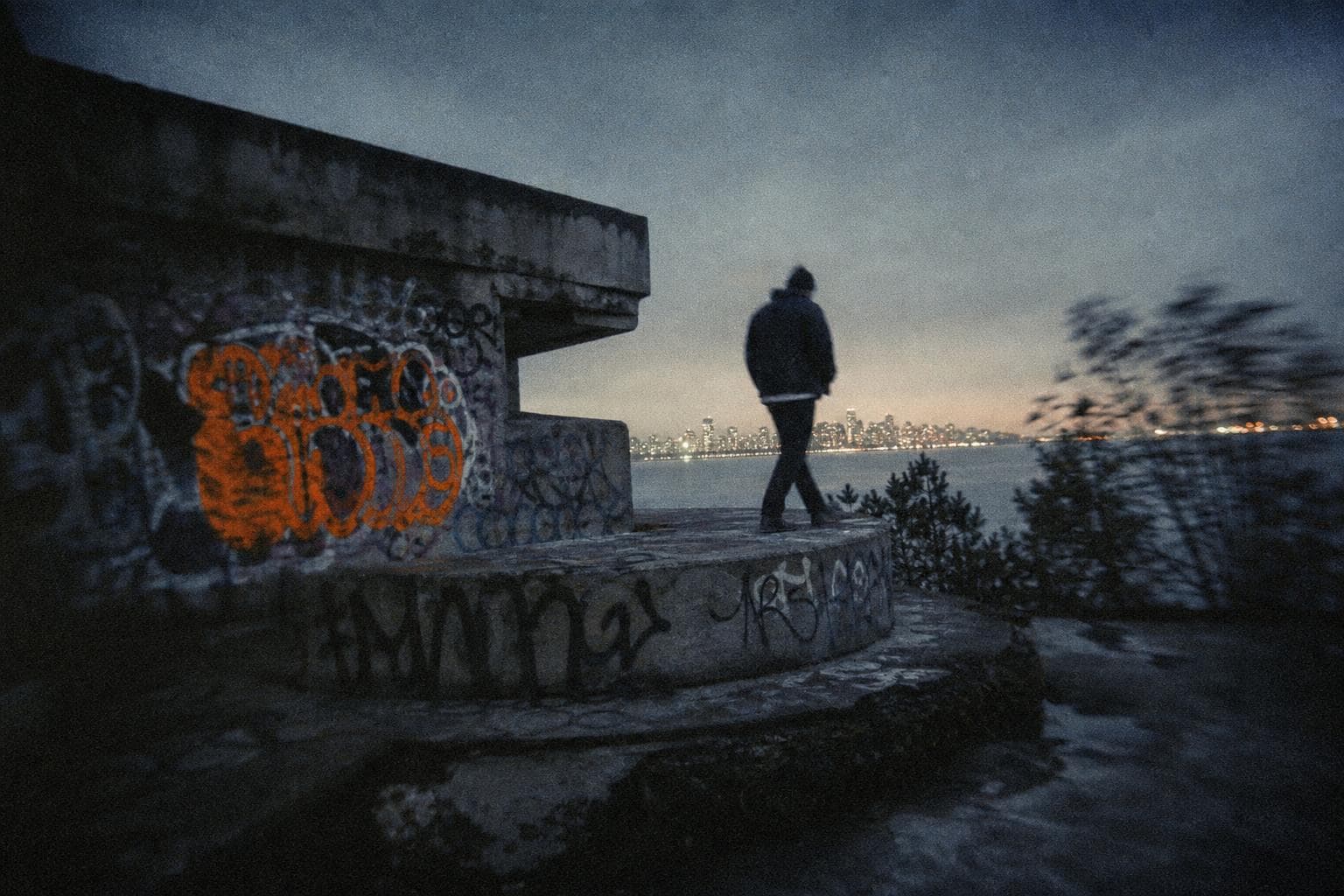
We covered the WW2 gun batteries at Point Grey back in May in the context of street art — but the batteries are genuinely different after dark, and worth revisiting on their own terms. The concrete emplacements at Acadia Beach and Spanish Banks are fully accessible public land (no trespassing involved), part of Pacific Spirit Regional Park. At night, the graffiti-covered bunkers read less like a history lesson and more like something out of a post-apocalyptic film set — the spray paint catches whatever ambient light comes off the city, and the ocean is loud and close in a way you don't register during the day.
Getting there: Bus 4 or 44 to UBC, then a 15-minute walk west through the park. Bring a headlamp — the trail through the trees is unlit and genuinely dark. The batteries themselves sit just above the beach; you'll hear the water before you see it.
What to know: The park is technically open until 11pm. The batteries are a documented historical site, not a restricted zone. You're allowed to be there. The darkness is the whole point.
Nature Adventures: Buntzen Lake After the Day-Trippers Leave
Difficulty: Easy to moderate | Time: 2–3 hours round trip | Transit: Possible but requires planning
Buntzen Lake in Anmore is one of those places that gets genuinely crowded on summer weekends — but arrive in the early evening on a weekday and it's a different experience entirely. The lake sits in a bowl of second-growth forest, and as the light drops, the water goes from blue to black mirror. The main trail around the lake is well-maintained and wide enough to navigate with a phone flashlight, though a proper headlamp is smarter.
The north beach is the destination: a small clearing where the tree canopy opens up and, on clear nights, you get a reasonable view of the sky. It's not a dedicated stargazing spot, but it's far enough from the city that the Milky Way is occasionally visible when conditions cooperate. Check the moon phase before you go — a full moon washes out the stars but makes the lake look extraordinary.
Getting there by transit is doable but slow: SkyTrain to Coquitlam Central, then a bus toward Anmore, then a walk. Most people drive. If you're going after dark, go with at least one other person.
Bring: Headlamp, layers (it drops fast near the water), water, and bug spray — May evenings mean mosquitoes are waking up.
Elsewhere: Seattle's Underground Is the Real Thing
If you've been following this newsletter, you know we've talked about Vancouver's underground myths before — the tunnels that may or may not exist, the stories that are better than the reality. Seattle's underground is the opposite: the reality is better than the story.
After the Great Seattle Fire of June 6, 1889, the city didn't rebuild at street level — it built on top of itself, raising streets by as much as 35 feet and leaving the original storefronts, sidewalks, and building facades sealed underground. The result is a preserved ghost district that you can actually tour. It's not free — tickets run around $25 USD — but it's the kind of thing that reframes how you think about cities and what's underneath them.
It's a three-hour drive from Vancouver, or a short flight. Worth it for a weekend, especially if you pair it with Capitol Hill's late-night food scene. Seattle rewards people who stay past 10pm.