


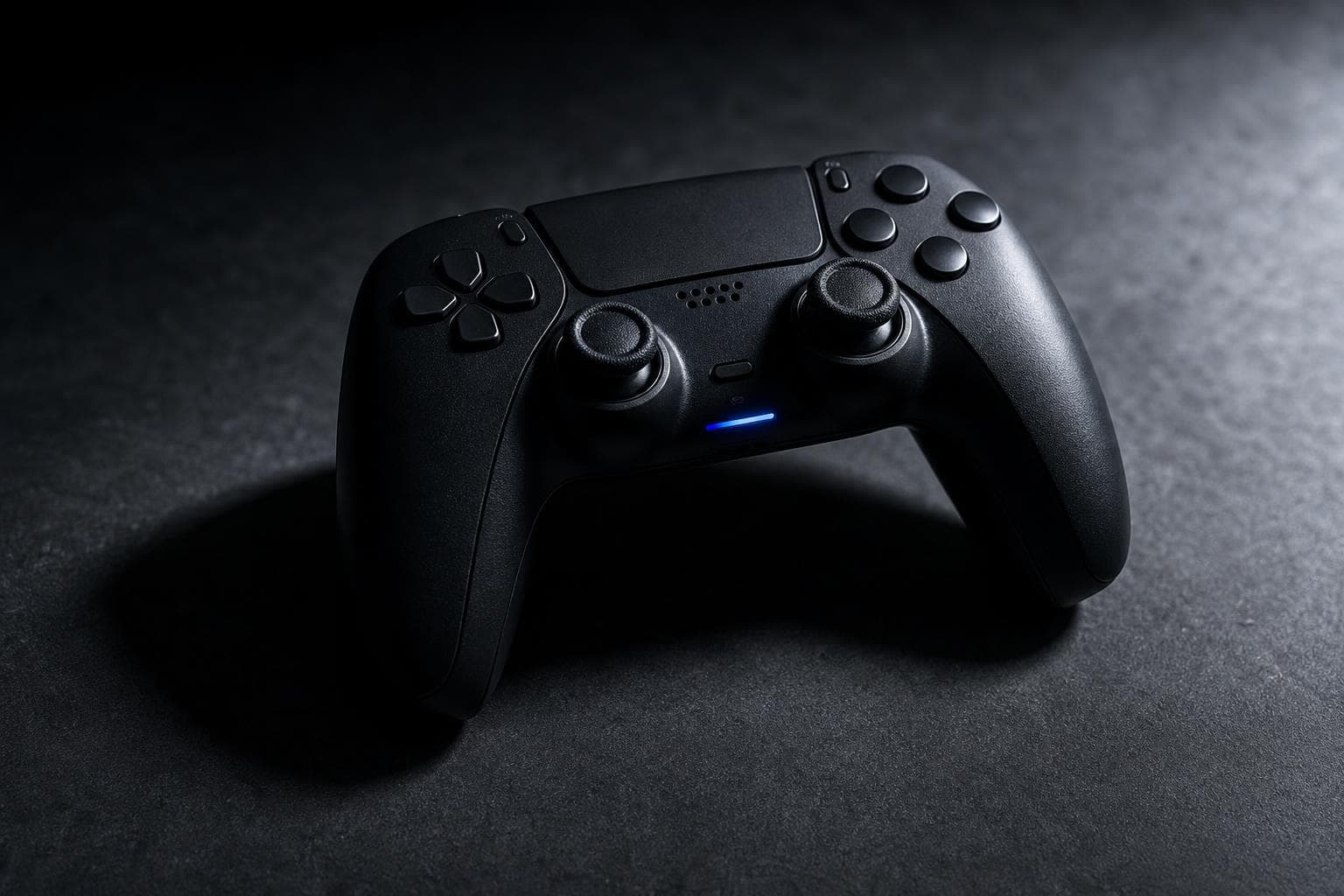

There's a moment The Verge's Jay Peters describes in his review of Valve's new Steam Controller that cuts right to the heart of why this thing matters: he pressed a back button out of habit, and the controller took a screenshot — exactly the shortcut he'd already programmed on his Steam Deck. No setup required. No re-mapping. It just worked.
That's not a small thing. That's the whole pitch.
The Problem It's Actually Solving
For years, PC gaming on the TV has been a compromise. You either played with a standard Xbox or PlayStation controller and lost access to the deep customization that makes Steam great, or you hauled your Steam Deck to the couch and squinted at a 7-inch screen. Neither answer was satisfying.
Valve's new Steam Controller — available May 4th for $99 — is a direct answer to that gap. It's a standalone gamepad designed to carry over every custom layout, button remap, and shortcut you've built on the Steam Deck, automatically, every time you launch a game. Peters spent more than two weeks with it and reports that layouts created on the Deck transfer immediately to the Controller and vice versa — and should even follow you to a friend's house.
That's a genuinely different value proposition than anything Sony or Microsoft offers. Those controllers are excellent, but they're closed systems. Valve is betting that the people who care most about Steam — and there are a lot of them — want their entire control setup to be portable and persistent.
The Good, the Bad, and the $99 Question
The case for buying one is straightforward if you're already in the Steam ecosystem. Peters says it's changed how he plays at home: he's now docking his Steam Deck to play on the TV rather than using it handheld, because the Controller feels even better in his hands. The customization, per his colleague Cameron Faulkner's deeper dive, goes beyond anything else on the market.
The case against is also real. Peters flags the trackpad placement as a genuine quibble — not a dealbreaker for him, but worth noting for anyone who relies on trackpads for PC-style cursor control. And at $99, it's priced above a standard Xbox wireless controller, which runs around $60. You're paying a meaningful premium for the Steam-native integration.
The honest framing: this is a controller built for a specific person. If you own a Steam Deck, play games through Steam on a PC connected to your TV, and have spent any time building custom control layouts, the $99 is easy to justify. If you're a casual gamer who plays whatever's on Game Pass, an Xbox controller is still the simpler, cheaper answer.
Not Ready for Primetime?
Not quite the right question here. This isn't a product with reliability concerns or confusing UX — it's a product with a narrow target audience. The setup friction is essentially zero for existing Steam Deck owners, which is the point. For everyone else, the friction is the entire Steam ecosystem, and that's a separate conversation.
What I'd watch for after launch: how the Controller handles games that weren't designed with Steam Input in mind, and whether the trackpad complaints from reviewers turn out to be a real ergonomic issue or just an adjustment period. Peters says his quibbles won't stop him from ordering one — but he's also someone who has spent years building Steam Deck muscle memory. Your mileage may vary.
Verdict: Buy — if you're a Steam Deck owner who plays on the TV. Wait — if you're curious about Steam gaming but haven't committed to the ecosystem. Skip — if you're primarily a console or Game Pass player.
What I'm Watching Next
Steam Controller real-world durability (mid-May): First-week impressions are almost always rosy. The more interesting question is how the trackpads and back buttons hold up after a month of heavy use. Watch for follow-up reports around mid-May.
Dell XPS 16 vs. MacBook Pro pricing pressure: Techaeris gave the 2026 XPS 16 an Editor's Choice, calling it the best Windows ultrabook for creators who want MacBook Pro-level battery life without the Apple tax. If that claim holds up across more reviewers, it's the most credible Windows challenger to the M-series MacBook in years. Worth watching as more hands-on reviews land.
OpenAI shutting down Sora: The Verge reported that OpenAI is discontinuing the Sora video generation tool and its associated Disney deal — a significant reversal for a product that was positioned as a flagship AI capability just months ago. What replaces it, and what it signals about OpenAI's product priorities, matters for anyone paying for ChatGPT.