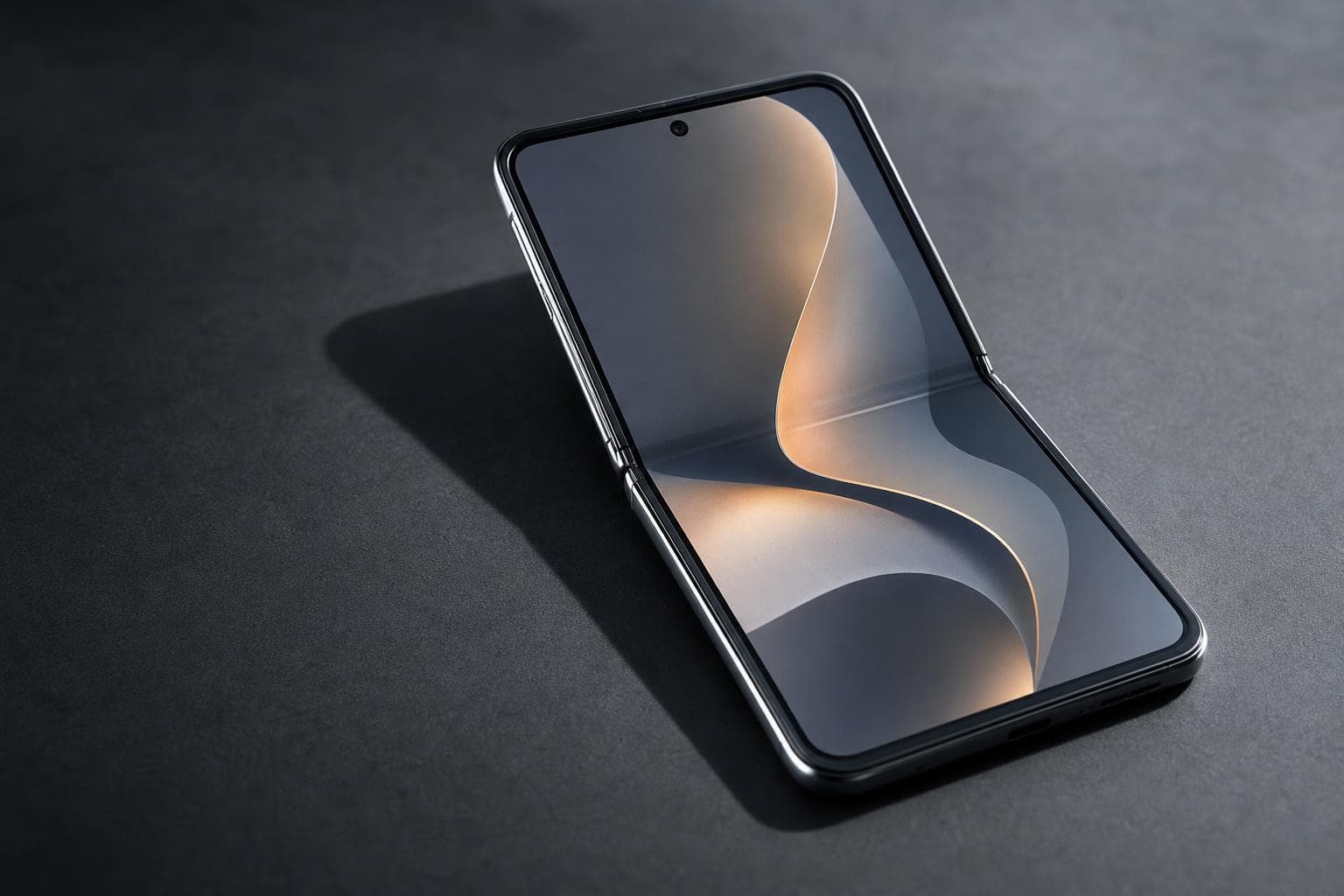

Motorola's first book-style foldable arrives with something its Samsung and Google rivals can't match: battery life that actually holds up under real use. That's not nothing. But at $1,900, "great battery" is a floor, not a ceiling — and The Verge's Allison Johnson found that the Razr Fold clears that floor and then struggles to climb much higher.
This is the phone that makes you feel the weight of every dollar you didn't spend on a Galaxy Z Fold.
The Battery Story Is Real — and It's the Best Thing Here
The Razr Fold packs a 6,000mAh silicon-carbon battery, and according to The Verge's hands-on, it genuinely rivals the best slab-style phones for endurance. Heavy use — gaming, working in documents on the inner screen — won't leave you hunting for a charger by evening. Samsung and Google's foldables, Johnson notes, are "much more likely to generate battery anxiety on a day of heavy use."
That's a meaningful differentiator in a category where large folding screens have historically punished battery life. The silicon-carbon chemistry lets Motorola pack more energy into the same physical space than traditional lithium-ion. The catch, flagged by The Verge, is that silicon-carbon batteries may degrade faster over time — which is likely why Apple, Samsung, and Google have been slower to adopt it. Motorola and parent company Lenovo appear less concerned. Whether that's confidence or calculated risk, you won't know for a year or two.
The design also earns genuine praise. Rounded corners, a soft-touch back panel, and thoughtful color options make this one of the better-looking phones on the market. Motorola has always had an eye for hardware aesthetics, and the Razr Fold doesn't break that streak.
Where $1,900 Starts to Hurt
Here's the problem: a great battery and a nice back panel do not a $1,900 phone make.
The Verge's review flags photo processing inconsistencies — the kind of thing that's forgivable on a mid-range device and quietly infuriating on a flagship. The multitasking interface is described as thoughtful, which is good, but "thoughtful" is a word reviewers reach for when something works in principle but doesn't quite sing in practice.
Then there's the bloatware. The Verge mentions it three times in the pros/cons summary — "bloatware bloatware bloatware" — which is about as clear a signal as a reviewer can send without filing a formal complaint. On a nearly two-thousand-dollar device, pre-loaded software clutter isn't a quirk. It's an insult.
The overall verdict from The Verge is blunt: "For a phone that gets a lot right, the Motorola Razr Fold is frustratingly hard to recommend." That's the kind of sentence that should appear in large print on the box.
Who This Is Actually For
The honest answer is: almost nobody, right now.
If you are deeply committed to the book-style foldable form factor, want the best battery life in that category, and can tolerate rough edges on a premium-priced device, the Razr Fold is worth a look. It's a first-generation product from Motorola in this specific format, and first-generation products at $1,900 are almost always a bet on potential rather than a reward for patience.
If you're cross-shopping against the Samsung Galaxy Z Fold 6 or Google's foldable, the battery advantage is real — but those devices have more mature software ecosystems, better camera systems, and fewer of the "dropped the act around the edges" moments Johnson describes.
If you're coming from a slab phone and wondering whether foldables are ready for normal people: they're getting there, but this isn't the device that closes the argument.
The Verdict: Wait
Wait. Not because the Razr Fold is bad — it isn't — but because it's a first attempt at a new form factor from Motorola, priced like a finished product when it reads like a promising draft. The battery technology is genuinely interesting and worth watching. If Motorola iterates on this the way it's refined the flip-style Razr line, version two could be a serious contender.
For now, the Razr Fold is a phone for people who want to be early. If that's you, go in with clear eyes about what "early" costs at $1,900.
What I'm Watching Next
Motorola Razr Fold battery longevity (6–12 months out). The silicon-carbon chemistry is the device's headline feature and its biggest open question. Real-world degradation data from early buyers will tell us whether Motorola's confidence is warranted — or whether the battery advantage erodes faster than the price tag.
DJI Osmo Pocket 4 US availability. The Verge's review called it an improvement over the Pocket 3 in nearly every respect — but it launched without US availability following DJI's ongoing regulatory complications. Worth tracking whether that changes, especially with a rumored dual-lens Pro version still on the horizon.
Dyson Spot + Scrub Ai in the real world. At $1,200 with a third-party motor inside, The Verge's Jennifer Pattison Tuohy found it to be Dyson's best robot yet — but a worse vacuum than its predecessors. Longer-term reliability reports will determine whether the mopping performance justifies the premium or whether this is a first-gen product that needs another pass.


