


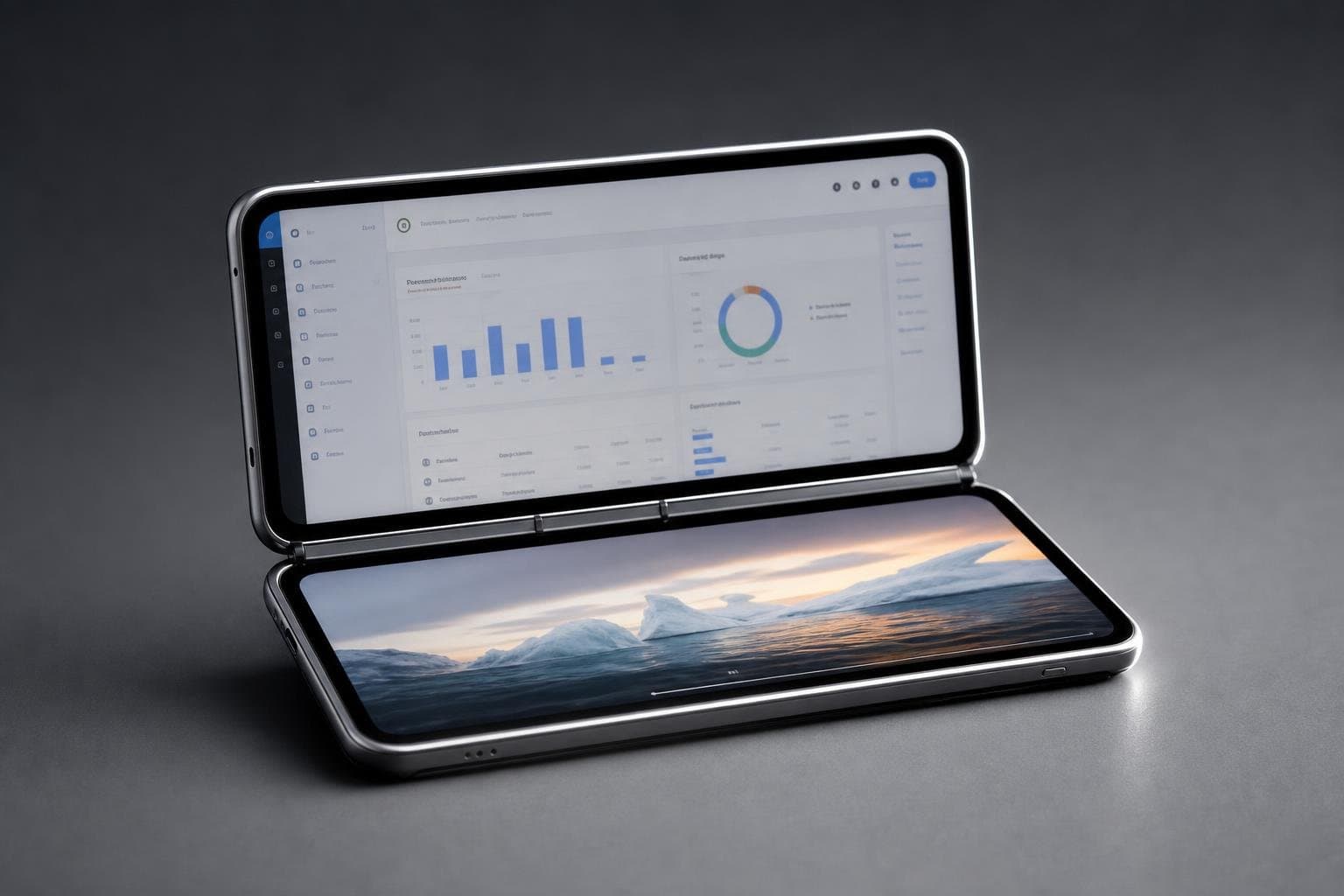

Apple spent a decade watching Samsung and Google fumble through folding phones before finally making one of its own. The hardware, by most accounts, justifies the wait. The software is a different story — and that gap is the whole review.
The Verge's hands-on testing calls the $1,999 iPhone Duo "a messy, expensive, good time," which is about as honest a verdict as you'll get for a first-generation foldable. The inner 7.6-inch display uses a nano-texture matte coating that reviewer Allison Johnson describes as a real step up from the glossy, slightly soft screens on competing foldables — the kind of detail that suggests Apple actually sweated the materials. But the Duo also broke from the tall-and-narrow shape every other foldable maker had settled on, going wide instead, like a passport. That decision reportedly rippled across the whole category: The Verge notes that rival phone makers shifted their own designs after rumors leaked about Apple's landscape-first approach, which means the Duo is already reshaping foldables it hasn't even outsold yet.
A Full Workday on the Duo Exposes the Seams
The more useful test came from WIRED, which tried to use the Duo as a complete replacement for both an iPhone and an iPad for an entire workday. The verdict: surprisingly workable, with real caveats. WIRED's trial run found that iOS doesn't recognize a Bluetooth mouse or trackpad out of the box — you have to dig into accessibility settings and turn on AssistiveTouch just to get a usable cursor. That's not a hidden power-user feature; that's a basic requirement for treating the Duo like a laptop replacement, buried where most people will never find it.
The multitasking restrictions are the bigger problem. Per WIRED, split-screen on the Duo locks you into an even 50-50 view — no dragging a divider to give one app more room, something Android foldables have allowed for years. Want to stack two apps vertically in portrait mode? You can't, unless one of them is a video app pinned to the top. And the review's honest aside — most third-party apps simply aren't optimized for the big screen yet, and probably won't be for weeks or months — is the quiet admission that buying a Duo today means beta-testing Apple's own ecosystem.
None of this means the Duo is a bad product. It means it's an early adopter's product, which is a different thing. The "app pairs" feature, which lets you pin two apps together so they reappear bundled in your Recents screen, is a genuinely clever bit of design — the sort of small convenience that makes a $2,000 purchase feel less abstract. It just can't carry the whole experience by itself.
Context Matters: This Isn't Apple's Only Foldable Dollar This Fall
It's worth placing the Duo against the rest of Apple's current phone lineup. The company's conventional flagship, the iPhone 18 Pro, got a $100 price hike this cycle and still landed near the top of independent buying guides — Tom's Guide and CNET both rank it among the best camera phones available, citing fast charging and strong low-light performance as the draws, alongside gripes about weight and a Camera Control button that still can't adjust aperture or shutter speed. That's the baseline a $1,999 foldable has to clear, and on camera quality alone, The Verge says the Duo's cameras are "just OK" — a notable step down from the phone it's supposed to outclass.
So who should actually buy this? People who genuinely need a tablet and a phone fused into one object, who don't mind a steeper learning curve, and who can tolerate software that's visibly a version behind the hardware it's running on. Everyone else is better served spending less — an iPhone 18 Pro plus a basic iPad, as WIRED's own cost comparison lays out, gets you most of the same capability for close to the same money, minus the fold.
What to watch: Apple's next event, reportedly centered on Mac and iPad hardware rather than iPhone software, won't fix the Duo's app-optimization gap directly — but a meaningful iOS update addressing multitasking flexibility would be the real signal that Apple intends to make foldables a mainstream product rather than a showcase piece. Until that update lands, this is a phone for people who like living in the future a little early, bugs included.