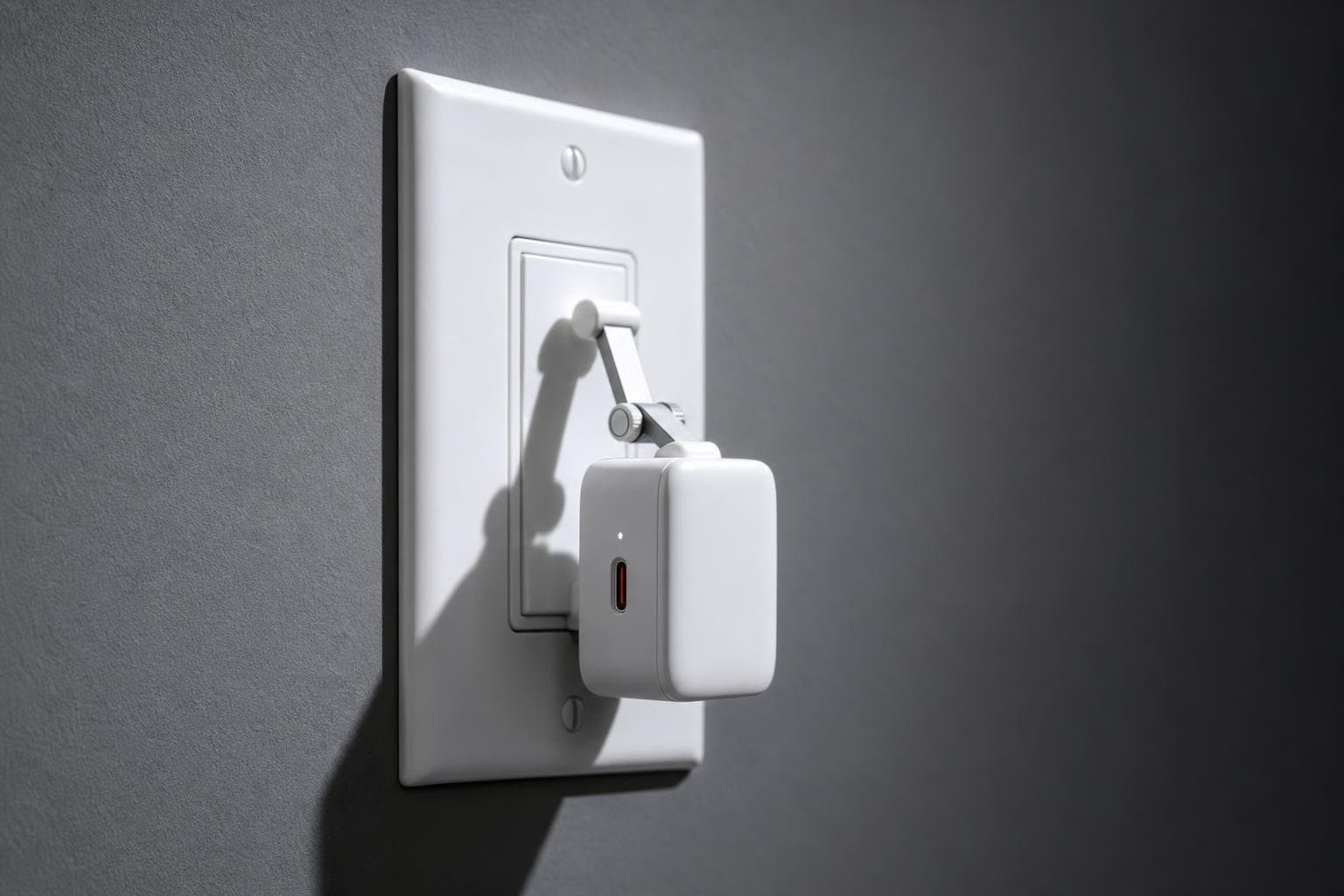

Most smart-home devices solve problems you didn't know you had. The SwitchBot Bot Rechargeable solves one you definitely do.
The pitch is almost embarrassingly simple: a small robotic arm that sticks near any physical switch or button and presses it for you, on command or on a schedule. No rewiring. No electrician. No replacing your perfectly functional light switches with $60 smart ones. At $33.99, it's the rare smart-home gadget that costs less than a dinner out and doesn't require you to rebuild your house around it.
The Verge's Sheena Vasani put it to a test that's more relatable than any lab benchmark: she used it to turn on her kitchen light before entering a room infested with cockroaches. That's not a joke. That's a real use case, and it worked. If a gadget can earn its place in someone's home by solving a problem that specific and that human, it's doing something right.
What It Does — and What It Doesn't
The Bot Rechargeable is mechanically identical to the original SwitchBot Bot, which has been around for years. The only meaningful change is the power source: USB-C rechargeable battery instead of disposables. That's a real quality-of-life improvement — no hunting for CR2 batteries, no wondering when it's going to die. You just plug it in when it needs a charge.
The tradeoff is battery life. The original model advertises up to 600 days on a single battery if you're only triggering it once a day. The rechargeable version drops that to about six months under the same conditions — a figure The Verge confirmed in hands-on testing. That's still a long time between charges — longer than most people go between thinking about their smart-home devices at all — but it's a meaningful regression if you're using it heavily or in a hard-to-reach spot.
Out of the box, you control it via Bluetooth from your phone, which limits range to roughly within your home. If you want voice control through Alexa or Google Assistant, or the ability to trigger it remotely from outside your house, you need a SwitchBot Hub — a separate purchase. That's a common upsell pattern in the smart-home category, and it's worth knowing upfront. The Bot alone is a useful gadget; the Hub is what makes it genuinely smart-home material.
Installation is where things get fiddly. The arm has to be positioned precisely to make clean contact with whatever it's pressing, and Vasani notes that her simple use case required more trial and error than expected. SwitchBot includes a spare adhesive pad in the box — a small but telling detail that suggests the company knows first-time placement doesn't always go perfectly. If you're mounting it on a standard rocker switch or a coffee maker button, plan for a few minutes of adjustment.
The Bigger Idea Here
What makes the Bot Rechargeable interesting isn't the device itself — it's what it represents as an approach to smart-home adoption.
The dominant model for years has been replacement: swap your dumb switch for a smart one, your dumb bulb for a smart one, your dumb lock for a smart one. That works if you own your home, have some comfort with wiring, and don't mind the upfront cost. For renters, for people in older homes with non-standard switches, or for anyone who just wants one specific thing to work smarter without a weekend project, it's a non-starter.
The Bot sidesteps all of that. It's an overlay, not a replacement. It makes the thing you already have respond to your phone. That's a fundamentally different philosophy, and for a lot of people it's the more honest path into home automation. Tech Advisor's current best-phones roundup is a useful reminder of just how capable the phone in your pocket already is — the Bot is essentially a bridge that lets all of that computing power reach the physical switches in your home that predate the smartphone era entirely.
The category has gotten more interesting lately. Wirecutter's Prime Day coverage noted that tech prices broadly are rising in 2026, driven by AI-related component shortages — which makes the Bot's sub-$35 price point stand out more than it might have a year ago. When flagship phones cost over a thousand dollars and even mid-range laptops are creeping up, a gadget that delivers genuine utility for the price of a streaming month is worth paying attention to.
Meanwhile, the broader smart-home market keeps moving upmarket. Forbes's consumer tech coverage this week highlights products like iRobot's new $399 cordless floor cleaner and premium Sony headphone collections — a reminder that the default trajectory of consumer tech is toward higher prices and more complexity. The Bot is a useful counterexample: a device that got more convenient (rechargeable battery) without getting more expensive.
Who Should Buy It
If you have a switch, button, or appliance that you wish you could trigger without being in the room — a coffee maker you want ready before you stumble into the kitchen, a lamp on an inconvenient wall, a garage door opener that predates smart connectivity — the Bot Rechargeable is a low-risk experiment. The rechargeable model is the right version to buy unless you're putting it somewhere truly inaccessible and want to minimize maintenance; in that case, the original's longer battery life might justify the disposable-battery hassle.
If you're already invested in the SwitchBot ecosystem, this is an easy add. If you're not, budget for a Hub if you want the full smart-home experience — the Bot alone is useful, but it's more useful with one. And if you're an Android user curious about what else Google is quietly improving in the background, 9to5Google's July system update notes are a good reminder that the platform underpinning all these connected devices keeps getting more capable, even when the changes are invisible.
The smart-home category has spent years promising to transform your house. Sometimes the most useful thing it can do is just flip a light switch before the roaches scatter.


