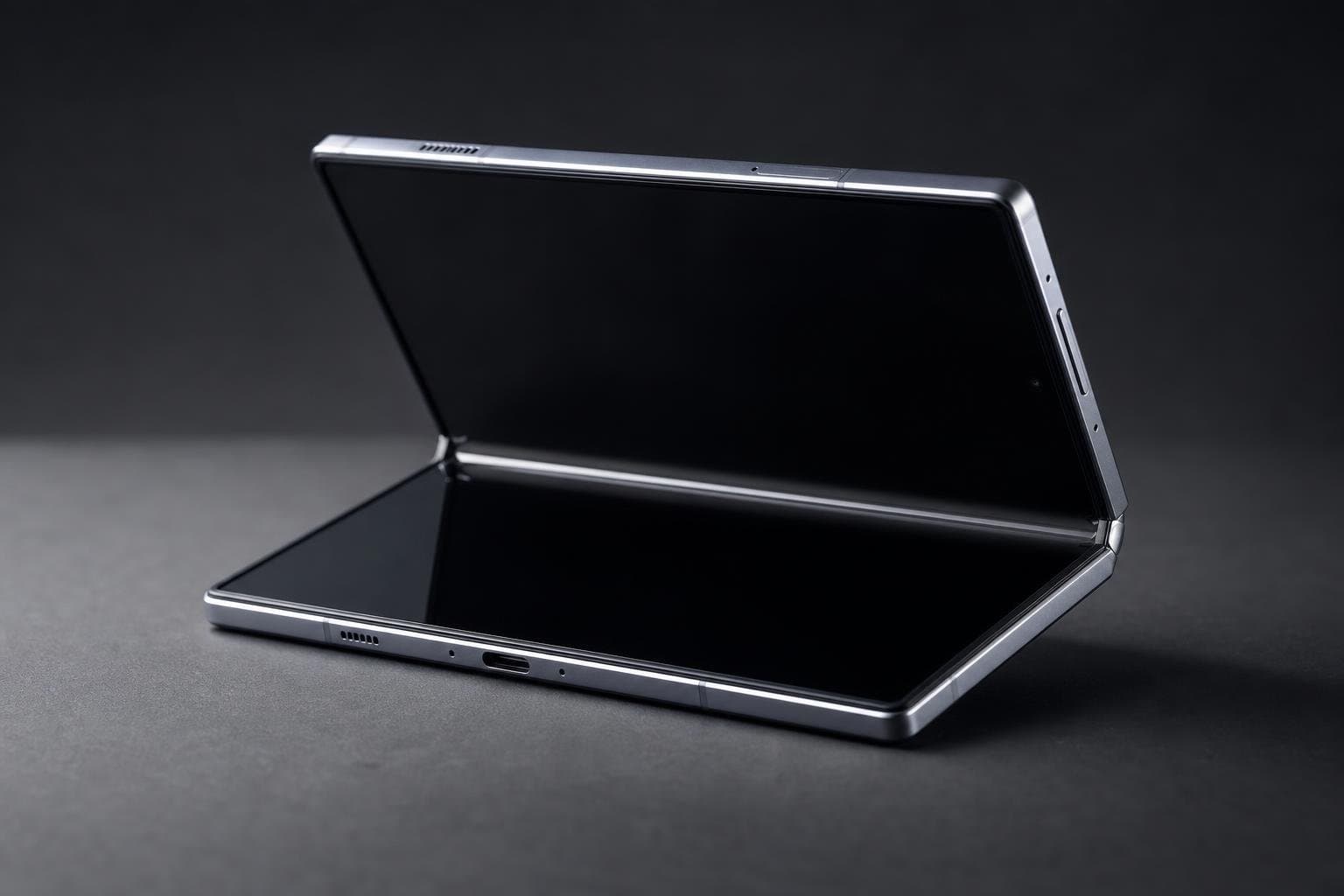

Something strange is happening in the foldable phone market. After years of tall, narrow book-style foldables that felt like holding a legal pad, Samsung has gone wide. The new Galaxy Z Fold 8 ships with a squat 4:3 aspect ratio — passport-sized, palm-filling — and the early verdict from hands-on reviewers is that it's genuinely delightful to use. CNET's reviewer, who spent a week with the device at Samsung's Galaxy Unpacked event in London, called it "one of the most enjoyable devices I've ever used." That's not a throwaway line from someone easily impressed.
But delight has a price. And the Z Fold 8's price is the thing that keeps this phone from being a recommendation for most people reading this newsletter.
The Design Shift Is Real, and It Matters
Previous Galaxy Z Fold phones were tall and narrow when folded — essentially a phone-shaped phone that opened into a tablet. The Z Fold 8 flips that logic. Its 4:3 aspect ratio when unfolded means it's optimized for horizontal content — video, browsing, multitasking — in a way that better reflects how people actually use screens. CNET's review notes that the compact build felt novel even to passersby on the street, which is either a sign of great design or a sign that tech reviewers travel in packs (both things can be true).
This wider format follows a path that Microsoft's Surface Duo and the original Google Pixel Fold started. The Verge's best-phones roundup lists the Google Pixel Pro 10 Fold as a competing option in the premium foldable tier — confirmation that the category is getting genuinely competitive — but the Z Fold 8 appears to be the one generating the most enthusiasm from reviewers who've actually held it.
The design also matters because Apple is reportedly preparing a passport-sized foldable iPhone for a fall debut, per CNET's coverage. If that's accurate, Samsung is essentially setting the template that Apple will be measured against. That's a meaningful position to occupy.
The $1,900 Question
Here's where I have to be the boring one at the party. The Z Fold 8 starts at $1,900 for the 256GB model, with a Z Fold 8 Ultra at $2,100, and it hits store shelves August 7. For context, The Verge's phone guide lists a flagship iPhone 16 Pro at $1,099 and a Pixel 9 Pro at $799 — both excellent phones that do nearly everything most people need.
The honest question for any foldable at this price isn't "is it good?" — it clearly is. The question is: what does the folding form factor actually do for your daily life that justifies the premium? For some people, the answer is real. If you travel constantly, consume a lot of video, or genuinely use your phone as a productivity tool with split-screen apps, the larger unfolded display delivers something a candy-bar phone can't. But for the majority of people who mostly scroll, text, and take photos, the extra $800–$1,100 over a flagship alternative buys a form factor novelty that will feel less novel in six months.
There's also the durability question that every foldable carries. CNET's reviewer noted the phone still has "some of the pain points of today's foldables" — a phrase that's doing some work without being specific, but foldable hinges and crease visibility remain real considerations that hands-on reviewers consistently flag. That's worth weighing alongside the enthusiasm. Meanwhile, the broader consumer-tech moment is one of escalating device prices across the board — Snap's new AR Specs preordered at $2,195, and even niche AI gadgets like the Stream smart ring from Sandbar are entering a market where consumers are being asked to pay premium prices for hardware that's still finding its footing. The Z Fold 8 is the most polished of these bets — but it's still a bet.
What to Actually Do With This Information
If you're already a foldable convert — you owned a Z Fold 6 or 7 and loved it — the Z Fold 8's redesign sounds like a meaningful upgrade. The shift to a wider aspect ratio is a genuine rethinking of the form, not an incremental spec bump. CNET's reviewer gave last year's Z Fold 7 an Editors' Choice Award and still found the Z Fold 8 a step forward. That's a real signal.
If you're foldable-curious but haven't committed, my honest advice is to wait. Not because the Z Fold 8 is bad — it sounds excellent — but because the Apple foldable rumored for this fall will either be worth buying or will push Samsung to compete on price. Either outcome is good for you. Buying a $1,900 phone two months before a major competitor enters the market is a choice you make with eyes open. And it's worth noting that we're in what The Verge describes as "more of a software era than a hardware innovation cycle" — meaning the gap between this year's flagship and last year's is narrower than it's ever been. Patience is rarely punished in this market.
And if you're a normal person who just wants a great phone that works reliably every day? The Z Fold 8 is a fascinating object. It's also not for you yet. The category is maturing fast, but "most enjoyable device I've ever used" and "most sensible device for most people" are still two different sentences.


