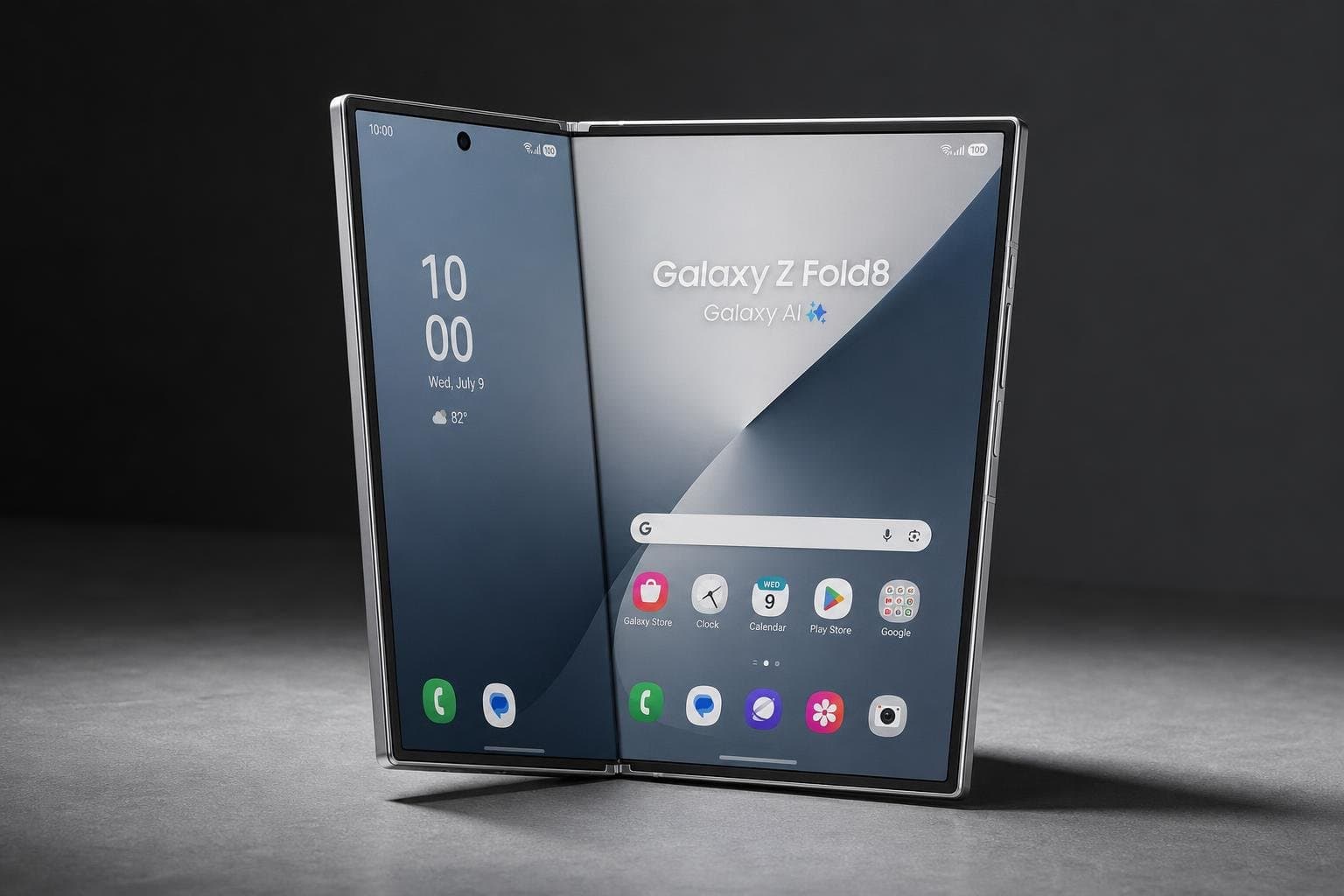

Samsung made a quiet but significant decision this year: instead of one flagship foldable, it built two. The Galaxy Z Fold 8 and the Galaxy Z Fold 8 Ultra share a family name and a price tier, but they're solving different problems — and based on the hands-on reviews that have landed over the past week, only one of them is solving its problem well.
The answer might surprise you. It's not the one with "Ultra" in the name.
The Base Model Steals the Show
The Z Fold 8's biggest change is dimensional. Samsung made it shorter and wider, giving the cover screen a 10:16 aspect ratio that feels like a throwback to pre-skinny-phone proportions — closer to a passport than a candy bar. That sounds like a small tweak. In practice, it changes the whole feel of the device: you can actually use the cover screen for maps or messages without feeling like you're squinting at a receipt.
The bigger payoff is inside. The main display is now a 7.6-inch panel with a 4:3 aspect ratio, which dramatically reduces the letterboxing problem that has plagued foldables since the beginning. Widescreen video looks better. Older 4:3 content looks genuinely great. Landscape gaming — the use case Samsung seems to be quietly targeting — is described as glorious. The phone also brings brilliant anti-glare displays, strong battery life, and improved charging speeds to the table.
There are real tradeoffs. The Z Fold 8 drops the dedicated zoom camera, and it requires a case or add-ons to use magnetic accessories — neither of which is a dealbreaker, but both are worth knowing before you spend foldable money. And if you're a heavy multitasker who runs two full apps side by side, the wider-but-shorter form factor means less vertical real estate than the Ultra's larger panel.
Still: for most people who want a foldable as a content device — video, gaming, reading, casual browsing — the base Z Fold 8 is the more interesting phone. The foldable category has spent years cycling through design trends in search of something that actually sticks with mainstream buyers; a wider cover screen that you'd willingly use every day is a more meaningful step forward than it sounds.
The Ultra Has a Naming Problem
The Z Fold 8 Ultra is a good phone. That's also its problem.
It keeps the same dimensions and weight as its predecessor — 8.9mm thick when closed, 7.58 ounces — and the same IP48 rating. The interior display gets a modest resolution bump. The processor is class-leading. Battery life is described as much longer. There are subtle refinements: tapered edges that make the phone easier to open, a new titanium alloy layer under the flexible display that reduces the appearance of the crease.
These are real improvements. But "refined version of an already great device" is a hard sell when the word "Ultra" is in the name and the base model just got a genuinely new design. The Ultra still lacks a built-in magnetic ring for Qi2 accessories — a notable omission at this price point. And its design is, by Samsung's own implicit admission, largely unchanged from last year.
The Ultra makes the most sense for power users who live in split-screen mode and need that extra vertical height. Its 8-inch main panel gives you more room to run two full-size apps simultaneously, which matters if you're actually using a foldable as a productivity device rather than a media one. But for everyone else, paying more for the Ultra means paying a premium for incremental refinement over a design that the base model just leapfrogged in meaningful ways.
What This Means If You're Considering a Foldable
The foldable category has spent years trying to justify its existence. The pitch — a phone that becomes a tablet — has always been complicated by the reality that the cover screens were too narrow to use comfortably and the inner screens were too letterboxed to watch anything on properly.
The Z Fold 8's wider design is the first credible answer to the cover screen problem I've seen from a major manufacturer. It doesn't fix everything — foldables are still expensive, still heavier than slabs, still require some ecosystem adjustment. But it suggests the category is finally iterating toward something genuinely useful for normal people rather than just impressive at trade shows. For context on how much the premium device market has shifted toward subscription-style ownership, Apple's newly launched Upgrade leasing program — which starts iPhone at $17.99 per month — is a reminder that manufacturers across the board are rethinking how people pay for expensive hardware. Samsung hasn't announced an equivalent, but the pressure to make high-end devices feel more accessible is real.
If you're foldable-curious and have been waiting for the right moment, the base Z Fold 8 is worth a serious look. If you're shopping for premium wireless audio to pair with it, CNET's current headphone rankings are a reasonable starting point for what works well with Android. And if you're an existing Fold 7 Ultra owner weighing an upgrade, the Ultra's refinements are real but probably not compelling enough to justify the switch.
The Ultra will find its buyers. But this year, Samsung's most interesting phone doesn't have "Ultra" anywhere on the box.


