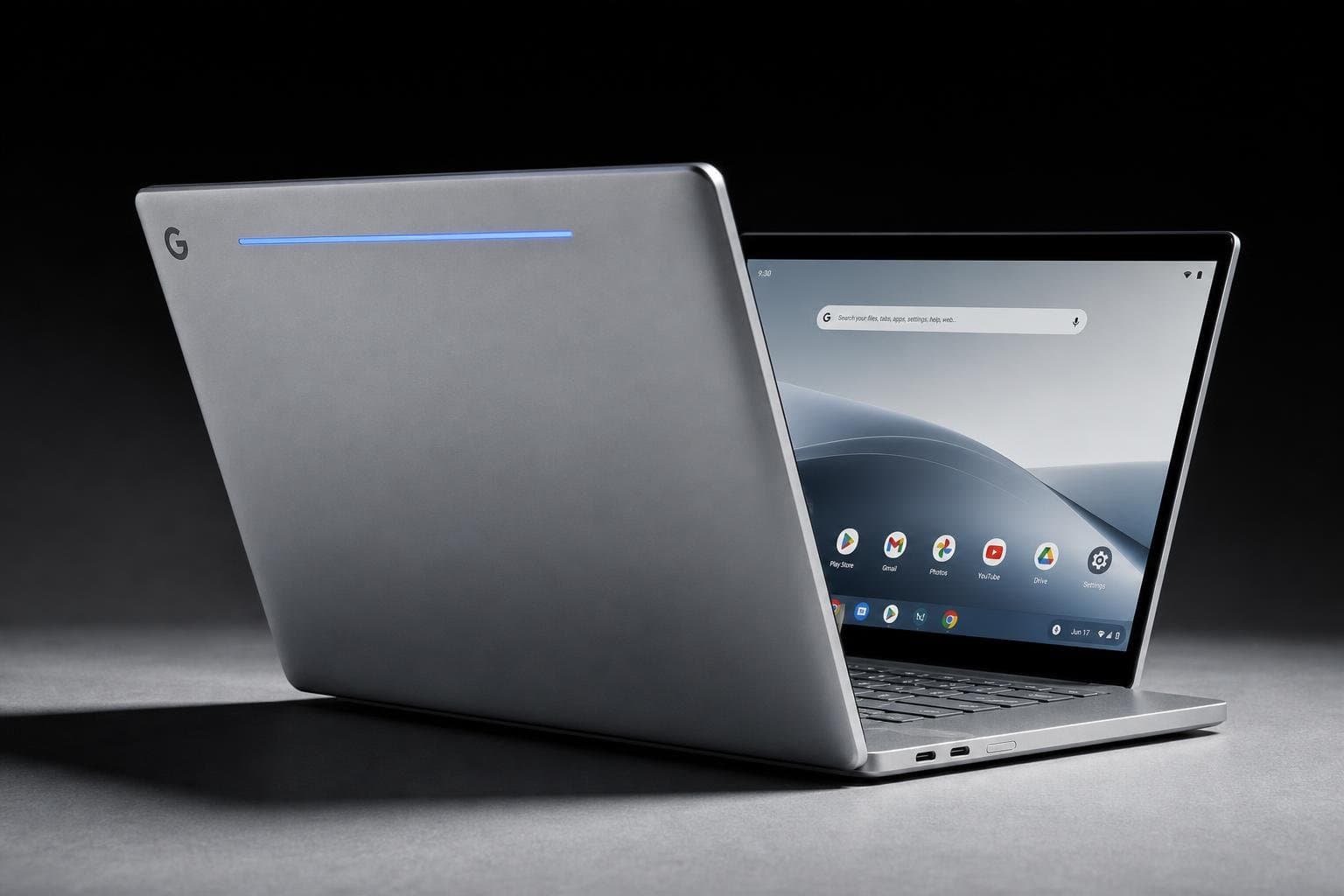

Google has tried to own the laptop market twice before. The first attempt — netbooks running Chrome OS — found its audience in classrooms and budget buyers, but never cracked the mainstream. The second attempt, the gorgeous-but-overpriced Chromebook Pixel, was more of a proof-of-concept than a real product line. Now there's a third swing: Googlebooks, Android-powered laptops starting at $899, made in partnership with Acer, ASUS, Dell, HP, and Lenovo. Pre-orders are live today, with launch set for October 4.
The honest question isn't whether Google can build a nice laptop. It's whether Android on a laptop is finally ready for normal people to use as their only computer — and whether the pricing makes any sense.
The Hardware Story Is Legitimately Good
Let's give credit where it's due. These are not Chromebooks with a different logo. According to Engadget's hands-on impressions from the press event, the five launch models share a set of specs that would have been considered premium anywhere: OLED screens, all-metal builds, at least 16GB of RAM, and fanless designs running either Qualcomm's Snapdragon X Elite or Intel's Core Ultra 5/7 Series 3 chips — both with NPUs rated for 45 TOPS of on-device AI performance.
Battery life targets are also serious: Google claims up to 14 hours of video playback or 16 hours of web browsing across the lineup, though real-world numbers will matter more than rated specs. There's also the Glowbar — a light strip on the lid that animates during boot and shows battery level on a swipe. It's a small, genuinely charming touch that Engadget compares to the original Chromebook Pixel's Glowbar and the notification array on the Pixel 11 Pro. Whimsical? Yes. Necessary? No. But it gives these machines a shared identity, which Chromebooks never really had.
The starting prices tell a different story. The Acer Googlebook 14 comes in at $899. The Dell XPS Googlebook starts at $999. The HP and Lenovo models open at $1,299. Most of the lineup, in other words, is firmly in MacBook Air territory.
The Software Is Where This Gets Complicated
Here's the problem Google hasn't fully solved: Android apps were designed for small touchscreens and pocket-sized interactions. Running them on a 14- or 15-inch display with a keyboard and trackpad has always produced an experience that feels like a compromise — apps that don't resize cleanly, touch targets that don't translate to cursor-based navigation, and a general sense of using tools that were built for a different context.
Google has been working on this for years, and Googlebooks presumably represent the most polished version of Android-on-a-laptop the company has ever shipped. But we don't have deep, sustained reviews yet — Engadget is explicit that their time with the devices was limited to a press event, with full testing to come. The gap between "impressive at a controlled event" and "reliable enough for your actual workday" is where laptops often fall apart.
Ars Technica notes that Google is positioning these as "real" computers with powerful development tools and on-device apps — the implication being that this is a genuine macOS or Windows alternative. That's a tall claim. The developer tools might be there. The app ecosystem maturity is still the unresolved question.
Who This Is Actually For Right Now
The honest answer, before real-world reviews land, is that this is probably not the right move for most people in week one.
If you're already deep in Google's ecosystem — Android phone, Google Workspace, Drive, Photos — the integration pitch is real. A laptop that syncs seamlessly with your phone is genuinely useful, and that's the scenario where a Googlebook is likely to shine. CNET's current laptop rankings still put the MacBook Air at the top for most users, and at comparable pricing, you're betting on Android-on-a-laptop delivering an experience that's proven it can hold up day-to-day. That proof doesn't exist yet.
For Windows users who don't want to pay Apple prices, alternatives like the HP OmniBook Ultra 14 — which CNET awarded an Editors' Choice for its design, performance, and battery life — represent a known quantity. The Googlebook HP model starts at $1,299. That's the same HP, charging the same or more, for a platform that has far less of a track record at this screen size.
The October 4 launch is close enough that proper long-form reviews should arrive quickly. Those reviews — specifically how the app experience holds up for browser-heavy work, video calls, document editing, and the kinds of things regular people actually do on laptops — will determine whether Googlebooks are genuinely disruptive or another promising Google product that needed another year in the oven.
Watch for those first full reviews carefully. Pay less attention to benchmark numbers and more to the honest section where reviewers describe the moments that frustrated them.


