


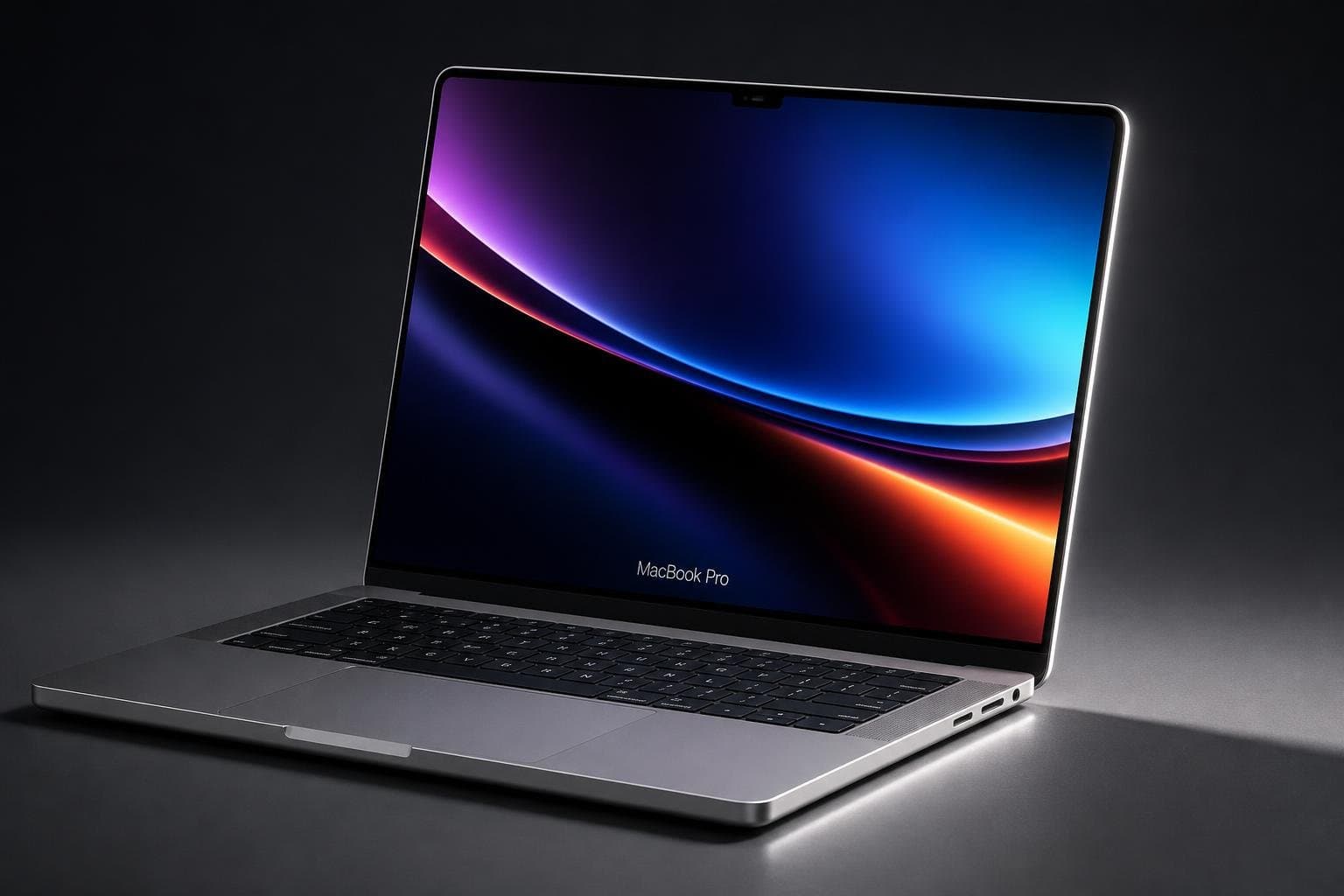

Steve Jobs spent years telling people touchscreen laptops were a bad idea — your arm gets tired, your screen gets smudged, and a trackpad does the job better. Apple just spent years proving him half-wrong, unveiling a touchscreen MacBook Pro with an OLED display as the finale of its three-day "Pro and Tell" event, alongside a new iPad mini and an M6 iMac (Tom's Guide). The hardware is real, the screen is apparently gorgeous, and the question for most people isn't whether Apple can build a good touchscreen laptop. It's whether you should pay a premium for one.
The Screen Is the Story — and Also the Whole Story
Early hands-on impressions from Ars Technica and CNET agree on one thing: the OLED panel is the reason to care about this laptop at all. Ars Technica's reviewer, after a brief session on the show floor, called the new display "outstanding" and noted the laptop felt lighter than the current 14-inch M1 Max model, with a smaller, less intrusive Dynamic Island cutout than you'd see on an iPhone screen (Ars Technica). CNET's hands-on was more measured about the actual touch functionality, writing that Apple "seems out of touch for the touchscreen" even as it praised the screen quality and a broader design overhaul that includes a 3-pound chassis for the 14-inch model, down from 3.4 pounds, and improved speakers with Dolby Atmos support (CNET).
That gap between the two reviews tells you most of what you need to know. Everyone likes the panel. Nobody, yet, has found a compelling reason to actually touch it. Ars Technica's reviewer poked at the screen during the demo and described doing things like dragging files or pinching to zoom on maps — all tasks you could already do with trackpad gestures. Notably, there's no Apple Pencil support, which rules out the one use case — drawing or annotating — where a touchscreen laptop would genuinely open new doors (Ars Technica).
The Price Tag Does the Talking
Here's the part that should give normal buyers pause. According to CNET, the touchscreen OLED models carry a $400 premium over the standard MacBook Pro lineup: the 14-inch M5 Pro configuration starts at $2,899 versus $2,499 for the non-touch version, and the M5 Max model starts at $4,499 versus $4,099. Push for 16TB of storage and you're locked into the M5 Max tier at a minimum of $11,499 with only 36GB of memory (CNET). Preorders opened this week, with shipping expected to start November 6 (CNET).
I've written before about Apple's pattern of charging a premium for its first-generation hardware swings — the iPhone Duo launched at $1,999 and up with real rough edges to match its price (Ars Technica). The touchscreen MacBook Pro fits the same mold: technically accomplished, priced like it knows it, and short on evidence that the headline feature changes how you'll actually work.
Who Should Buy This, and Who Shouldn't
If you're a video editor or photographer who lives in Final Cut or Lightroom and craves the best screen Apple has ever put in a laptop, the OLED panel alone might justify the jump — CNET notes the display's gamut now covers Adobe RGB and more, a real step up from even the excellent mini-LED screens on the current Liquid Retina XDR MacBook Pros (CNET).
Everyone else should look elsewhere. Wired's longtime laptop reviewer still points to the standard MacBook Air, with its M5 chip, as the computer to recommend to friends and family — it handles everyday computing and even occasional creative work without the premium pricing, even after a recent $200 price bump to $1,299 (Wired). That's a third of the cost of the entry-level touchscreen MacBook Pro, for a machine that will cover what almost anyone actually does with a laptop.
What to Watch Next
Full reviews of the touchscreen MacBook Pro should land once reviewers get units ahead of the November 6 shipping date, and that's when we'll learn whether the touch layer earns a place in daily workflows rather than remaining a novelty for showroom demos. Until then, treat this as a laptop built for a narrow slice of professionals with deep pockets — and treat the marketing glow around "the first touchscreen Mac" with the skepticism Steve Jobs would have wanted.