


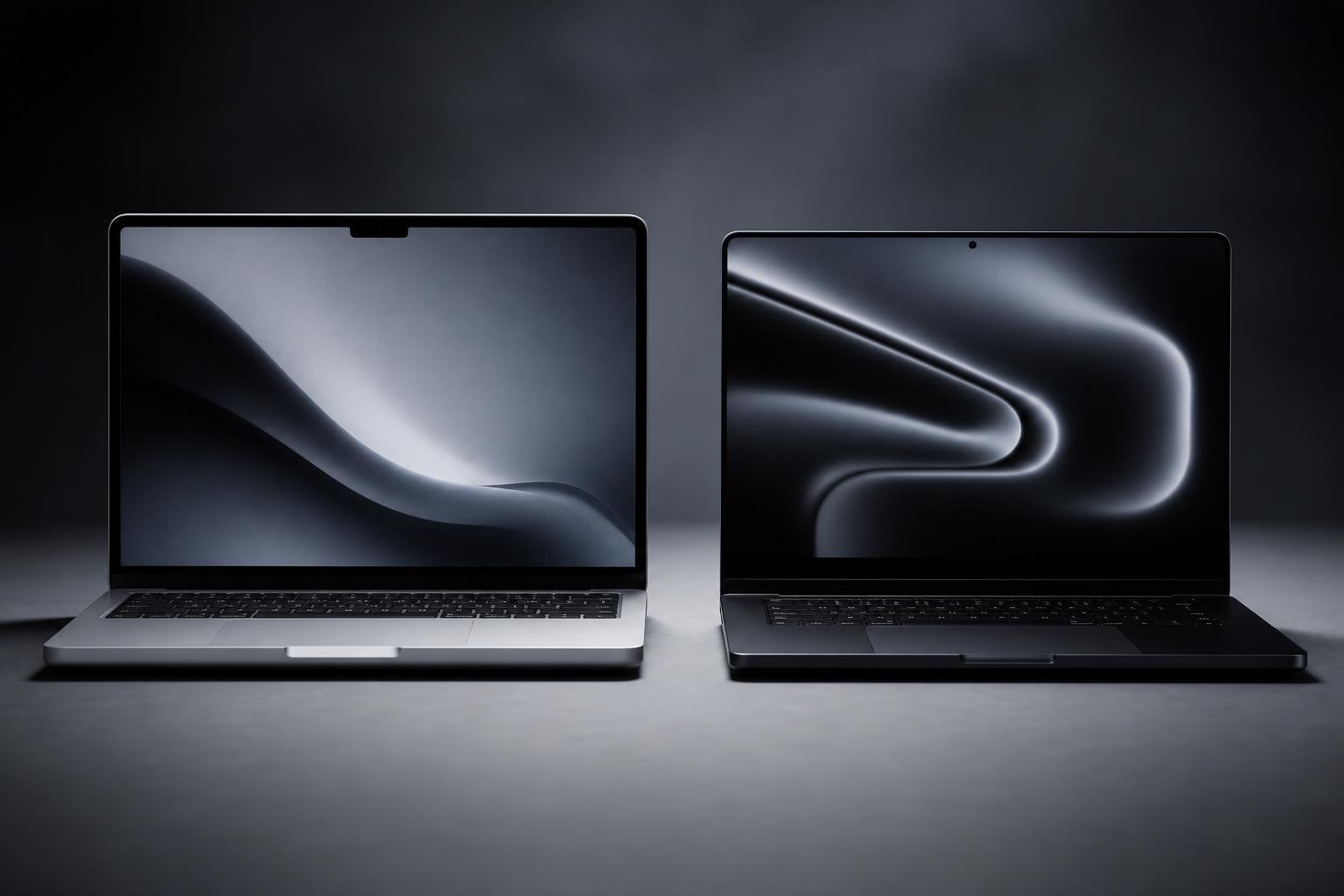

Buy the entry-level MacBook Pro today and you'll pay $1,999 for a laptop with the same basic design Apple has used since 2021. No OLED screen. No touchscreen. No Dynamic Island. No glowing logo. Buy the laptop sitting next to it on the same shelf, and you'll pay at least $2,899 for all of that — plus a thinner body and almost half a pound less weight, according to The Verge. Same name. Same shelf. Two very different machines. That's worth untangling, because the gap tells you more about where Apple's money is going than any keynote slide did.
The Expensive One Really Is Better
I wrote last month about the touchscreen MacBook Pro's launch and concluded the hardware was ready even if the touch feature itself was a minor addition. The reviews that have piled in since confirm the bigger parts of that verdict. Both The Verge and WIRED, testing the new "PROLED XDR" model, landed on genuine enthusiasm for the screen technology itself rather than the touch gimmick riding along with it. WIRED called it the biggest change to the MacBook Pro since 2021, pointing to a punch-hole camera replacing the much-maligned notch, a lighter 16-inch chassis down to about 4 pounds, and a new Dynamic Island borrowed from the iPhone. The Verge's review agreed the laptop is "lighter, thinner, and all-around better," and found the touchscreen itself almost beside the point — something you forget is there most of the week, per The Verge.
None of that comes cheap. A fully configured 16-inch model with the OLED screen, 128GB of memory, and 16TB of storage runs $14,549, and Engadget's breakdown of that invoice is the most useful thing in this week's coverage: storage and memory alone account for roughly 62 percent of that total, with the 16TB SSD upgrade contributing $7,000 by itself. Strip those add-ons away and the OLED premium over an equivalently specced non-touch 16-inch Pro is just $400, according to Engadget. That's a genuinely useful number for anyone trying to figure out what they're actually paying for the new screen versus what they're paying for storage that most people don't need.
The Cheap One Didn't Get the Memo
The problem is what happens below that line. Ars Technica's review of the base M6 MacBook Pro — the one most people searching "MacBook Pro" will actually click "buy" on — is blunt about what $1,999 gets you now: an updated chip and not much else. No OLED panel, no touchscreen, no Dynamic Island, no weight reduction, no glowing logo, according to Ars Technica. It's the same industrial design Apple introduced in 2021, now selling for $700 more than the base M1 MacBook Pro did in 2020 and $400 more than last year's M5 model, per the same review. Ars notes this entry-level machine still occupies an awkward perch between the MacBook Air and the real Pro lineup — not quite consumer laptop, not quite flagship — and this year that gap has widened rather than closed.
What This Means If You're Shopping Right Now
I'd argue Apple has effectively split the MacBook Pro name into two different products wearing the same badge, and that's a problem for ordinary shoppers who assume "Pro" means one consistent tier of hardware. If you need the screen — genuinely need OLED's contrast and brightness for photo or video work, or you've decided you want a laptop touchscreen for its own sake — the premium model is a legitimately strong laptop this year, and the reviews back that up unanimously. But if you're buying the base $1,999 model expecting "this year's Pro," know you're buying last year's design with a faster chip inside it. That's not a bad laptop. It's just not the laptop the marketing photos are selling.
The practical move: decide which bucket you're actually in before you shop, and don't let the shared "MacBook Pro" name imply you're choosing between trim levels. You're choosing between two different laptops. Apple's next move worth watching is whether this split becomes permanent architecture — a cheap Pro and an expensive Pro, indefinitely — or whether OLED eventually trickles down the way Retina displays and SSDs once did.