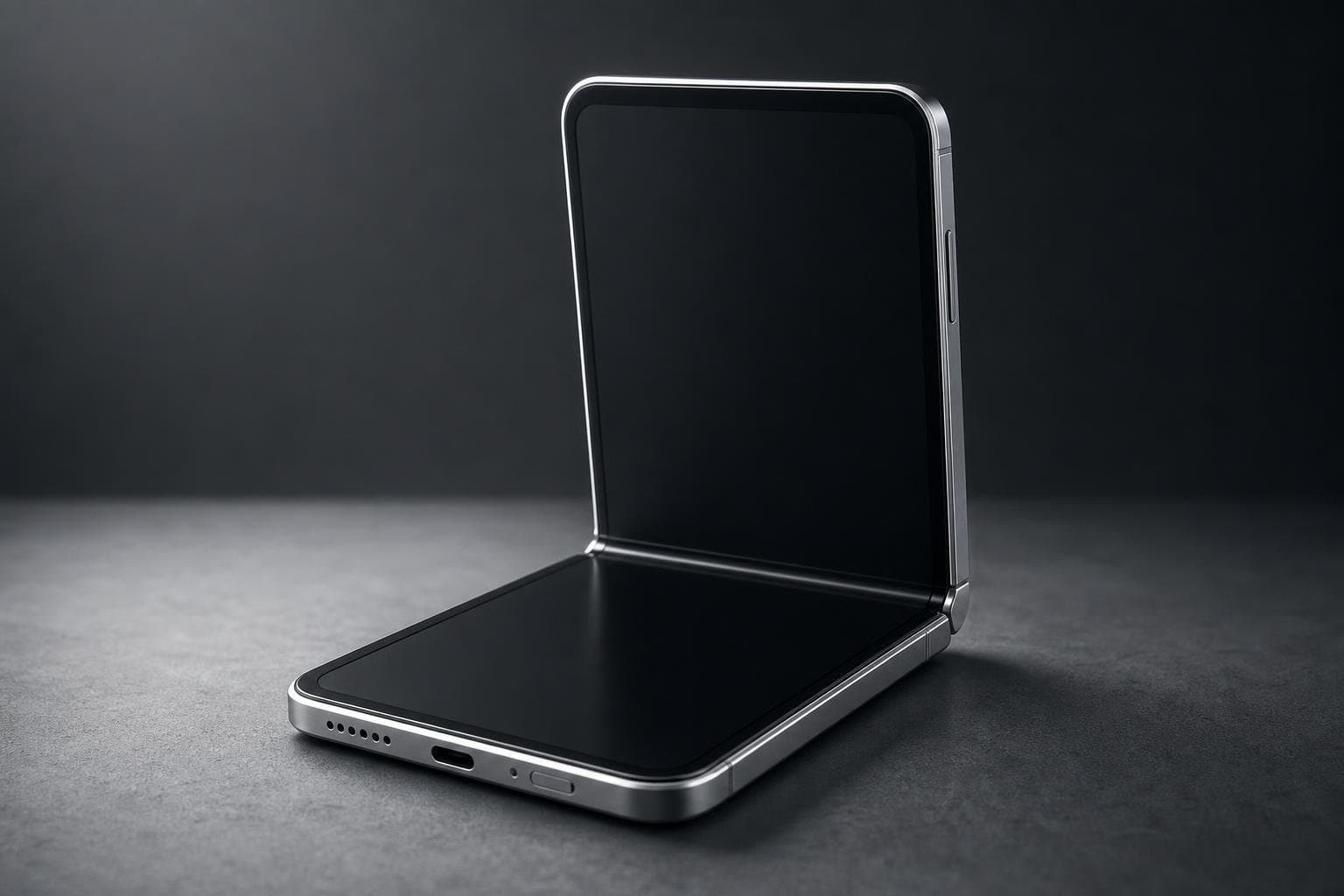

Apple held its "Surprise and Shine" event on September 9, and the headline product was exactly what the rumors promised: a foldable iPhone. But the details that emerged from the event tell a more complicated story than "Apple finally made a folding phone."
The iPhone Duo Is Real — and It Starts at $1,999
Apple's event introduced the iPhone Duo, a book-style foldable that Apple is pitching as an "intelligent personal hub" — the phone does the thinking, the Watch senses, the AirPods handle private audio. That's a coherent product story. The hardware, by all accounts, is genuinely impressive.
But let's start with the number that matters most for most people: $1,999. That's the entry price for first-generation foldable hardware, and it comes with real compromises. As Tom's Guide's event recap noted in the lead-up to the show, this event was expected to mark "the dawn of a new era" — Apple's most dramatic hardware pivot in a decade. The key tradeoffs are these: no Face ID, a smaller outer screen, a hinge with more than 100 parts, and — critically — a camera system that gives up the variable aperture and telephoto reach of the iPhone 18 Pro. If you want the best camera Apple makes, you need the Pro, not the Duo.
The software story is more interesting. MacSparky notes that the way apps move between displays, the new dock, the two-app layouts, and the partially-folded positions make this feel like a genuinely new kind of device — not iPadOS folded in half. Apple has clearly thought about what a foldable does rather than just what it is. That's more than you can say for some of the early Android foldables.
The iPhone 18 Pro Is the One Most People Should Actually Consider
While the Duo grabbed the spotlight, CNET's event coverage points to something that deserves more attention: there is no base iPhone 18 this fall. Apple's least expensive new iPhone starts at $1,199. That's the 18 Pro, and it's a meaningful price floor shift for anyone who's been buying the standard model.
The 18 Pro's camera system is the real news here. A mechanical aperture that moves from f/1.48 to f/4 gives photographers genuine control over light and depth of field — the kind of control that used to require a dedicated camera or a third-party app. MacSparky observed that Apple is also bringing aperture, shutter speed, white balance, and a histogram directly into its own Camera app — meaning third-party camera apps just lost some territory.
One feature worth watching: Apple Reference Image, which creates a signed record of what the sensor captured at the moment of shooting. With AI-generated images improving rapidly, a verifiable provenance system for photographs is going to matter more, not less. This is the kind of quiet infrastructure play Apple does well. It's worth noting that The Verge's IFA coverage flagged Xiaomi's new 18 Fold foldable — announced the same week — as a direct challenger with superior specs to Samsung's latest. Apple is entering a foldable market that's already getting crowded and competitive.
Apple Watch Series 12 Rounds Out the Platform Story
The Apple Watch Series 12 was also announced, with Apple emphasizing what it's calling the Health Sensing System — higher-frequency heart rate and heart rate variability sensing, a readiness score, and Audio Intelligence features built with privacy at the core. Apple is positioning the Watch as the sensing layer in its broader "intelligent personal hub" pitch, which is a cleaner narrative than the Watch has had in a while.
The readiness score in particular is worth noting. It's Apple's answer to what Oura and Garmin have been doing with recovery metrics — a daily signal that synthesizes sleep, activity, and heart data into something actionable. Whether Apple's implementation is as nuanced as the competition's is something reviewers will need to assess over weeks of use, not hours. Meanwhile, Engadget's IFA roundup observed that Apple's influence on consumer tech "can't be underestimated" — a point underscored by the number of third-party peripheral makers at the show chasing the MacBook Neo's aesthetic. The same gravitational pull will shape how competitors respond to the Duo.
And it's not just hardware rivals Apple has to think about. The New York Times reported that Meta rolled out Muse, an AI agent that autonomously books travel, sends emails, and makes purchases — connecting to Facebook, Instagram, Spotify, Gmail, and OpenTable. Apple's "intelligent personal hub" framing is a direct answer to this kind of ambient AI competition. The question is whether Siri, after years of underdelivering, can actually hold that center.
What to Actually Do With All of This
Here's the honest read: the iPhone Duo is a fascinating first-generation product that most people should not buy right now. First-gen foldable hardware from any manufacturer has historically meant hinge durability questions, software rough edges, and a price premium that evaporates by year two. Apple's execution looks better than most first attempts — the software especially — but $1,999 for a device with camera compromises and no Face ID is a steep ask.
The iPhone 18 Pro is the more defensible purchase for anyone upgrading from an iPhone 15 or older. The camera system is a genuine leap, and the price, while higher than the old base model, reflects real hardware advances. PCMag's recent Windows coverage is a useful reminder that platform-level decisions — even well-intentioned ones — can have real performance consequences for users on older hardware. Apple faces a version of that same tension: pushing the platform forward while keeping the installed base along for the


