


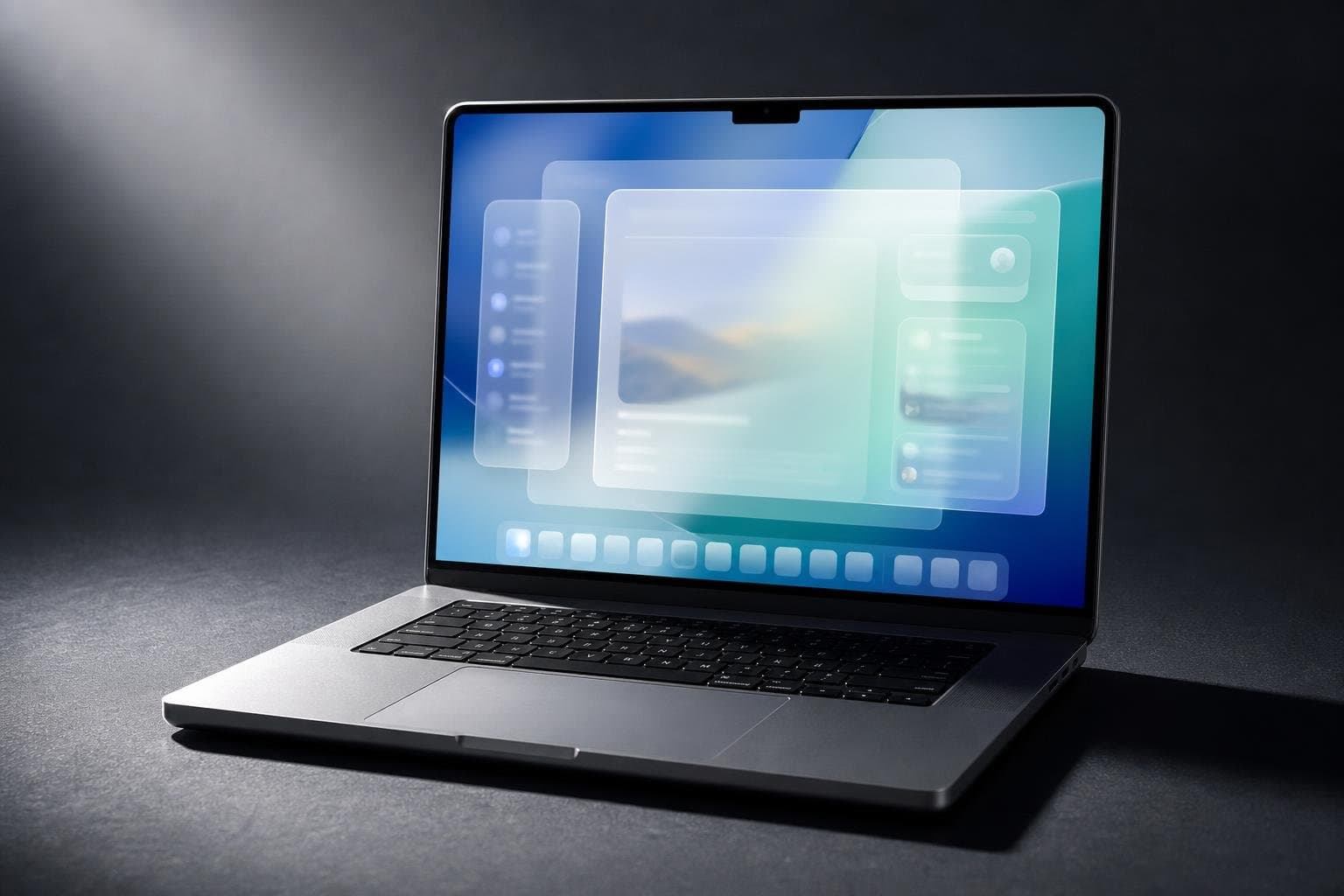

Something unusual happened at Apple's Worldwide Developers Conference this year: the most interesting thing Apple showed wasn't a feature. It was an admission.
Buried inside the macOS 27 Golden Gate developer beta is a new Liquid Glass slider — a setting that lets users dial back the aggressive UI transparency Apple introduced with its sweeping design overhaul. The Verge's Antonio Di Benedetto, who spent time with the beta, describes it plainly: one end of the slider is as see-through as Liquid Glass gets; the other end is heavily frosted. The default sits in the middle, which Di Benedetto notes is "perhaps a gentle admission that the original look went too far." You still can't go fully opaque, but the frosted setting substantially reduces what reviewers had flagged as a visually distracting interface.
That's a meaningful course correction, and it matters for normal Mac users. Liquid Glass was polarizing from the moment Apple unveiled it — beautiful in a demo, fatiguing in daily use. The fact that Apple is shipping a transparency slider in the first developer beta, before the OS is anywhere near public release, suggests the feedback was loud enough to move quickly.
The Headline Feature Is Still Behind a Velvet Rope
Here's the catch: the thing Apple actually announced at WWDC26 — the next generation of Apple Intelligence and an entirely new version of Siri called Siri AI — isn't available to try yet. It's waitlisted, even for developers. So the first impressions of macOS 27 are almost entirely about aesthetics and feel, not capability.
That's a strange position for Apple to be in. The company's WWDC press release describes Siri AI as "profoundly more intelligent, knowledgeable, and capable" — the kind of language that sets expectations high. But until the waitlist opens and reviewers can actually put it through its paces, those are marketing claims, not demonstrated facts. I'd argue Apple is in a trickier spot than it appears: it needs Siri AI to be genuinely transformative to justify the design upheaval of the past year, and right now, nobody outside Apple knows whether it is.
The AirPods Camera Story Is the More Revealing One
While the macOS beta was the hands-on news of the week, the more telling story came from Wired's reporting on camera-equipped AirPods. According to Bloomberg's Mark Gurman (cited in the Wired piece), Apple has designed AirPods with small cameras in the stems, intended to give Siri visual context for spoken requests — landmark navigation, food identification, that kind of thing. The hardware is reportedly ready. The software isn't.
A source who spoke to Wired anonymously said Apple will likely delay the camera AirPods because Siri's visual intelligence isn't up to par — and because Apple executives are genuinely worried about launching a significant privacy risk without compelling use cases to justify it. That's a notable admission from a company that has historically moved with more confidence.
Read those two stories together and a pattern emerges: Apple has ambitious AI plans, but the gap between the announcement and the reality is wider than usual. The Liquid Glass slider is a small but real sign that Apple is listening to users. The camera AirPods delay is a sign that Apple is, at least in this case, choosing not to ship something before it's ready. Both of those are actually good instincts. But they also mean that the version of Apple's AI future that was promised at WWDC26 is still largely theoretical.
What to Do Right Now
If you're a Mac user wondering whether to get excited about macOS 27 Golden Gate: the design improvements sound genuinely promising, and the transparency slider alone may be enough to make Liquid Glass livable for people who found it distracting. But the OS won't be publicly available until later this year, and its flagship feature — Siri AI — is still behind a waitlist even for developers. There's nothing to install, and nothing to decide yet.
If you were hoping camera AirPods would arrive this fall: based on current reporting, that seems unlikely. The hardware exists, but Apple appears to be holding it until the software experience is worth the privacy tradeoff. Given how poorly received half-baked AI features have been across the industry, that restraint seems wise.
The more useful question to watch heading into fall is whether Siri AI, once it actually opens to developers and reviewers, delivers something meaningfully different from what Google and others have been shipping. Apple's credibility on AI has taken some hits over the past two years. The next few months of developer beta testing will tell us whether WWDC26 was a genuine turning point or another round of ambitious promises. Watch for early developer reports in July, when the waitlist is likely to start opening up.