


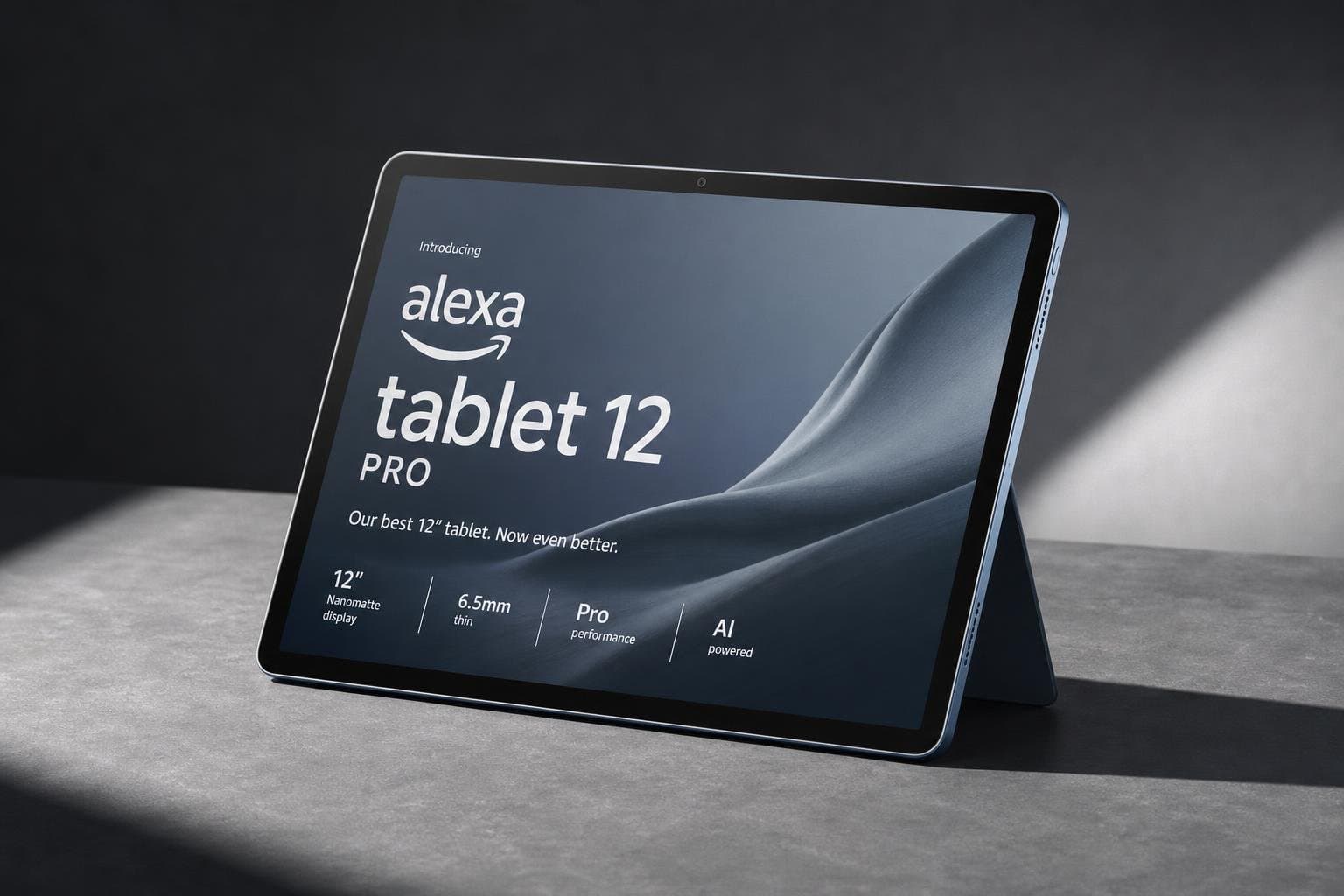

For fifteen years, Amazon's tablet strategy was essentially: make it cheap, slap ads on it, and don't worry too much about whether anyone loves it. That changes this week. The company has retired the Fire tablet name for its flagship slate and replaced it with something called the Alexa Tablet 12 Pro — and for the first time, Amazon is building a device it actually wants you to choose over an iPad, not just tolerate because it was $90 on Prime Day.
The headline change is software. Amazon shut down its own app store last year, and the new Alexa Tablets run full, Google-certified Android with genuine Play Store access, according to Ars Technica. That's a real shift. Fire OS always felt like Android wearing a costume — recognizable shape, none of the actual ecosystem. Now you get Gmail, YouTube, Netflix, and millions of other apps out of the box, per TechCrunch. Amazon is explicit that this isn't a rebrand of the old Fire line but new hardware on a new OS, a spokesperson told TechCrunch.
The Display Is the Actual News Here
Specs rarely move me, but the screen option on the $499.99 Alexa Tablet 12 Pro (a $549.99 Nanomatte version adds anti-glare coating) is worth pausing on. The Verge's hands-on account describes Corning's Nanomatte coating as something close to eliminating glare entirely rather than merely reducing it — the reviewer says an Amazon rep had to demonstrate the screen was actually on, because in a sunlit demo room it looked like a dummy placeholder. The glossy alternative, by contrast, turned into a mirror under the same lighting. If that holds up outside a controlled press briefing, it's the most meaningfully useful hardware feature on a sub-$600 tablet in a while — the kind of thing that actually changes where and how you can use a device, not just how it photographs on a spec sheet.
The tablet also leans into reading with three Kindle-specific display modes — standard, a muted Color mode, and full grayscale Ink — and extends battery life from 16 hours to 20 in that mode, per the Verge's hands-on. TechCrunch's reporting on the official materials confirms the 12-inch, 3:2 panel at 120Hz and notes the device is 6.5mm thick with Dolby Atmos speakers and Wi-Fi 6E. Two smaller siblings round out the line: an 11-inch model starting at $329.99 and an 8.7-inch model at $229.99, both detailed by TechCrunch.
Alexa+ Is Riding Along, Whether You Asked For It or Not
Baked into all three tablets is Alexa+, Amazon's AI assistant layer, with a feature called On-Screen Intelligence that lets you ask Alexa questions about whatever's currently visible — TechCrunch's example is asking which hike on a trail list suits you best. Worth noting, since it's not a small detail: Ars Technica points out that Alexa will naturally keep nudging you toward Amazon purchases when it can. That's not a scandal, it's just Amazon being Amazon, but it's a fair thing to go in expecting rather than discovering later.
My read: these tablets occupy a sensible middle ground. Ars Technica frames the pricing as now competitive with Apple's lower tiers — the base iPad starts at $450 — while finally offering real app support instead of Amazon's walled garden. The honest caveat, also from Ars Technica, is that despite years of Google promising better tablet-optimized Android apps, there still aren't very many. A gorgeous matte screen running apps designed for phone-sized rectangles is a real tradeoff, not a footnote.
Elsewhere This Week: Microsoft's Other Bet on "Not Apple"
Microsoft also put a laptop in reviewers' hands this week: the Surface Laptop Ultra, built around Nvidia's N1X chip. Gizmodo's early hands-on is cautiously impressed — solid build quality, a genuinely clever magnetic 140W USB-C port, and smooth gameplay in a demo of Gears of War: E-Day — but flags that the demo ran through Microsoft's Prism emulator rather than natively, and the company wouldn't say when native ARM support is coming. That's the same tension that's dogged Windows-on-ARM for years: promising hardware undercut by software that hasn't fully caught up.
The takeaway: if you've been waiting for Amazon to make a tablet worth owning rather than just gifting, the Alexa Tablet 12 Pro is the first real answer — assuming that screen performs in daily use the way it did in a press demo. I'd watch for independent battery and app-compatibility testing once units ship on October 14, per Ars Technica, before fully trusting the hype.