
The UK just ran its most successful renewable energy auction in the program's history — and the honest read is that it still might not be enough.
AR7 delivered 14.7 GW of contracted capacity, the largest single-round haul since the Contracts for Difference scheme launched. That's a genuine milestone. The previous record, set in AR4, was 10.8 GW. AR5 — the round that produced zero offshore wind bids and became a cautionary tale about setting strike prices too low — looks like a distant embarrassment by comparison. The government has clearly learned something about auction design. Whether it has learned enough is a different question.
The Auction Mechanics Actually Improved
The CfD structure is worth understanding before evaluating whether it's working. Generators bid for a guaranteed "strike price" per MWh of output. When wholesale prices fall below that strike price, consumers top up the difference. When wholesale prices exceed it, generators pay the surplus back. The mechanism is designed to give developers the revenue certainty they need to finance capital-intensive projects while theoretically protecting consumers from overpaying when markets move in their favor.
That second part has started functioning in a visible way. Solar farms with CfD contracts are now paying money back to consumers rather than receiving subsidies, because their contracted strike prices are now below prevailing wholesale electricity prices. The pattern of negative subsidies — generators remitting funds to suppliers, which OFGEM then factors into the price cap — began in summer 2025 and has been accelerating. The CfD solar fleet as a whole has crossed the £10 million threshold in net consumer payments and is heading higher as installed capacity grows.
This is the mechanism working as designed. It's also a useful corrective to the reflexive framing of CfDs as pure subsidy programs. They're contingent instruments — the direction of cash flow depends on where wholesale prices land relative to strike prices.
AR7 also introduced structural changes beyond raw capacity numbers. The round featured the first separate Scottish clearing price for offshore wind, anonymized bid transparency, and mid-round budget flexibility that allowed the government to maximize contracted capacity rather than stop at a predetermined spend ceiling. The Subsidy Advice Unit published its report on the proposed AR8 framework in early September 2026, signaling that the government is already moving toward the next round — a sign of institutional momentum, if nothing else.
14.7 GW Contracted Is Not 14.7 GW Built
Here's where the audit lens matters. A CfD contract is a revenue guarantee, not a construction permit. The gap between what gets contracted and what gets built has been a persistent feature of the program, and the conditions that create that gap haven't disappeared.
LCP Delta's independent analysis of the GB power market puts the problem plainly: on current trajectory, 83% of GB generation will come from clean sources by 2030, against a government target of 95%. Only four of eight key technologies are on track for their required build rates. Offshore wind, onshore wind, solar, and batteries are all falling short. The report projects that 27 TWh of renewable generation will be curtailed in 2030 due to network constraints alone — clean electrons that get produced and then wasted because the grid can't move them.
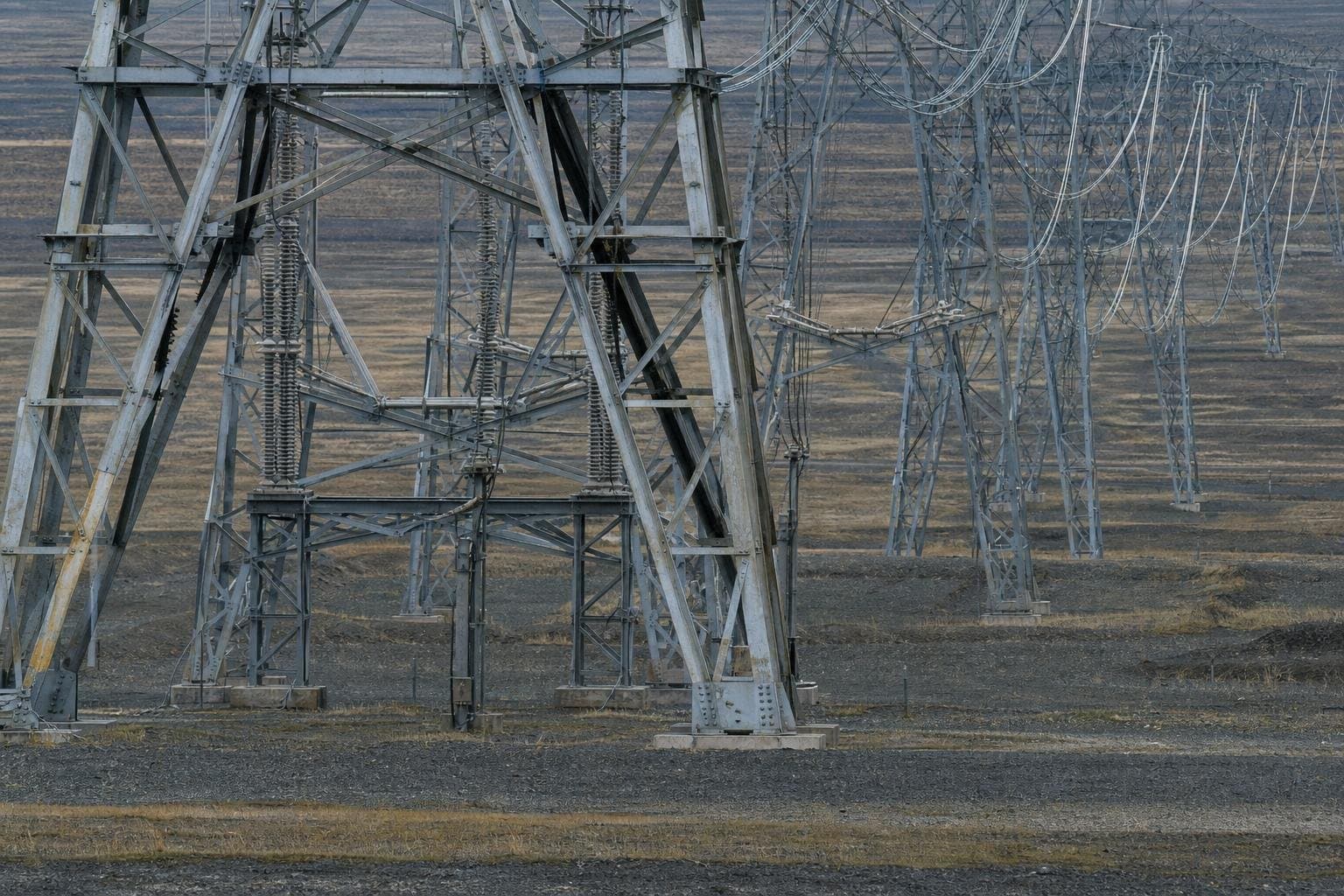
The bottlenecks are physical and logistical, not financial. Grid connection queues, a shortage of specialist installation vessels for offshore wind, and skilled labor constraints all sit outside what a CfD contract can fix. Strike prices rising roughly 10% above previous rounds in AR7 — still well below the levelized cost of new gas, but higher than AR6 — reflect those supply-chain pressures being priced into bids. The government can uplift the budget envelope mid-round; it cannot conjure cable-laying ships.
The Consumer Bill Question Stays Complicated
The political promise attached to the clean power buildout is that it will eventually reduce household energy bills by reducing exposure to gas price volatility. The LCP Delta analysis suggests this is directionally correct but temporally uncertain. Under an accelerated build scenario, the firm estimates a meaningful reduction in the typical annual household electricity bill by 2030 — but "accelerated" is doing a lot of work in that sentence, given that four of eight key technologies are currently behind schedule.
The mechanism by which wholesale price reductions translate to consumer bills also runs through gas. As long as gas remains the marginal price-setter in the wholesale market — which it will for most hours even in a high-renewable system — consumer prices will track gas market volatility more than renewable build rates. The CfD fleet suppresses average wholesale prices through merit-order effects, but the distribution of prices becomes more bimodal: very low prices when wind and solar dominate, gas-set prices when they don't. Consumers on standard tariffs experience something closer to the average, which improves — but the protection against a 2021-style gas price shock is partial, not complete, until storage and demand flexibility scale up alongside generation.
The AR7 results are real progress. The 2030 target remains a probability distribution with a wide confidence interval, and the honest version of that distribution has its peak well below 95%. Watch for LCP Delta's next quarterly build-rate update and NESO's grid connection queue data — those numbers will tell you more about where 2030 actually lands than any auction headline.


