
The Trump administration has spent roughly $4 billion in settlement payments this year to make offshore wind projects disappear, and the companies taking the money aren't complaining. That's the detail that should bother anyone doing the actual cost-benefit math here, not the politics.
Start with the mechanics. In June, Interior canceled four Invenergy leases worth $765 million — including nearly 84,000 acres in the New York Bight that the company paid $645 million for in a 2022 Biden-era auction — in exchange for Invenergy redirecting that capital into natural gas and geothermal projects (EnergyNow). Interior Secretary Doug Burgum framed the leases as built on a bad assumption: "that taxpayers would indefinitely subsidize costly, unreliable projects" (EnergyNow).
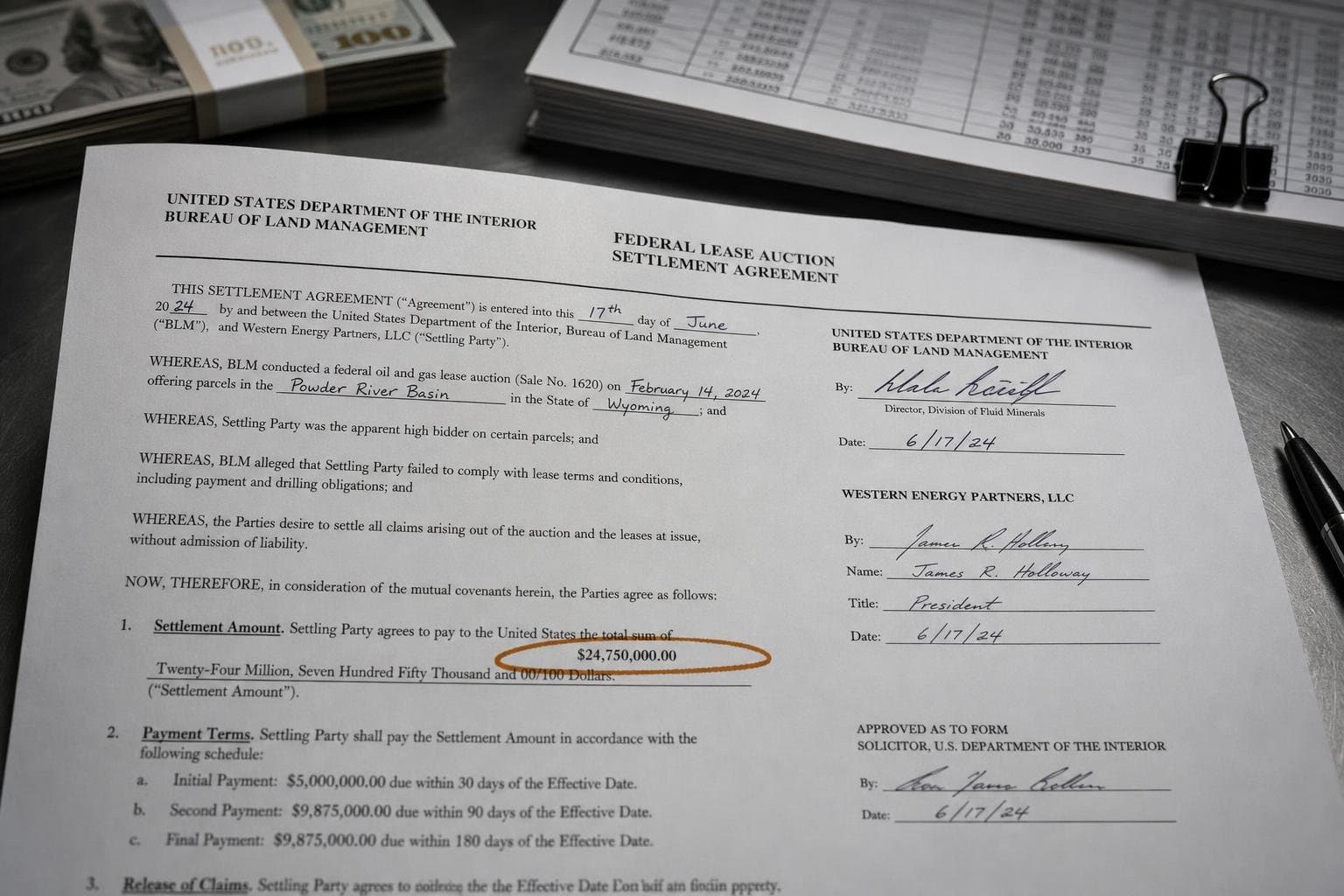
By August, that pattern had scaled into a program. Bloomberg's Mark Chediak and Ari Natter reported the administration had reached roughly $4 billion in total settlements across six developers, including a $1.22 billion deal with RWE and an agreement with TotalEnergies, with companies agreeing to surrender leases and redirect the reimbursed funds into fossil fuel projects and other Trump-favored investments (via EnergyNow). More than 20 additional leases worth close to $2 billion remain outstanding, according to estimates from ClearView Energy Partners cited in that reporting — meaning the $4 billion tally is a floor, not a ceiling.
Who's Actually Paying, and Who's Getting Made Whole
This is the part that matters for anyone tracking subsidy economics rather than headlines. These aren't clawbacks in the conventional sense — the government isn't recovering money developers already received. It's closer to the reverse: Treasury's judgment fund is paying companies to walk away from assets they bought fair and square, often at prices set during a Biden-administration leasing boom. ClearView's Timothy Fox put it bluntly: the administration is "pulling all the levers it can to constrain the offshore wind industry to the few projects already under construction or in service... And they seem likely to succeed" (via EnergyNow).
Grid Strategies' Seth Kaplan noted that some of the canceled leases covered projects that were already struggling to advance on their own — meaning the federal payout isn't just compensating for stranded capital, it's bailing out developers who may have abandoned ground anyway (via EnergyNow). More than 15 gigawatts of offshore wind capacity across 16 projects has been withdrawn from the pipeline this way, per the same reporting. That withdrawal is the kind of capital-stranding risk that development finance researchers normally price into emerging clean-energy markets abroad — the IEA's own work on renewable project finance treats policy reversal as a core bankability risk that has to be underwritten before capital ever gets committed (IEA). It's a strange turn when that same risk shows up in a mature, developed US market with federally issued leases.
It's worth remembering how we got to settlements in the first place. The administration's initial approach — an executive order halting leases and project reviews on federal lands and waters — was declared illegal by a federal judge in December, per Bloomberg's reporting (via EnergyNow). Stop-work orders didn't survive judicial review. Checks did. That's a tell about which strategy actually works when an administration wants to unwind federal commitments: litigation is slow and uncertain, but nobody sues you for paying them.
The Leverage Play Complicates the Clean Story
The picture isn't a straight line toward zero offshore wind, though. Bloomberg reported in late October that the White House is simultaneously using a handful of wind approvals as a bargaining chip to win Democratic votes for a broader permitting overhaul — even as it asked federal courts to preserve the option to reconsider three Biden-era offshore wind authorizations, and as the Pentagon began clearing some onshore wind farms from a national security review that had stalled hundreds of projects (Bloomberg). So the buyout program and the permitting leverage are running on parallel tracks: cash settlements to kill offshore leases outright, selective approvals to extract legislative wins elsewhere.
That inconsistency is exactly what creates the political opening Democrats are now eyeing. Bloomberg reported that with polls favoring a Democratic recapture of the House, and possibly the Senate, party lawmakers have signaled they'll investigate the wind lease buyouts alongside other energy-agenda moves if they gain subpoena power (Bloomberg).
Whatever the investigations turn up, the core number is already on the table: roughly $4 billion in federal payouts, redirected into fossil fuel and other favored investments, for capacity that will never generate a kilowatt-hour. Watch the next round of settlement disclosures against that $2 billion in outstanding leases — if the pace holds, the final bill lands well north of $5 billion before anyone in Congress gets a chance to ask what the public got for it.


