


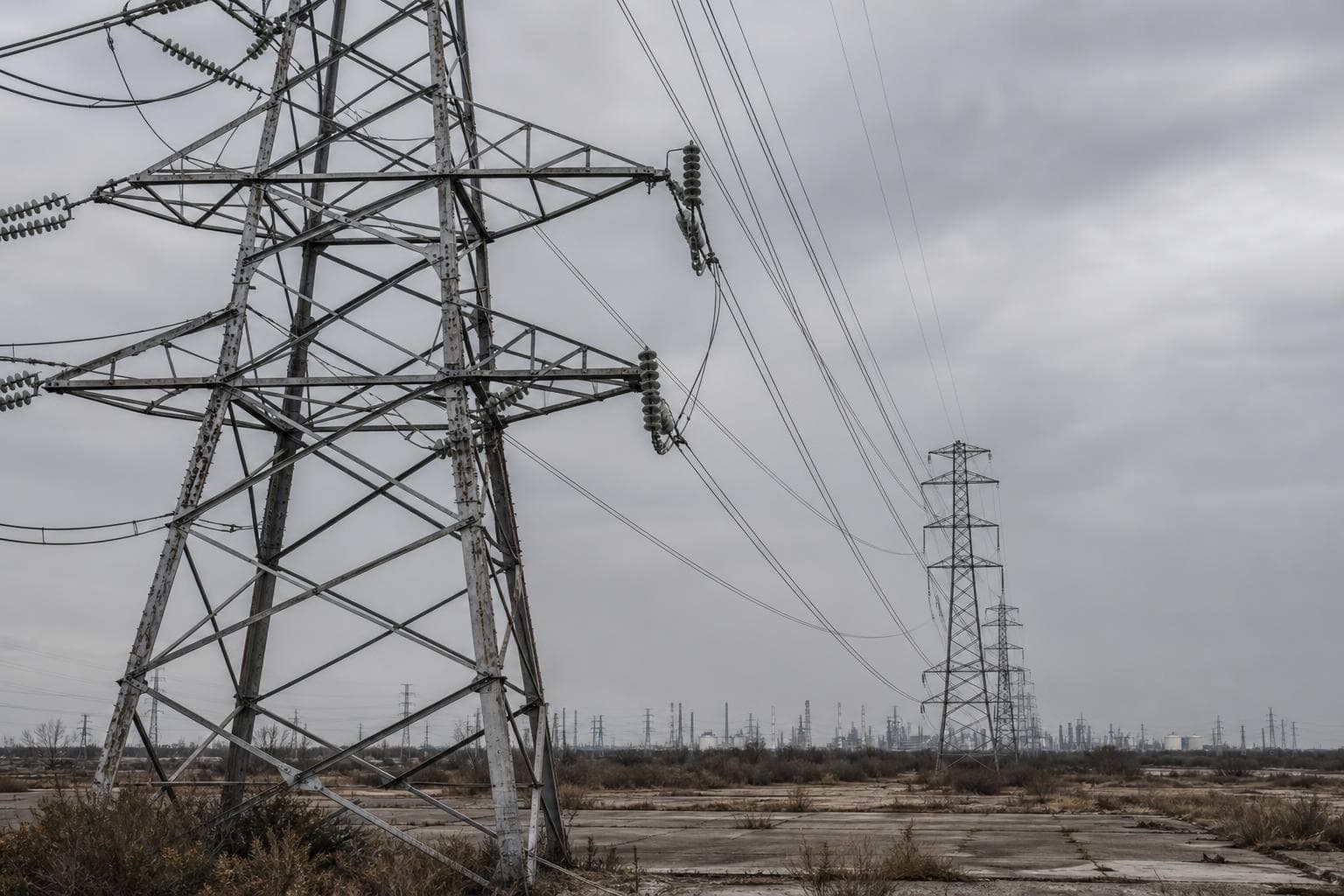

PJM Interconnection just reopened its generation interconnection queue for the first time in four years. Eight hundred eleven new projects totaling 220 gigawatts have applied to connect — roughly twice the currently installed U.S. generating capacity sitting in queues nationally, per Deloitte's utility outlook. The announcement reads like progress. It isn't, or at least not yet.
The four-year freeze didn't just delay projects. It restructured them. Of the 811 applications now entering PJM's reformed process, gas and nuclear make up roughly 55 percent of total capacity — a dramatic reversal from the renewable-heavy queue PJM spent years clearing. That's not a coincidence. It's what happens when you combine a multi-year interconnection logjam with an administration actively revoking offshore wind permits and redirecting policy toward fossil fuels and nuclear. Developers who could wait, pivoted. Developers who couldn't, walked.
Maryland Is the Case Study Nobody Wanted to Be
For states that built legally binding clean energy targets around expected interconnection timelines, the damage is structural. Maryland has a statutory obligation to reach 100 percent clean electricity by 2035 and net zero by 2045. Those targets were written assuming a functioning interconnection process. Advocates and legislators told Inside Climate News that the yearslong delay has already done irreversible harm to the state's clean energy pipeline — and that the queue reopening offers no near-term relief for consumers.
This is the transmission bottleneck problem in its most concrete form. It's not primarily a wire problem. It's a process problem that produces wire problems. Projects that spent years in interconnection limbo either died, got repriced out of viability, or got replaced by gas and nuclear applications that face fewer political headwinds under the current federal posture. The physical grid hasn't changed much. The project mix entering it has changed enormously.
The New Load Problem Makes This Worse
Just as PJM reopens its queue, the grid is absorbing a demand shock from a completely different direction. NERC issued a Level 3 alert — only the third in the organization's history — warning of "significant risks" to the bulk power system from large data centers. The alert, developed after reports of data centers abruptly going offline in Virginia and Texas, flags that computational loads "could increase exponentially in the next four years."
The specific reliability concern is behavioral, not just volumetric. Data centers aren't currently required to follow the same notification rules as power plants when coming online and offline. They don't have to share data about sharp power swings. A paper from Nvidia, Microsoft, and OpenAI researchers warned that AI power swings can "cause physical damage" to grid infrastructure. NERC is now pushing toward mandatory reliability standards for data centers, pending FERC approval.
The transmission implication is direct: interconnection queues were already overwhelmed by generation projects trying to get power onto the grid. Now grid planners have to simultaneously model large, behaviorally unpredictable loads pulling power off it — in the same constrained corridors, with inadequate data about how those loads actually behave.
The Cost Is Already Showing Up in Bills
None of this is abstract. EIA data shows Americans paid 22 percent more for electricity in 2025 than five years earlier, with infrastructure bottlenecks cited alongside policy mandates and fuel access as primary drivers of the steepest increases. The states with the worst transmission constraints aren't just missing clean energy targets — they're paying more for the fossil generation filling the gap.
The pattern here is consistent with what I've been tracking in the IRA cost-per-ton analysis: the gap between policy ambition and implementation infrastructure keeps widening, and the costs of that gap land on ratepayers and state budgets, not on the federal programs that created the mismatch.
What to Watch
NERC's Level 3 alert is a trigger, not a resolution. The seven "essential actions" it recommends require transmission planners to model grid stability margins annually in AI-heavy regions and install monitoring equipment — but mandatory standards still need FERC approval, and that process has its own timeline. Watch for FERC's response to the NERC petition, which will determine whether data center load disclosure becomes a legal requirement or stays voluntary guidance.
On the interconnection side, the more telling number won't be how many projects applied to PJM's reformed queue — it's how many of those 811 projects are still alive in 18 months, and what fuel mix survives the attrition. If the reformed process is actually faster and more predictable, the renewable share should stabilize. If it isn't, the 55 percent gas-and-nuclear composition of this first cycle is a preview of the grid Maryland and a dozen other states will be managing in 2035.