
The One Big Beautiful Bill Act didn't repeal the Inflation Reduction Act's clean energy tax credits. It did something more surgical: it set a clock running that the physical infrastructure of American energy development almost certainly cannot beat.
When I last wrote about this in June, the OBBBA had just imposed construction and in-service milestones on IRA credits that were originally designed to be durable through the 2030s. The question I left open was whether the deadlines would actually bite, or whether falling technology costs would absorb the shock. Three months of implementation data later, the answer is: both, unevenly, and the uneven part is where the real story is.
Falling Costs Saved Solar. They Didn't Save Wind.
The OBBBA's accelerated phaseout of wind and solar credits forces developers to meet strict construction or in-service milestones by 2026–2027 to maintain eligibility. Bloomberg's reporting on the fiscal trajectory of the OBBBA frames the law's clean energy provisions as part of a broader $4.1 trillion deficit-expansion package — which tells you something about the political logic: the credit phaseouts were revenue offsets, not energy policy. The administration needed the savings on paper. Whether the deadlines were physically achievable was a secondary concern.
For utility-scale solar and battery storage, the math mostly still works. Module costs have fallen far enough that projects can absorb some credit reduction and remain financeable. The research memo circulating among project finance desks suggests roughly 67–74% of originally projected IRA clean capacity remains viable under the new rules — but that aggregate figure conceals a brutal sectoral split. Onshore wind is the outlier: nearly half of its projected capacity is now at risk, because wind project timelines are structurally longer than solar timelines, turbine supply chains are tighter, and the permitting process for wind — particularly in contested rural areas — runs years, not months.
The credit deadline is, in effect, a technology-discriminating policy that its drafters probably didn't fully model. Solar wins. Wind loses. The environmental outcomes per dollar of remaining credit spending will look better on paper than they are in practice, because the projects that survive will be the ones that were already closest to completion — not necessarily the ones with the best abatement economics.
The Credits Were Never the Binding Constraint
Here's the part that gets lost in every IRA debate: tax credits don't build transmission lines. They don't shorten interconnection queues. They don't move a NEPA review faster.
The EIA's electricity data has been tracking the gap between announced capacity and actual grid additions for years. The pattern is consistent: the queue is enormous, the additions are a fraction of it. The constraint isn't capital availability or credit generosity — it's the physical and regulatory infrastructure required to connect generation to load. A developer who can't get an interconnection study completed by Q3 2026 doesn't benefit from a tax credit that expires in Q4 2026, regardless of how attractive the credit rate is.
This is the efficiency problem that the deployment-versus-budget-allocation framing usually misses. Budget allocation efficiency asks: are we spending tax expenditure dollars on projects that deliver emissions reductions per dollar? That's the right question. But the answer increasingly is: we're spending them on projects that can clear the queue fast enough to claim the credit, which is a different optimization target entirely. Speed-to-interconnection and cost-per-ton of abatement are not the same variable, and right now policy is selecting for the former while claiming credit for the latter.
What Treasury Does Next Is the Actual Policy Lever
The OBBBA's text is set. What remains open is how Treasury defines "commencement of construction" in its implementing guidance — a question with nine-figure implications for projects currently in development limbo. Historically, Treasury's safe harbor rules have given developers meaningful flexibility on this definition. A restrictive interpretation would effectively move the deadline earlier than the statute's face date; a permissive one would extend the viable window for projects that have broken ground in any meaningful sense.
Treasury's public filings don't yet reflect finalized IRA implementation guidance on this point. That's the number to watch: not the headline credit rate, not the phaseout schedule, but the administrative definition that determines which projects are inside the tent and which aren't. Project finance teams are already pricing this uncertainty into deal structures — which means capital is sitting on the sideline waiting for a regulatory answer that may not come until after some projects have already missed their window.
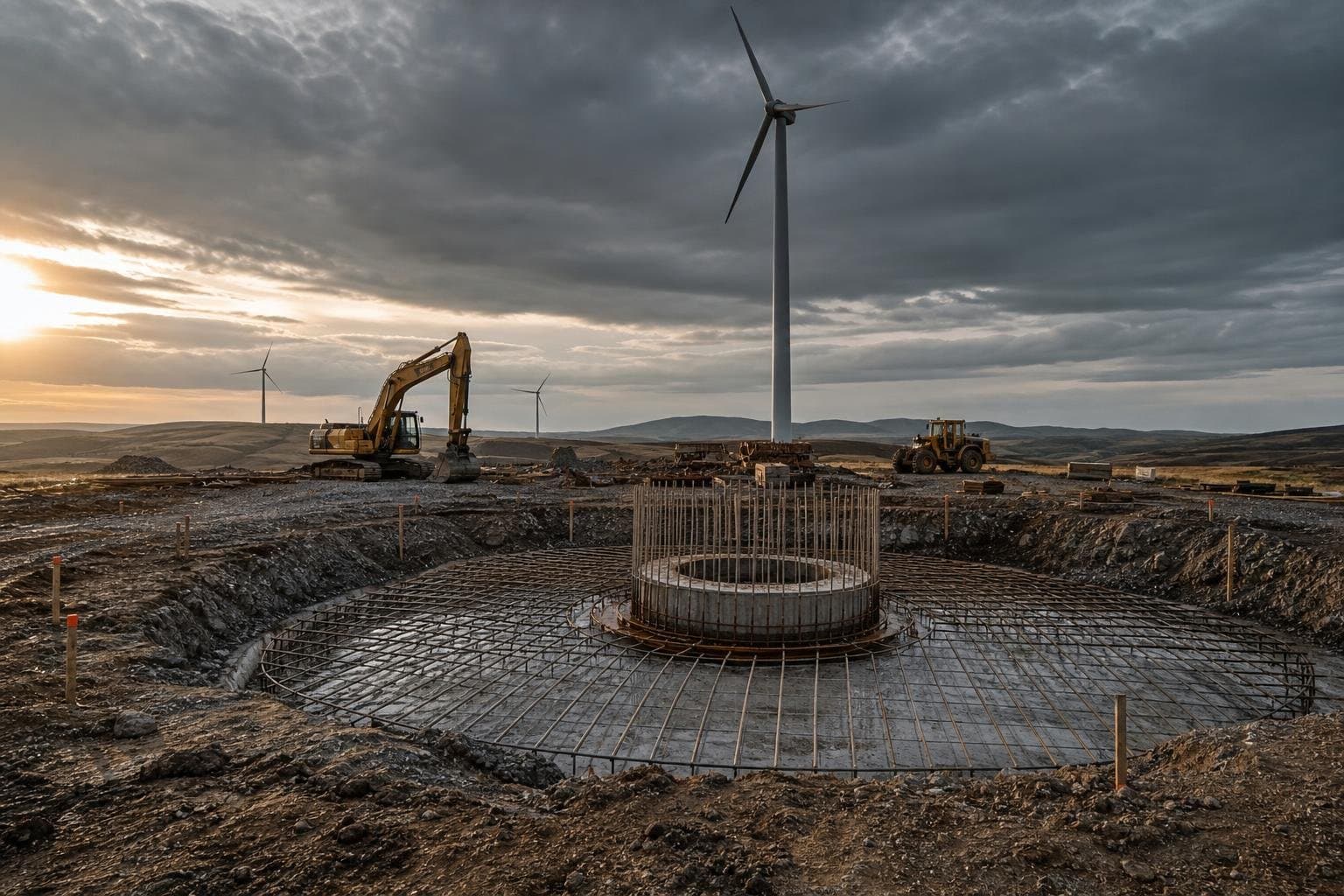
The deeper problem remains unchanged. Federal permitting reform — the one intervention that would actually move the physical constraint — is stalled in partisan gridlock. Tax credits are a demand-side tool being asked to solve a supply-side problem. The credits can make a project more attractive to finance. They cannot make an interconnection queue shorter, a transmission corridor permitted faster, or a turbine foundation poured before winter.
The efficiency question for IRA spending was always: dollars per ton of actual abatement, measured against what would have happened anyway. That math was already complicated before the OBBBA. Now it's complicated and on a deadline — which is a combination that tends to produce rushed decisions, not optimal ones.


