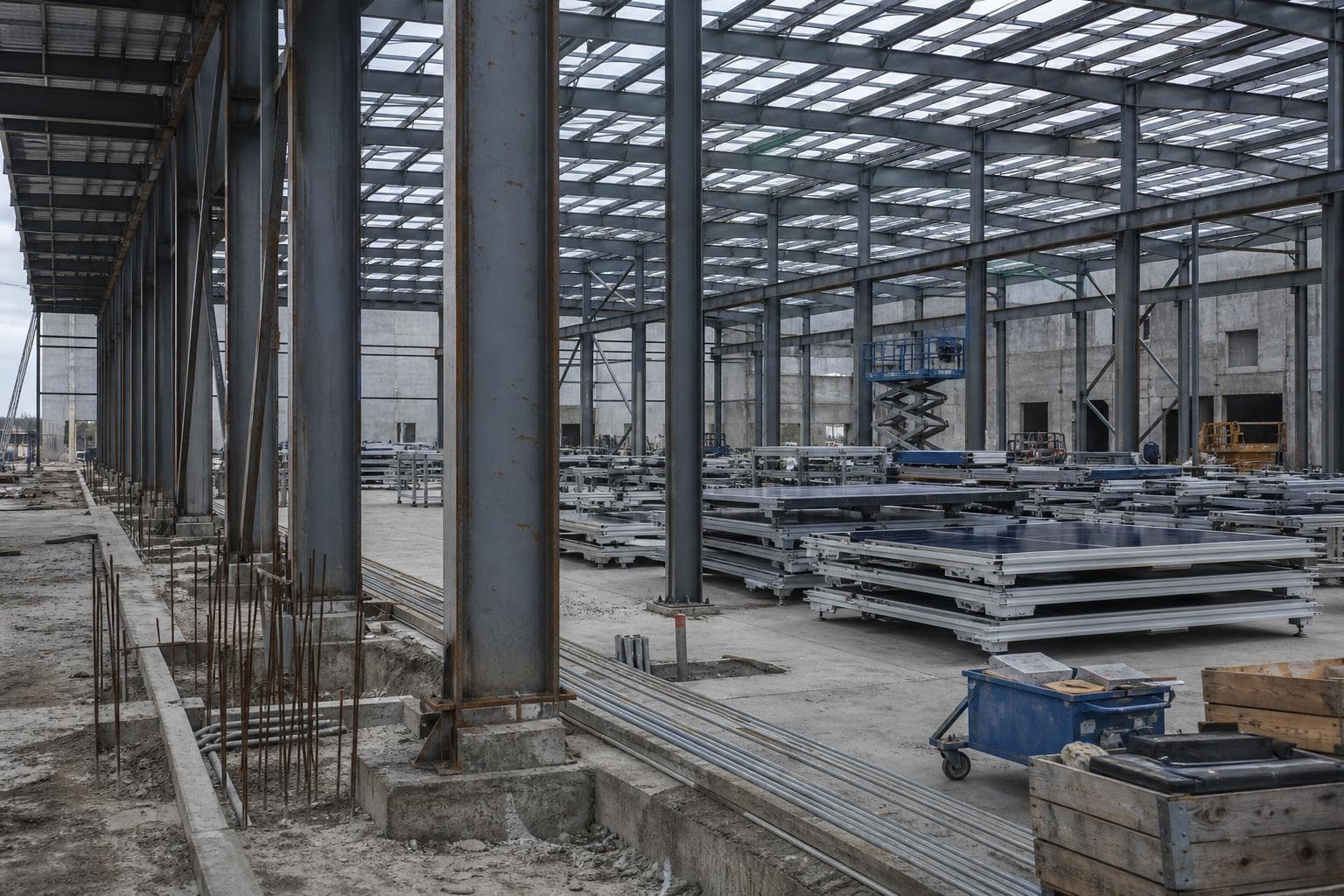

The solar industry just handed Congress a compelling statistic: $43.1 billion in announced domestic manufacturing investments since 2022, deployed through the IRA's manufacturing tax credits. Nameplate U.S. module capacity has rocketed past 70 GW, up from roughly 8 GW before those credits took effect. The United States now ranks third globally in solar panel manufacturing.
That's the number the industry brought to Capitol Hill. Here's the one they didn't lead with: of that $43.1 billion, only $14.5 billion represents operational facilities. The remaining $28.6 billion is either under construction or in early planning.
Announced investment is not deployed capital. Nameplate capacity is not factory output. And this gap — between what the IRA's incentives have triggered on paper and what's actually running on the factory floor — is the central implementation problem the program faces right now.
Announcements Are Cheap. Transformers Are Not.
The IRA's manufacturing credits were designed to solve a real problem: the U.S. had almost no domestic solar supply chain, which made the clean energy transition permanently dependent on imports. The policy logic was sound. The execution reality is messier.
According to Wood Mackenzie and InfoLink data reported by pv magazine, the gap between stated capacity and actual production traces to a familiar set of bottlenecks: land acquisition timelines, local environmental permitting, and — the one that should make grid analysts wince — extended waits for utility transformer grid connections. The same interconnection queue problem that's throttling renewable deployment is now throttling the factories meant to supply that deployment.
This is a system that can jam at multiple points simultaneously, and right now it's jamming at most of them.
Meanwhile, a separate tension is developing at the policy level. The Rhodium Group's Clean Investment Monitor, as reported by Heatmap News, shows a distinct decline in investment flowing into U.S. clean manufacturing factories — even as the American Clean Power Association's data shows staggering recent growth in production capacity. Two reports, same week, opposite headlines. The honest read is probably that both are true in different time windows: capacity was built out aggressively in 2023-2024, and new investment commitments are now softening as policy uncertainty rises.
The Grid Is Getting the Benefit Anyway — For Now
Here's the part that complicates the narrative: the grid reliability picture has actually improved. U.S. generating capacity will increase by roughly 75 GW this summer compared to a year ago, per FERC's summer assessment, with major additions in Texas, the Western Interconnect, and MISO. Solar and batteries — not aging coal plants — are the primary reason grid reliability has improved since last summer, according to Canary Media's analysis of the NERC summer outlook.
So the IRA is working in the sense that matters most to ratepayers this July: more capacity, better reliability. The question is whether it's working efficiently — whether the subsidy structure is delivering environmental outcomes per dollar at a defensible cost, and whether the domestic manufacturing buildout it's paying for will actually materialize before the political window closes.
That last part is the live risk. The DOE's IRA program page still describes the law in present-tense terms, but the policy environment has shifted considerably since 2022. Reconciliation negotiations in Congress are creating real uncertainty about which credits survive and at what level. Factories that broke ground on the assumption of a 10-year credit runway are now doing math on shorter timelines.
The Deployment Gap Has a Deadline
The IRA's manufacturing credits were always a bet that announced investment would convert to operational capacity before the political environment changed. Right now, $22.2 billion is under active construction and $6.4 billion is in early planning — meaning a substantial share of the program's promised industrial output hasn't been built yet, and the companies building it are doing so into an increasingly uncertain policy environment.
The number to watch isn't the $43.1 billion headline. It's how much of that $28.6 billion in non-operational investment reaches production before the next reconciliation bill lands. That's the actual deployment rate — and it's running behind the spending projections that justified the program in the first place.
Elsewhere this week: Bloomberg reports that slower-than-anticipated data center grid connections are providing unexpected summer relief to U.S. power grids — NERC's summer demand forecast has been revised down as a result. Grid demand is still expected to rise by 11 GW this summer versus last year, but the data center slowdown is buying time. Whether that time gets used productively depends on whether the interconnection queue reforms that PJM and others have been promising actually accelerate new capacity hookups — not just announcements.


