



Two weeks ago I wrote about the IRA's cost-per-ton problem. The numbers have moved again — in the wrong direction.
The R Street Institute, working from updated EIA projections, has put a sharper point on what that problem actually looks like. The IRA was originally projected in 2023 to reduce cumulative CO2 emissions by 3.1 billion metric tons between 2025 and 2034. The revised estimate is 1.8 billion metric tons — a 42 percent reduction in projected abatement without a corresponding reduction in subsidy cost. The denominator shrank; the numerator didn't. That's the definition of a rising cost-per-ton.
There's a compounding problem buried in that revision: 79 percent of the projected abatement is now expected to occur in the final three years of the analysis window — 2032 through 2034. Which means the IRA's effectiveness case rests almost entirely on medium-term projections that have already proven optimistic once. If EIA's near-term estimates were off by 87 million metric tons on the high side for 2022, the confidence interval on 2033 projections deserves some skepticism.
The Subsidy Is Shrinking Anyway — But Not Because of the Math
Here's the policy irony: the IRA's clean energy tax credits are being curtailed not because the cost-per-ton analysis failed, but because of straightforward partisan politics. Republican lawmakers have been debating mass repeal of wind and solar credits, and the budget reconciliation process — the One Big Beautiful Budget Act — ultimately curtailed rather than eliminated the credits. The cost-effectiveness argument barely entered the debate. The credits were targeted because they were politically legible, not because Congress ran the abatement math.
That's worth sitting with. The most rigorous case for scaling back IRA subsidies — they're delivering fewer tons per dollar than projected — isn't the case actually being made in Congress. The actual case is ideological. Which means if the political winds shift again, the credits could be restored without anyone having resolved the underlying efficiency question.
Wind and solar collectively generated about 16 percent of U.S. electricity last year, exceeding coal output for the first time, and power sector CO2 emissions have fallen 38 percent since 2005. Those are real outcomes. The question the abatement math forces is whether the subsidy dollars were the efficient mechanism for achieving them — or whether the cost curve on solar and wind had already dropped far enough that the credits were partly paying for deployment that would have happened anyway.
SunZia Is the Argument and the Counterargument Simultaneously
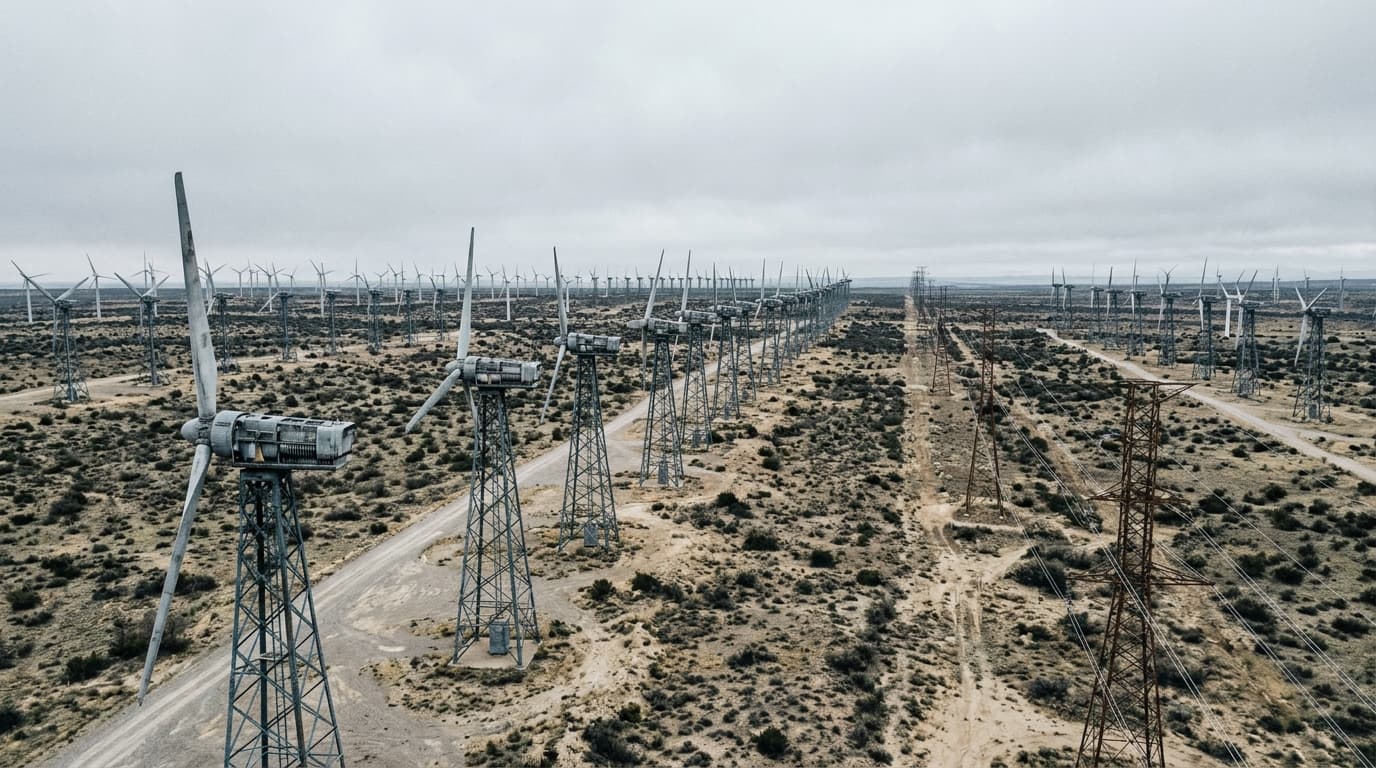
The largest renewable project ever built in the United States has begun generating electricity. SunZia Wind — 3.5 gigawatts of New Mexico wind delivered over a 550-mile transmission line to California — started testing its 916 turbines this month and is approaching commercial operations. California broke its wind generation record eight times in the past four weeks as a result.
SunZia was first proposed in 2006. It took twenty years, multiple route changes, military objections, tribal litigation, and a permitting gauntlet that would exhaust a lesser project. It is now arriving at the finish line precisely as the federal government eliminates wind tax credits and erects new permitting barriers.
The project illustrates both sides of the subsidy effectiveness debate. On one hand: this is exactly the kind of large-scale, transmission-integrated renewable infrastructure that decarbonizes a grid in ways rooftop solar cannot. California burns natural gas at night; SunZia generates most heavily at night. That's a real emissions displacement, not a marginal one. On the other hand: SunZia was conceived before the IRA existed and survived the Trump administration's hostility to wind. The tax credit wasn't the variable that made or broke it. Permitting timelines and transmission access were.
If you're trying to spend dollars efficiently per ton of CO2 avoided, that's a useful distinction. Subsidizing the electricity generation is one lever. Fixing the permitting and transmission bottlenecks that added a decade to SunZia's timeline is another — and arguably the one with higher returns per dollar at this point in the deployment curve.
What to Watch
The IRA's abatement trajectory gets its next real test when EIA publishes updated Annual Energy Outlook projections — watch for whether the 2032-2034 back-loaded abatement estimates hold or compress further. If they compress, the cost-per-ton number becomes very difficult to defend on the merits, regardless of what Congress does for political reasons.
The more immediate signal: whether the curtailed tax credits in the reconciliation bill are enough to slow new wind and solar contracting in 2026. Utility procurement decisions made this year will show up in interconnection queues by Q3. That's the real-time market test of whether the subsidy cuts bite.