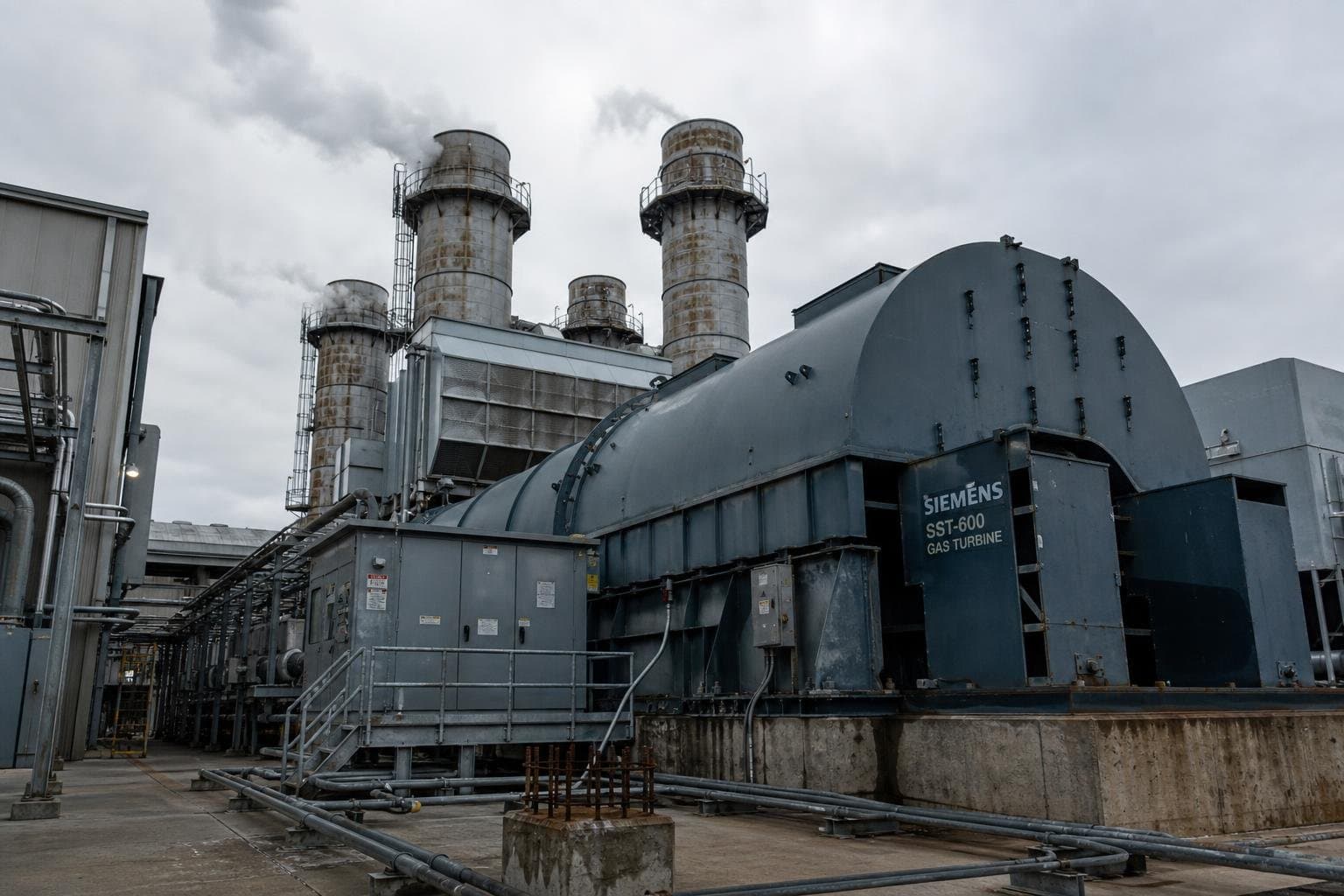

Natural gas plants are supposed to be stranded assets in waiting — expensive to run, carbon-intensive, and increasingly uncompetitive against wind and solar on a levelized cost basis. The retirement math has looked straightforward for years. Then European gas futures hit a three-year high this week on renewed fighting in Iran, oil moved toward $100 a barrel, and the question of what replaces dispatchable gas capacity during a stress event became considerably less theoretical.
The stranded asset framing is real. But it's incomplete. The harder problem is that gas plants don't just generate electricity — they provide insurance against the hours when everything else fails simultaneously. And right now, nobody has priced that insurance correctly, let alone built a credible replacement for it.
The Dunkelflaute Problem Has a Dollar Sign Attached
Grid operators don't lose sleep over average conditions. They lose sleep over the tail events: extended periods of low wind and low solar output — what German engineers call dunkelflaute, dark doldrums — that coincide with peak demand. During those hours, gas turbines are often the only dispatchable resource available at scale. They set the marginal price, they keep the lights on, and they do it regardless of what the annual capacity factor looks like on a spreadsheet.
The EIA's June 2026 data illustrates the underlying tension: the Midwest hit its highest daily peak demand of the past twelve months on the last day of June, and average retail revenues per kWh rose 4.5% nationally year-over-year. Forty-three states saw higher electricity costs compared to the prior June. That's not a renewable energy failure — it's a reminder that the grid is being asked to do more, and that the cost of reliability is showing up in rate cases before the replacement infrastructure is fully built.
The stranded asset argument assumes that retiring a gas plant frees up capital and reduces long-run costs. That's true in expectation. The problem is variance. A plant that runs 5% of the year but prevents a grid emergency during the other 95% is not well-described by its capacity factor. It's described by its option value — and option value is notoriously hard to price in regulated markets that weren't designed to compensate it.
Retirement Decisions Are Being Made Without a Solved Replacement Pathway
The policy pressure to retire gas capacity is real and accelerating. Carbon pricing, state-level clean energy standards, and IRA incentive structures all push in the same direction. But the replacement pathway — long-duration storage, demand response, expanded transmission, hydrogen-ready turbines — remains contested on both cost and timeline.
Bloomberg's coverage of the current energy price surge points to exactly this structural vulnerability: European politicians are "sounding the alarm" not because renewables failed but because the dispatchable backup layer — gas storage, LNG import capacity, interconnection — is under stress from a geopolitical shock. The same architecture problem exists in U.S. markets, just with different trigger conditions.
The EIA's wholesale market data for May 2026 shows the regional price volatility that results when dispatchable capacity is tight: daily on-peak prices across RTO markets swing dramatically within a single month, reflecting the gap between average conditions and stress conditions. That gap is what gas plants are currently filling. Retiring them before something else fills it doesn't eliminate the gap — it just makes the price spikes larger when it opens.
This is the stranded asset trap in reverse. Utilities that hold gas plants too long face regulatory pressure, carbon cost exposure, and potential write-downs as the energy transition accelerates. Utilities that retire them too early face reliability penalties, emergency capacity procurement at elevated prices, and the political fallout from blackouts. Neither path is clean, and the cost of getting the timing wrong falls on ratepayers either way.
The Honest Accounting Hasn't Happened Yet
What's missing from most retirement discussions is a rigorous cost-per-unit-of-reliability calculation. How much does it cost to keep a gas plant on standby for the 200 hours per year when it actually matters? How does that compare to the cost of the storage, demand response, or transmission investment that would provide equivalent reliability? And who pays — the utility, the ratepayer, or the capacity market?
These questions don't have clean answers yet, partly because capacity markets were designed for a different resource mix and partly because long-duration storage at scale is still a cost curve that analysts are projecting rather than observing. Reuters' analysis of tighter energy markets through 2027 suggests the supply-demand balance for dispatchable energy remains stressed well into the medium term — which means the window for orderly gas retirement may be narrower than the policy timeline assumes.
The stranded asset risk is real. So is the grid stability risk. The problem is that current policy frameworks are optimized to address the first and largely silent on the second. Watch for FERC's next capacity market rule proceedings and whether any regional grid operator moves to formalize a "reliability holdback" mechanism for gas retirements — that's where the honest accounting will either happen or get deferred again.


