


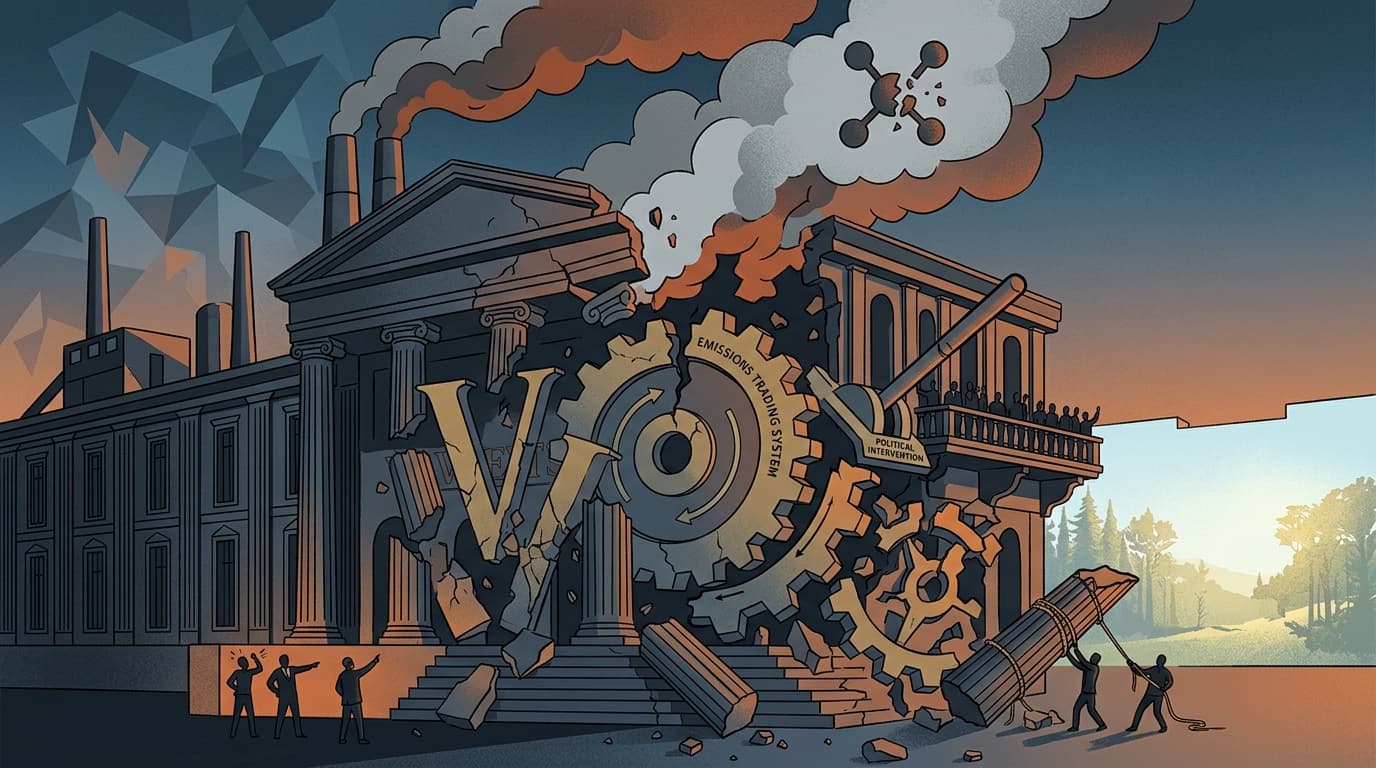

The EU Emissions Trading System just had a rough week. European carbon prices fell more than 5% after the European Commission President signaled the bloc might release additional emissions permits to ease energy costs. That's the mechanism working exactly as designed — until the political pressure gets high enough, at which point the mechanism gets overridden.
This is the core tension in carbon pricing that never quite makes it into the press releases: the price signal is only credible if governments don't blink when it hurts. And right now, it's hurting enough that Europe's biggest business lobby is calling for a full ETS overhaul, arguing the system adds financial burden on top of already-high energy costs and competitive pressure from outside the EU.
They're not wrong about the burden. They're just not asking the right follow-up question: burden compared to what alternative?
The ETS design problem isn't that it prices carbon — it's that the price is volatile enough to plan around in bad years and easy to politically dilute when it becomes inconvenient. A 5% single-day drop on a policy announcement isn't a market signal. It's a market expressing that it doesn't fully trust the policy.
On the voluntary side, the picture is murkier. Research into the voluntary carbon offset market finds that energy price movements and new legislation are likely to shift both the price and volume of credits issued — but establishing actual causality between policy changes and offset quality remains methodologically difficult. The pattern suggests the market is reactive to external signals in ways that don't always track underlying emissions reductions.
Who's making money? Primarily the intermediaries — brokers, registries, and project developers who earn fees regardless of whether the underlying offset holds up to scrutiny. The environmental outcome per dollar is the variable that gets squeezed.
Watch the Commission's next move on permit supply. If they release additional allowances to cap energy prices, the ETS price floor becomes a political ceiling — and every industrial emitter in Europe will have learned exactly how much lobbying pressure it takes to get relief.