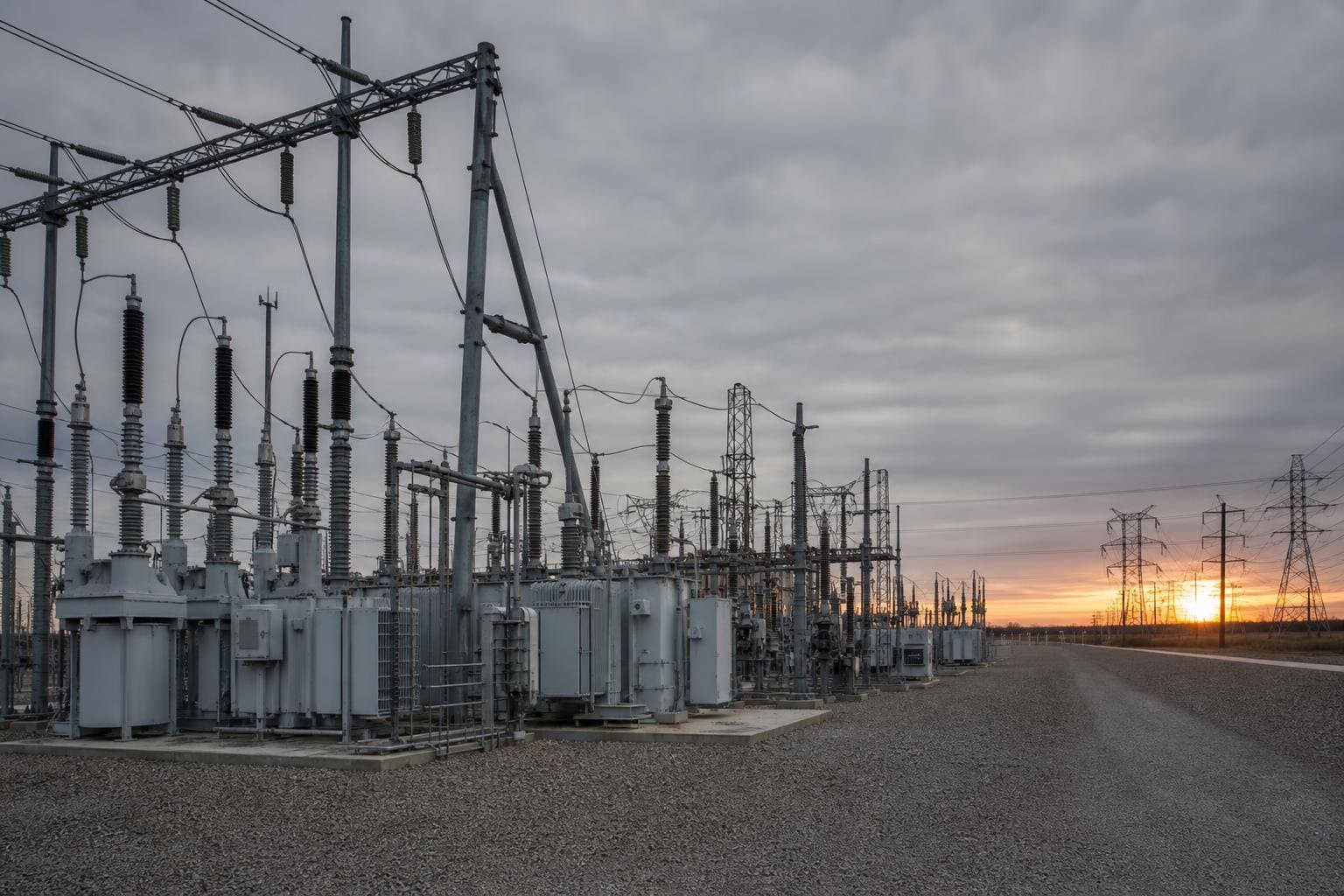

The interconnection queue is supposed to be a planning tool. In Texas, it has become a stress test.
ERCOT is currently tracking approximately 410 GW of large-load interconnection requests against a current peak demand of roughly 85–90 GW. That's a 4.5-to-5x ratio — the largest disclosed interconnection-versus-demand gap of any U.S. grid operator. For context, the queue isn't a commitment; most of those projects won't be built. But the sheer volume signals something real: industrial and data center load is arriving faster than the grid's governance structures were designed to absorb, and the mechanisms meant to manage that growth keep hitting procedural walls.
The Queue Tells You Where the Money Is Going
A decade ago, Texas was a wind story. Today it's a gas story. For the first time since January 2016, gas generation has surpassed wind in ERCOT's interconnection queue by volume — driven almost entirely by data centers seeking dispatchable, 24/7 power to support AI workloads. "The data center explosion and their desire for 24/7 power probably excited a lot of gas developers, and that gas queue got bigger," University of Texas energy regulation professor David Spence told the Texas Tribune.
This isn't just a preference signal — it reflects a structural mismatch. Renewables are abundant in the queue on the generation side, but the load growth driving grid stress is specifically the kind that solar and wind can't serve alone: always-on, high-density, intolerant of curtailment. Data centers don't ramp down at 6 p.m. when solar output drops. That's the core tension. The grid is adding variable capacity while the new demand profile is relentlessly flat.
The queue numbers also need a reality check: only 22% of projects in ERCOT's queue historically reach completion, according to Lawrence Berkeley National Laboratory. So 410 GW of requests doesn't mean 410 GW of actual load is coming. But even a fraction of that materializing — say, 20% — would represent load growth that dwarfs current peak demand. The uncertainty itself is a planning problem.
The Governance Mechanism Meant to Fix This Keeps Slipping
ERCOT's answer to the queue chaos is a framework called Batch Zero — a proposal to replace the existing one-at-a-time Large Load Interconnection Study process with a batched, collective review that would produce cleaner cost allocation and faster pathways for hyperscale connections. It cleared two subcommittee reviews in early May. Then the Technical Advisory Committee tabled it on May 13, the first procedural setback in ERCOT's normal governance ladder, pushing the timeline past the originally targeted Board vote window.
The TAC meeting on May 19 — held after the tabling — did advance several transmission expansion projects through the Regional Planning Group process, including major reliability upgrades across North and Central Texas. But the Batch Zero framework itself remains unresolved, likely returning at the mid-June TAC cycle. That compresses the path to Board approval and delays the implementation of rules that are supposed to govern the very load growth already straining the system.
This is the implementation gap in real time: the load is arriving, the queue is filling, and the regulatory framework designed to manage it is running one meeting cycle behind.
The Physical Risks Aren't Waiting for the Paperwork
Governance delays would be merely frustrating if the grid had comfortable margins. It doesn't. The IEA's Electricity 2026 forecast projects global electricity demand growing at an average annual rate of 3.6% through 2030, with data centers among the primary drivers — and Texas is absorbing a disproportionate share of that growth given its regulatory environment and land availability.
The physical stress shows up in specific ways. Evening hours have become the tightest operating window as solar output drops while industrial and data center loads continue unabated. The gas plants needed to cover that gap are the same water-intensive thermal units exposed to drought risk — a non-trivial concern in a state that has experienced severe drought conditions in recent years. And the IEA's battery storage analysis notes that while utility-scale battery additions reached 87 GW globally in 2025, regulatory uncertainty and grid connection delays remain the primary barriers to deployment — exactly the conditions ERCOT is currently generating.
Meanwhile, Texas utilities are investing in hardening distribution infrastructure against extreme weather — necessary work, but downstream of the transmission-level reliability problem that Batch Zero is supposed to address.
What to Watch
The mid-June TAC meeting is the next decision point for Batch Zero. If it clears there, the ERCOT Board could vote before end of summer. If it gets tabled again, the framework that's supposed to govern 410 GW of interconnection requests will remain unresolved through peak demand season.
The more important number to track isn't the queue total — it's the realization rate. If data center developers start pulling interconnection agreements and breaking ground at even 15–20% of the requested volume, Texas will have a dispatchable capacity problem that no amount of governance reform fixes quickly. Gas developers in the queue are betting that's exactly what happens. The queue composition suggests they're probably right.


