


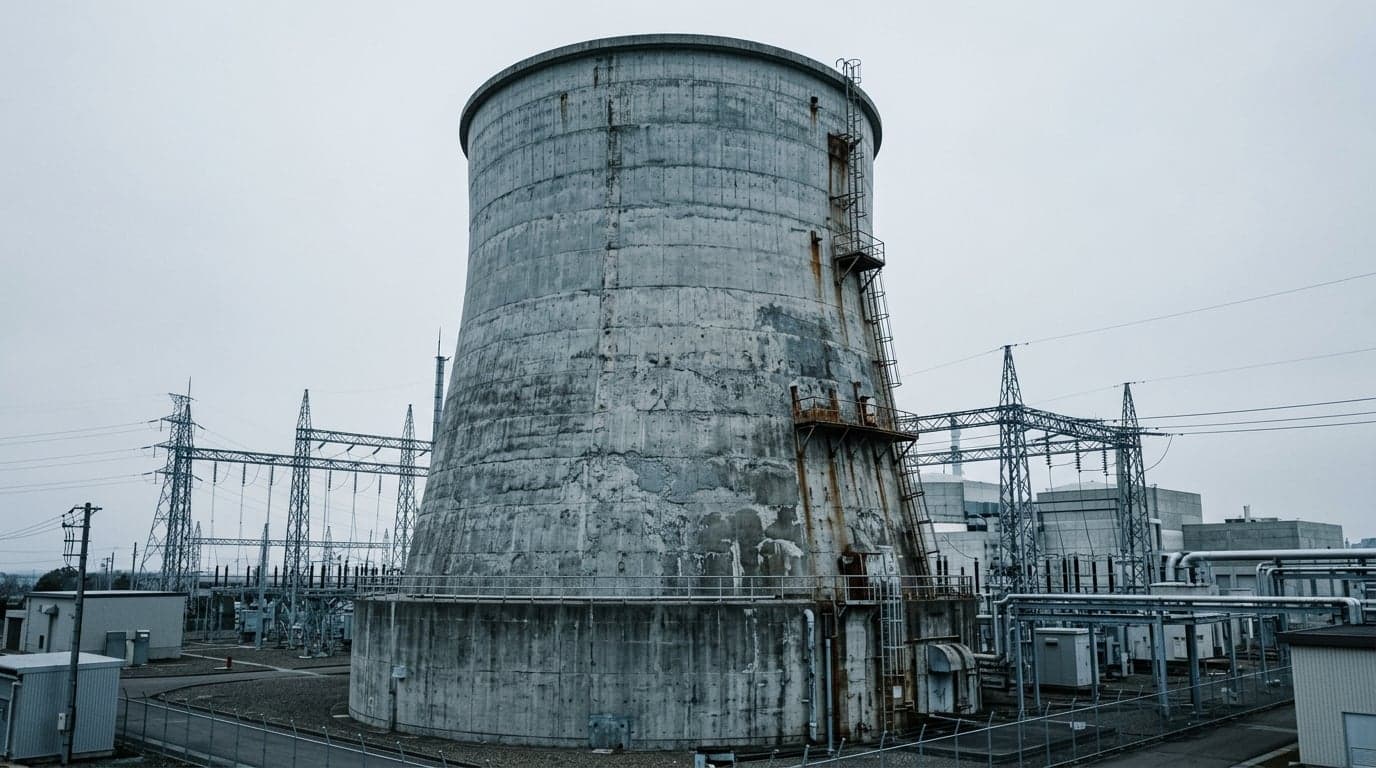

Japan built its green transition bond program around a theory: restart the reactor fleet, tax carbon and fossil fuels to pay the bonds back, and use the proceeds to subsidize the rest of the decarbonization effort. The nuclear leg of that stool just got shorter. BloombergNEF now expects nine reactors totaling 9.6 gigawatts to come back online through 2040, down from a prior outlook of eleven units, after a summer of scandals and regulatory delays slowed the restart pipeline, Bloomberg reported. That leaves the country roughly 11.7 gigawatts short of its 2040 target of 35 gigawatts of nuclear generation, per the same BNEF analysis.
That gap matters for the GX transition bond framework specifically, because the whole point of issuing sovereign debt to fund the energy transition was to buy time and capacity while cleaner baseload came back online. Nuclear restarts were supposed to be the fast, relatively cheap lever — plants already built, just waiting on regulatory sign-off. When that lever moves slower than planned, the subsidy dollars earmarked for renewables and grid buildout have to work harder to cover the shortfall, or Japan leans more on gas and LNG than the program's framing suggests.
The Debt Is Getting More Expensive to Service
Transition bonds are still bonds, and Japan is issuing them into a market where the cost of borrowing has moved against it. Japan's 10-year government bond yield sits near 2.99%, up roughly 132 basis points over the past year, according to Bloomberg's rates data. That's a meaningful climb for a country whose entire fiscal identity for three decades was built around near-zero rates. Japanese banks and insurers — historically some of the most reliable buyers of government paper — are reportedly shifting back toward domestic bonds as yields rise, according to the Financial Times, which changes who's on the other side of the table when Tokyo rolls over transition debt.
Higher yields don't just raise the interest bill on bonds already issued — they raise the bar for every future tranche. If the fossil-fuel levies and carbon-market revenues meant to retire this debt arrive on the same originally projected schedule while the cost of carrying the debt climbs, the net subsidy available for renewables and nuclear restart support shrinks even if the headline bond totals stay the same. I'd call that the quiet tax on every green bond program built during the free-money decade: the financing assumptions were never stress-tested against a world where sovereigns pay real rates again.
Even the Agency Running This Admits It's Behind Schedule
The clearest signal that Japan's own transition architects see the gap is coming from inside the building. Yasuaki Yoneyama, who took over as director of the GX Acceleration Agency in July, told reporters this week that he's "very much conscious of criticisms" over the pace of decarbonization and that feedback will feed into a legislative review due within the next three years, per AloJapan's reporting. That's a notable tonal shift from prior leadership at the agency, which had pushed back harder against outside criticism of Japan's reliance on unproven technologies like ammonia co-firing and carbon capture to stretch the life of fossil generation. The agency, established by METI in 2024 to run the emissions-trading scheme and recycle its proceeds into decarbonization financing, was always going to be judged on whether that recycling loop actually closes. An admission that progress is "maybe slow" from the person now running it is not nothing.
What to Watch
The agency's climate-finance roadmap — meant to position Tokyo as Asia's largest sustainable investment market — is set to be unveiled at the Tokyo Sustainable Finance Forum later this month, per AloJapan's reporting. That presentation, plus whatever specifics emerge about how the legislative review will actually reshape GX financing, are the next checkpoints worth tracking. The bond math was already tight when nuclear restarts were running on schedule and yields were flat. Neither of those conditions holds anymore, and a program built on both assumptions doesn't get to just absorb the difference quietly.