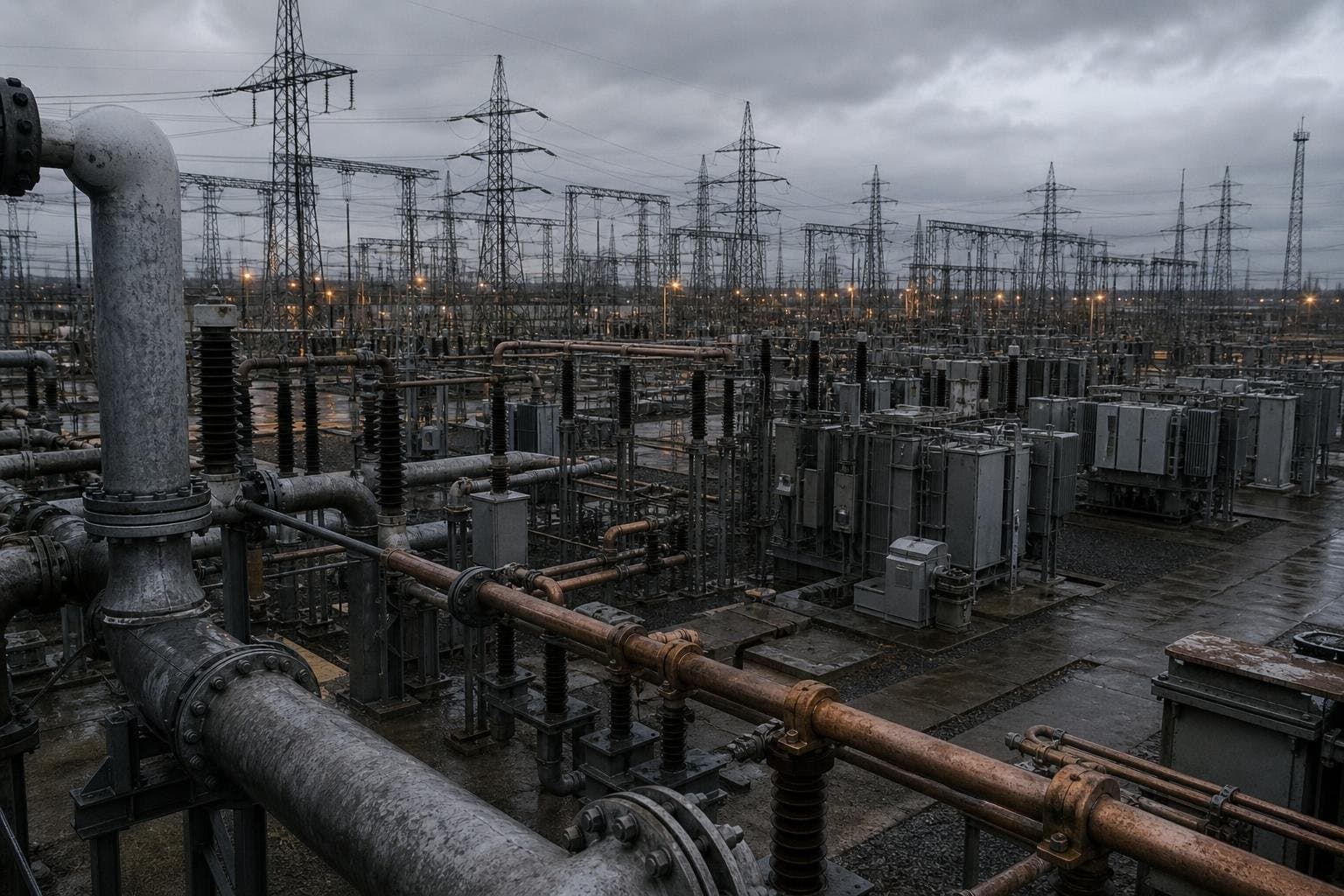

Germany hit 57% renewable electricity generation in 2025, according to Federal Statistical Office data — solar alone jumped from 75.9 billion kWh in 2024 to 92.2 billion kWh, a gain of more than 20% in a single year. That's a genuine engineering achievement. It's also the setup for a grid management problem that's getting expensive fast.
When wind and solar produce more power than the grid can absorb or export, grid operators have two options: pay generators to switch off (curtailment), or pay dispatchable plants to ramp up or down to rebalance the system (redispatch). Germany is doing a lot of both. The research memo underlying this piece puts curtailment at 8 TWh in 2025, with redispatch fees running into the hundreds of millions. Those costs don't disappear — they land on consumer electricity bills as grid fees. The 6.7% household price drop Germany achieved in early 2026 came largely from a €6.5 billion government subsidy on transmission grid fees, not from the underlying cost structure improving. Strip out the subsidy, and the grid's congestion costs are still there, compounding.
The Proposed Fix Creates Its Own Problem
The obvious engineering answer is storage — batteries that absorb excess renewable output during surplus hours and discharge during scarcity. Germany's battery storage pipeline is growing, and regulators at the Bundesnetzagentur (BNetzA) have been working to clarify the investment framework. The forthcoming AgNes framework would impose a capacity-based network fee on battery energy storage systems of roughly €4,000–7,000 per MW per year starting in 2029, with grandfathering protection for projects that reach final investment decisions before late 2026.
That grandfathering window matters enormously. It's essentially a regulatory deadline disguised as a benefit: developers who move fast get cost certainty; those who wait face a fee structure that could materially change project economics. Whether €4–7k/MW/year is a dealbreaker depends on the revenue a storage project can earn — and that's where the second layer of uncertainty enters.
Germany is also working through a proposed Grid Package that would designate certain areas as capacity-limited zones, potentially stripping new renewable projects of compensation when they're curtailed due to congestion. The intent is to send location signals — don't build more wind in already-congested corridors — but the side effect is that storage projects in those same zones face murkier revenue assumptions. If a battery is charging from curtailed wind that no longer receives compensation, the economics of the arbitrage trade shift. Flexible connection agreements, which may further limit when storage can draw from or inject into the grid, add another variable that developers can't yet fully price.
The Capacity Market Wildcard
Layered on top of all this is the pending StromVKG — Germany's capacity market, currently scoped at around 10 GW and focused primarily on gas. The design of that mechanism will determine whether storage can compete for capacity payments alongside gas peakers, or whether it's effectively excluded from the revenue stack that makes firm capacity economics work.
This is the part of the German storage debate that doesn't get enough attention. Battery storage advocates often present the technology as a straightforward substitute for gas backup — charge when renewables are cheap, discharge when they're scarce, collect the spread. But that arbitrage only pencils out if the price spread is wide enough and frequent enough. Germany's wholesale electricity prices fell according to EnergyPrices.net even as renewables hit record shares — which is the expected effect of high renewable penetration on average prices, but it compresses the very spread that storage needs to be profitable. Meanwhile, the scarcity spikes during low-wind periods remain severe, but they're episodic. A storage project that earns most of its revenue from a handful of tight days per year needs either very high spike prices or capacity payments to be financeable.
If the StromVKG capacity market excludes or undervalues storage, developers will either wait for better terms or build elsewhere in Europe. JPMorgan's analysis of European power infrastructure projects roughly €1 trillion in grid investment across the continent over the next decade — the capital is available in principle, but it will flow to jurisdictions with clearer rules.
What to Watch Before Year-End
Germany's curtailment costs are a symptom of a grid that's adding renewable generation faster than it's adding the flexibility infrastructure to manage it. That's not a reason to slow the renewables build — the Federal Statistical Office data shows natural gas actually increased its share in 2025 as backup, from 16.2% to 17.0%, which is the opposite of the intended direction. More storage and transmission would help. But the regulatory framework governing how storage gets paid is still being written, and the grandfathering deadline creates a race against a moving target.
Three things to track in the second half of 2026: whether the Grid Package passes in its current form and how it handles compensation in congestion zones; the final StromVKG design and whether storage qualifies for capacity payments; and how many battery projects actually reach final investment decision before the AgNes grandfathering window closes. The last one is the most concrete test of whether the regulatory clarity the BNetzA is offering is actually bankable — or just looks that way on paper.
Germany's renewable numbers are real. The grid bill is also real. The question is whether the storage economics get resolved before the curtailment costs become a political problem that's harder to paper over with grid fee subsidies.


