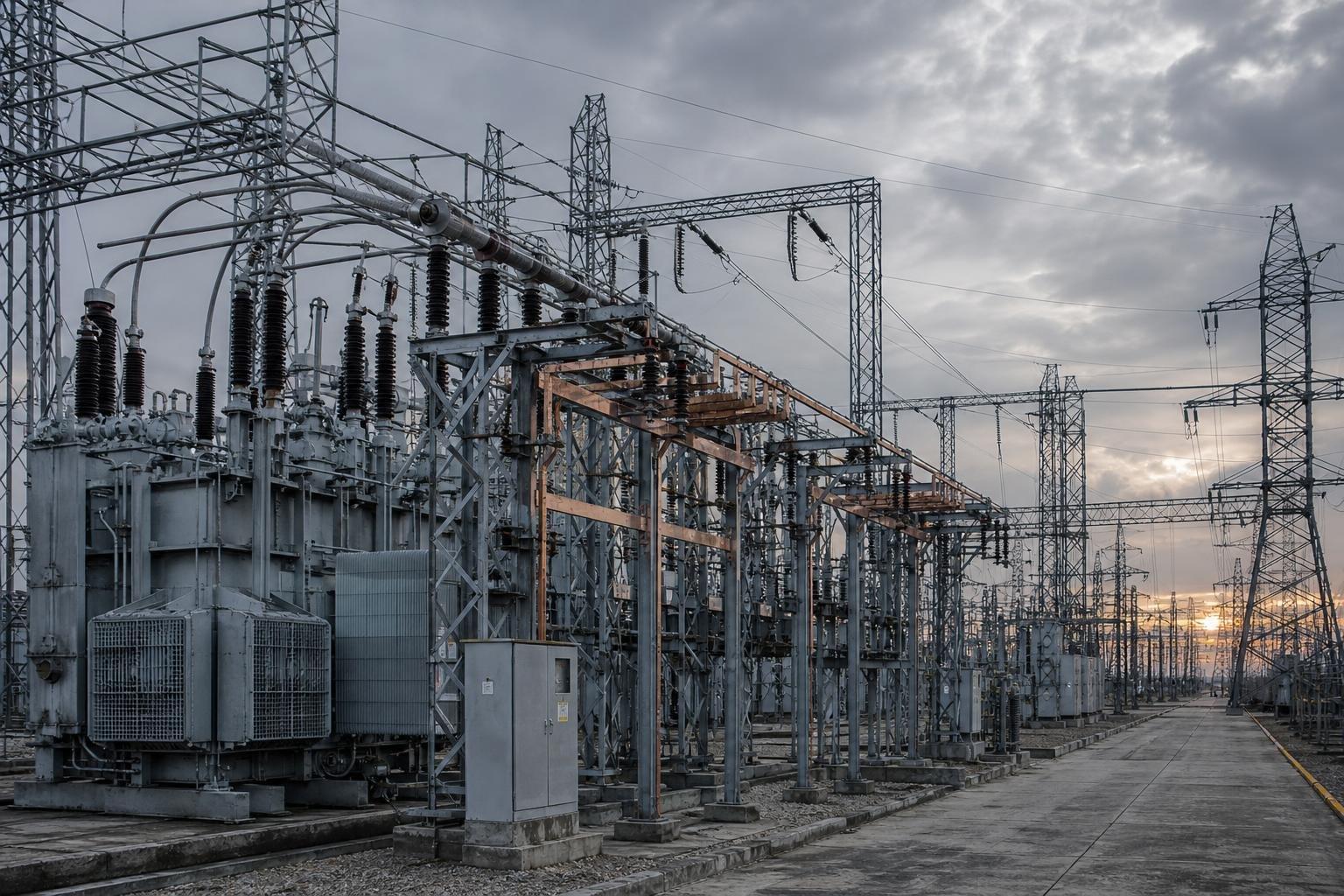

Texas spent the hottest summer in its grid's history without a single real price spike. That sentence would have sounded absurd in August 2023, when demand peaked at just over 85,000 megawatts and the day-ahead market blew past $1,000/MWh on twenty separate days, topping out above $4,200/MWh according to IEEFA's analysis of ERCOT pricing data. This year ERCOT set a new peak above 91,000 megawatts in July — a jump of roughly 6.5% over the old record — and prices barely moved. Day-ahead settlements cleared above $125/MWh on just five days all summer, with the highest spike landing at $229/MWh per IEEFA. That's not a rounding error. That's a market behaving completely differently under more stress than it faced before.
It's worth remembering that this is happening inside a wholesale market with no retail price cap — the deregulated structure Texas adopted in 2002 passes fuel and scarcity costs straight through to consumers rather than smoothing them over a multi-year rate case the way regulated states do as a Texas electricity market explainer lays out. That structure is exactly why the 2023 price spikes mattered so much, and why this summer's calm is the more interesting data point. The mechanism Texas regulators spent years debating to buy this kind of reliability — a capacity-style payment scheme compensating generators for being available during scarcity — never got built in the form originally proposed. What actually showed up instead was hardware: solar capacity in ERCOT nearly doubled from 22,153 MW in 2023 to 41,185 MW by this July, and battery storage quadrupled from 5,090 MW to 21,564 MW over the same stretch IEEFA reports. During August's record-peak hour, solar alone covered nearly a third of demand, compared with 13.6% during the 2023 peak, when the grid leaned on expensive gas and coal to fill the gap per the same analysis. That shift did what any reliability payment mechanism is supposed to do — keep the lights on during scarcity without forcing consumers to eat four-figure marginal prices — and it did it through merchant investment responding to existing price signals, not a new administered payment.
This matters for how you read the next reliability fight, because Texas is about to try a cheaper lever than cash.
The Next Scarcity Problem Doesn't Pay Anyone to Show Up — It Tells Someone to Stop
ERCOT's reliability math is shifting target. Data center load growth is the variable regulators are now worried about, and the tool on the table isn't a new capacity payment at all — it's curtailment authority. ERCOT CEO Pablo Vegas told the BNEF Summit in Houston this month that he'll ask the Texas legislature for the power to require data centers to cut consumption before a formal grid emergency is even declared, rather than waiting until the system hits level two of its three-stage alert scale, which is the current trigger Bloomberg reported. That's a materially different economic instrument than anything resembling a performance credit. A capacity mechanism pays dispatchable generators to exist as insurance. Preemptive curtailment authority instead conscripts large loads as the insurance policy, for free, and pushes the cost of reliability onto whoever's data center just got told to throttle back mid-shift.
It's a cheaper fix on a utility ledger — no annual cost cap to negotiate, no new line item on consumer bills — but it's not actually costless. Somebody absorbs the economic hit of unplanned curtailment, and right now that's the data center operator, not the ratepayer. Whether legislators grant Vegas that authority will tell you a lot about who Texas expects to bear reliability risk going forward: generators getting paid to stand by, or large loads getting told to stand down. The politics of that tradeoff are getting sharper too, with Texas business leaders already nervous about state-level policy risk heading into next year the Financial Times notes — a mandate that effectively taxes the state's fastest-growing commercial load segment won't help that mood.
Meanwhile the rate picture nationally gives useful context for why Texas keeps avoiding administered payment schemes in the first place. U.S. average retail electricity revenue rose 5.1% year-over-year to 14.87 cents per kWh in August 2026, with residential rates up 3.4% to 18.16 cents per EIA's Electricity Monthly Update. Texas's own retail market, for context, had a median listed plan rate of 14.7 cents per kWh as of late October across the state's deregulated providers per Choose My Power's plan data — roughly in line with the national average despite the state's much larger exposure to fuel and weather volatility. Any new reliability payment mechanism in Texas has to clear that backdrop — a national rate environment already trending upward — without becoming the next line item critics point to on a bill.
What to Watch
The real test comes when the Texas legislature reconvenes and decides whether to hand ERCOT lower-threshold curtailment power over data centers. If lawmakers grant it, expect a fight over compensation — large loads rarely accept free curtailment quietly, and the fee structure attached to any mandate will determine whether this becomes a genuinely cheap reliability tool or just a capacity payment wearing different clothes. Watch for how that compensation question gets resolved, because it will tell you whether Texas actually found a cheaper way to buy reliability or just moved the bill to a different payer.


