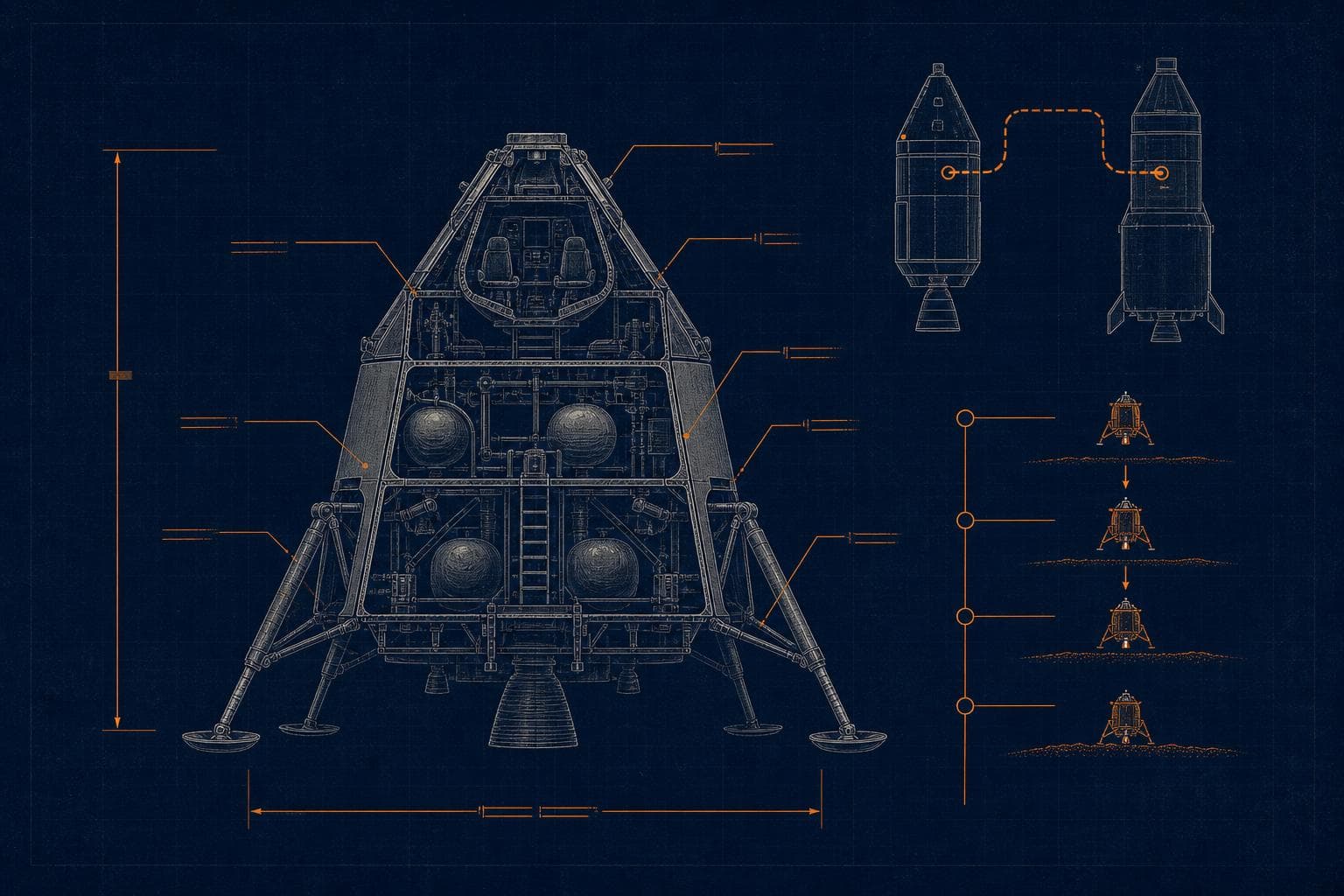

Three years ago, NASA's Human Landing System looked like a model for how to run a commercial space program. Fixed-price contracts, milestone-based payments, two competing providers. The agency had learned from the ISS cargo program and applied those lessons to the Moon. The cost discipline has largely held. The schedule has not.
A March 2026 audit from NASA's Office of Inspector General lays out the situation plainly: SpaceX's Starship lander is at least two years behind the original plan, with further delays expected. Blue Origin's Blue Moon lander is at least eight months behind. Both companies are struggling with the same core technical challenge — cryogenic fluid management, specifically the ability to store and transfer the super-cold propellants their vehicles require. NASA is tracking this as a top program risk.
The OIG report was completed before NASA announced a significant architecture change on February 27. That change, as Space.com reported, converted Artemis 3 from a crewed lunar landing to an Earth-orbit rendezvous test. The first actual Moon landing is now targeted for Artemis 4, no earlier than 2028. The program didn't lose a contractor — it lost a mission profile.
The Cost Controls Worked. That's Almost the Problem.
The OIG's finding on costs deserves a moment of genuine credit before the criticism. SpaceNews reported that SpaceX's HLS contract has grown by roughly 6% since its 2021 award, while Blue Origin's has grown by less than 1% since 2023. For a program this technically ambitious, that's a real achievement. Fixed-price, milestone-based contracting does what it's supposed to do: it keeps the government's financial exposure bounded.
But cost discipline and schedule discipline are not the same thing, and the HLS program has conflated the two. When a contractor absorbs schedule risk internally — stretching development timelines without triggering contract penalties — the government saves money in the short term while the mission date quietly recedes. The OIG report captures this dynamic. A critical SpaceX test, an in-space propellant transfer between two Starship vehicles, was originally scheduled for March 2025. It slipped to March 2026. SpaceX did not meet that revised date either, and the next Starship launch was not expected to include that demonstration.
That test matters because it's not optional. Starship's lunar architecture depends on orbital refueling — tanker vehicles transferring propellant to the mission vehicle before it departs for the Moon. Until that capability is demonstrated, the lander's readiness timeline is genuinely uncertain.
A Harder Problem Than Contractor Management
The assigned topic here — why NASA keeps losing contractors — doesn't quite match the verified record. NASA hasn't lost its HLS contractors. SpaceX and Blue Origin are still under contract, still developing their vehicles, still receiving milestone payments. What NASA has lost is schedule margin, and the distinction matters.
The deeper issue is that both landers are attempting technologies that have never been demonstrated at operational scale. Cryogenic fluid management in the thermal environment of space, long-duration propellant storage, vehicle-to-vehicle transfer — these aren't engineering details to be worked out late in development. They're foundational capabilities. The OIG report flags them as top risks precisely because they remain unproven close to the mission window.
Meanwhile, the broader lunar program is expanding its ambitions faster than its technical foundation can support. Ars Technica reported that NASA has penciled in nine lunar landings for 2027 and ten for 2028 across its Commercial Lunar Payload Services program — this is separate from HLS, covering robotic and cargo landers. Of the four CLPS missions that have launched so far, only one has completed a fully successful landing. Four more are under construction for the second half of this year, with schedules that have historically slipped.
A New Glenn rocket explosion during an engine test at Cape Canaveral has added another complication: Blue Origin planned to use New Glenn to launch its Blue Moon landers, and the incident has raised questions about the timeline for those cargo delivery missions.
What to Watch
The FY 2027 budget request, analyzed by The Planetary Society, proposes a 9% increase for exploration — the one NASA directorate that would grow under the White House plan. HLS is unlikely to face funding cuts in the near term. The pressure is technical, not financial.
The milestone to watch is SpaceX's in-space propellant transfer demonstration. Until that test happens and produces clean data, the 2028 landing target is a planning assumption, not an engineering commitment. Blue Origin's New Glenn return-to-flight timeline matters too — it determines whether the cargo delivery infrastructure for the Moon base initiative can stay on schedule. Both of those data points should become clearer before the end of this year.
Also this week: NASA announced contract awards for two lunar rovers — Astrolab's CLV-1 and Lunar Outpost's Pegasus — each targeting delivery to the Moon in 2028, with Blue Origin's Blue Moon Mark 1 lander contracted to carry them. The awards signal that the Moon base initiative is moving from concept to procurement, even as the foundational lander technology remains in development.


