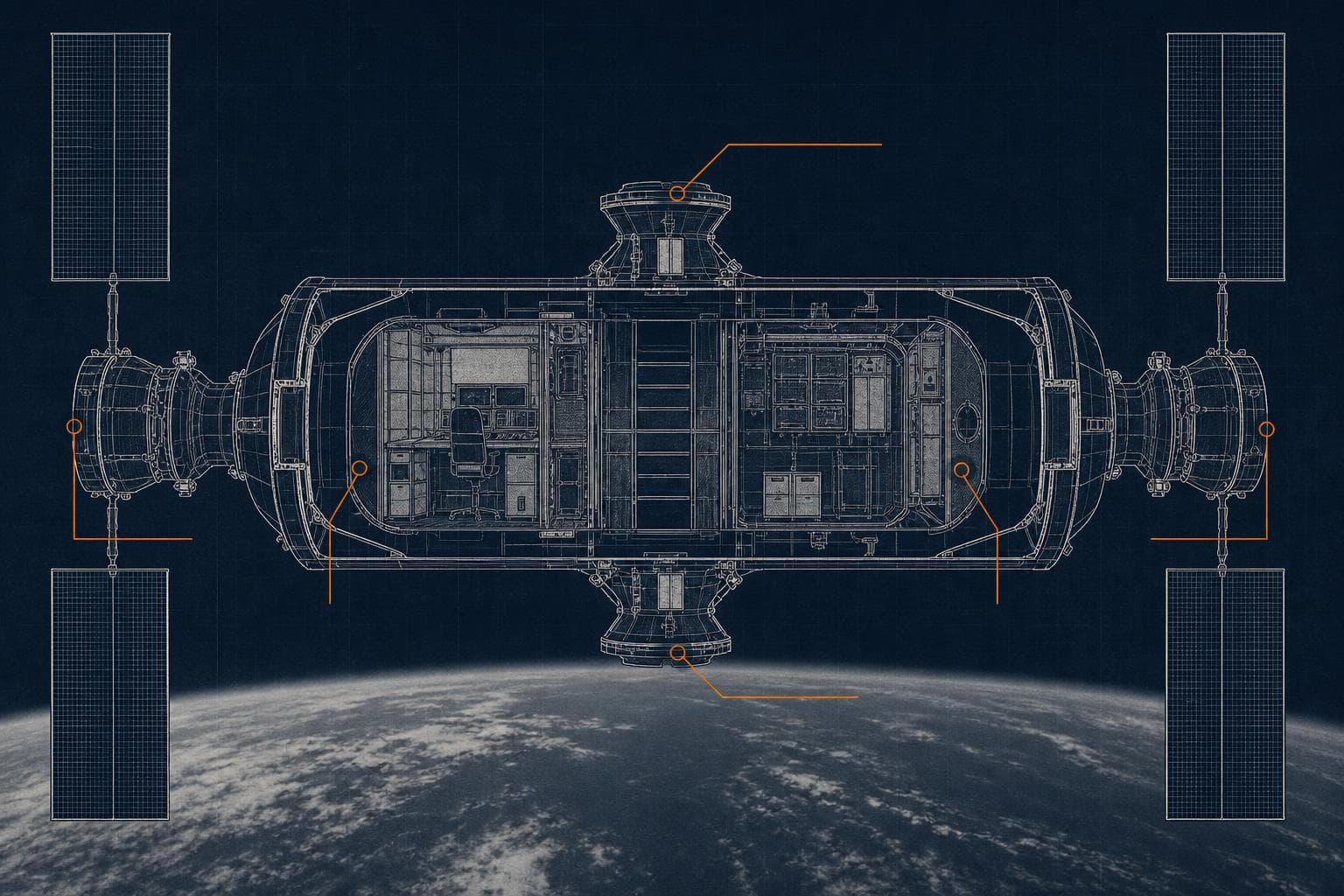

The ISS has been continuously inhabited for over 25 years. When it comes down — currently planned for 2030 — NASA intends to spend roughly $1.5 billion to deorbit 420 metric tons of space-grade hardware into the Pacific Ocean. That number is worth sitting with. The agency will pay to destroy a structure it spent decades building, on the theory that clearing the way for commercial successors is worth the cost.
That logic captures the current moment in space exploration better than any press release. Government isn't exiting space — it's restructuring its role, betting that private capital can carry more of the operational weight while agencies focus on the frontier. Whether that bet pays off is the defining question of the next decade.
The Money Has Already Voted
Private investors aren't waiting for the policy debate to resolve. According to the Space Economy Institute, Q1 2026 alone saw $9.4 billion in closed deals, with the year on pace to exceed $28.7 billion across 420 transactions. The hottest categories aren't the ones you'd expect from a government-driven agenda: in-space manufacturing drew $5.2 billion, cislunar logistics $3.8 billion. These are bets on a space-to-space economy — orbital factories, lunar propellant depots, reusable infrastructure — not on flags-and-footprints exploration.
That's a meaningful signal. When sovereign wealth funds from the UAE, Singapore, and Norway are allocating to cislunar logistics, they're not doing it out of scientific curiosity. They're following revenue models. The priorities private capital is funding — broadband, Earth observation, in-orbit services — are not the same priorities that drove Apollo or even the ISS program. Science and exploration remain on the agenda, but they're increasingly passengers rather than drivers.
The Launch Cost Shift Is Structural, Not Incremental
Underpinning all of this is a cost transformation that's easy to understate. Analysis from Space Policies puts Starship's confirmed pricing at $600–900 per kilogram to orbit — undercutting every operational competitor by a factor of three to ten. At those numbers, the economics of what's worth doing in space change fundamentally. Missions that were marginal become viable. Infrastructure that required government subsidy starts attracting project finance.
The same analysis notes that NASA's Commercial Moon/Mars budget line is projected to grow from $864 million to $3.59 billion by FY2030, while SLS retires after Artemis III. That's not a minor procurement shift — it's the institutional completion of a transition no other space power has attempted. The U.S. government is deliberately moving from owning launch infrastructure to buying launch services. The risk is real: sole-provider dependence on SpaceX for super-heavy lift is, as the analysis puts it, simultaneously the industry's greatest efficiency gain and its most acute systemic vulnerability.
What's Actually Changing on the Human Spaceflight Side
Four privately operated missions have docked with the ISS since 2022, according to the National Space Society. A commercially funded crew has flown higher than any human since Apollo and conducted the first commercial spacewalk. The companies running those flights are now building the orbital stations intended to replace ISS by the early 2030s.
This is the part that tends to get lost in the funding headlines: private involvement isn't just changing who writes the checks. It's changing who decides what questions get asked. A government-run station optimizes for scientific return and international partnership. A commercial station optimizes for revenue — which might mean pharmaceutical manufacturing, tourism, or media production as much as microgravity research. Those aren't necessarily worse priorities, but they are different ones.
Meanwhile, NBC News reported that Mars — once the stated centerpiece of both NASA's long-term roadmap and SpaceX's founding mission — is losing ground to near-term lunar and commercial priorities under current budget pressures. Whether that's a temporary retrenchment or a genuine strategic pivot remains unclear, but the trajectory is worth watching.
What to Watch Next
The clearest near-term signal will come from NASA's response to its own April 2026 request for feedback on a government-owned crewed station — a move that SpaceNews flagged as potentially complicating the clean handoff to commercial LEO destinations. If NASA ends up hedging toward a hybrid model, it tells you the agency isn't fully convinced private operators will deliver on schedule. Watch also for the FY2027 budget request's treatment of the Commercial Moon/Mars line — whether that $864 million baseline holds or gets trimmed will say more about the administration's actual priorities than any speech about manifest destiny.
The private sector has the capital and, increasingly, the hardware. What it doesn't yet have is a proven track record of running the kind of long-duration, science-focused missions that justify the word "exploration." That gap is where the next few years get interesting.


