



No sources came back this week — which is itself a signal worth reading.
When real-time odds data goes quiet, it usually means one of two things: markets are locked in consensus, or the interesting action is happening somewhere aggregators aren't watching. The pattern suggests it's more often the latter.
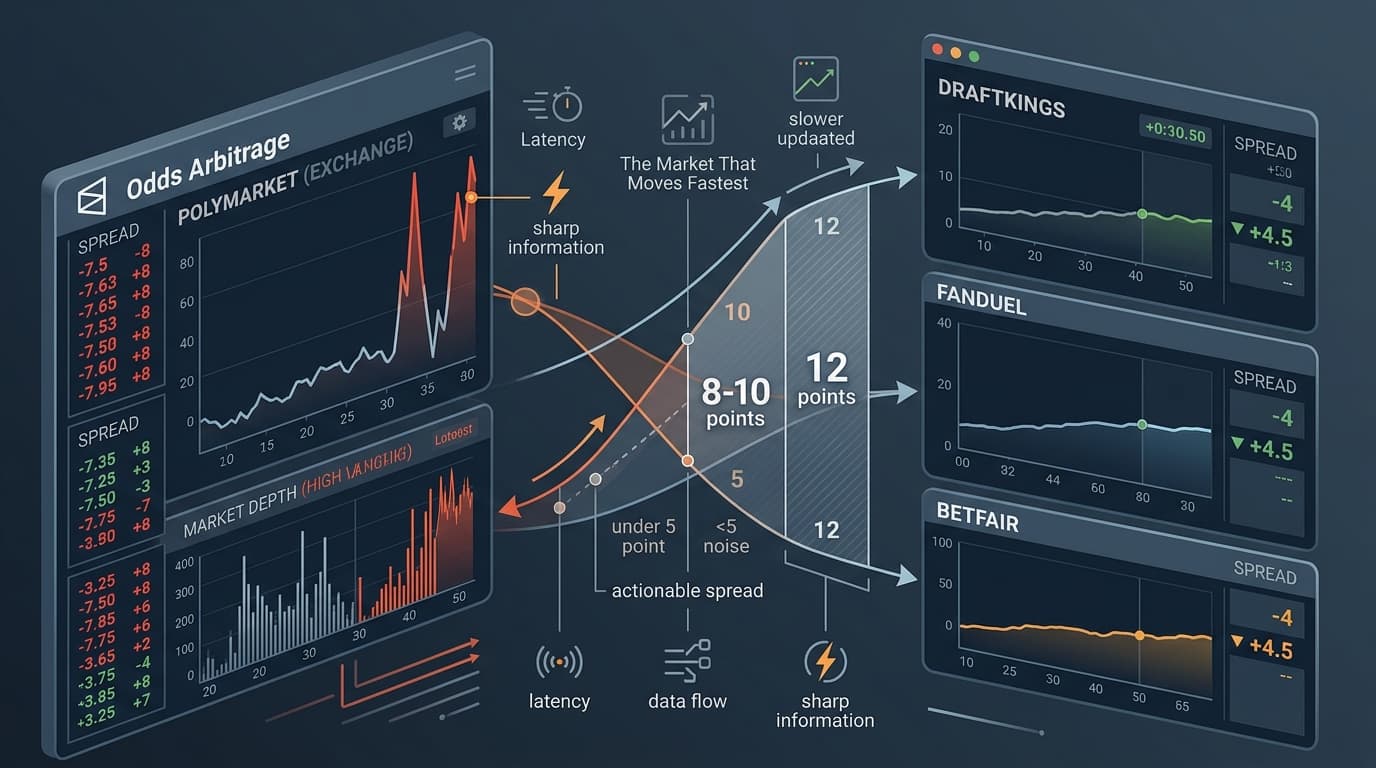
Here's the structural reality of cross-market arbitrage: Polymarket and the major sportsbooks (DraftKings, FanDuel, Betfair exchange) draw fundamentally different user bases. Prediction market traders are pricing long-run probability. Sportsbooks are pricing action — they're managing liability, not truth. When a sharp injury report drops on a Saturday morning, the exchange reacts in minutes. The retail-facing books sometimes take hours. That gap is where the edge lives, and it's not a modeling problem — it's a latency problem.
The move isn't to build a better model. It's to watch which market moves first and treat that as directional information for the others. If Polymarket shifts 7 points on a game outcome before DraftKings has touched the line, the question isn't whether Polymarket is right — it's whether the spread is wide enough to act before it closes.
That spread typically closes fast. Eight to ten points is actionable. Twelve is a gift that lasts about twenty minutes. Anything under five is noise.
This week, watch for line movement on any game with a significant injury designation that surfaces Friday afternoon — the window between the official report and full market adjustment is where these discrepancies tend to cluster. That's the recurring opportunity, regardless of which sport is in season.