
Tactics games are having a moment right now — Polygon's Ford James counted off a genre renaissance running through everything from Mario + Rabbids: Kingdom Battle to the Star Wars-flavored Zero Company, and he's not wrong that there's never been a better time to get into turn-based squad combat. But most of the games on that list are full-price, big-studio productions, the kind that also show up in roundups of underappreciated strategy picks during big storefront sales. The genre's actual experimental edge — the stuff that rethinks what a "unit" even is — is happening somewhere quieter: two itch.io projects that cost a fraction of what the mainstream tactics renaissance charges, and that treat unit design as the whole point rather than a feature checkbox.
Lancer Tactics Doesn't Simplify the Tabletop Game — It Imports the Whole Thing
The pitch for Lancer Tactics sounds almost reckless in its ambition: a full digital port of the Lancer tabletop mech RPG, built by a small team led by programmer Olive Perry with art direction from Mark Carpenter and narrative direction from Josh Boykin. Most tactics games borrow the skeleton of a tabletop system and smooth off the parts that don't translate to a screen. Lancer Tactics goes the other way. The project tracker on its own page lists the scope in blunt numbers: all 30 NPC base kits and optional kits implemented, all 30 core bonuses done, and the game can import pilot builds made in the community character tool COMP/CON directly from the tabletop original.
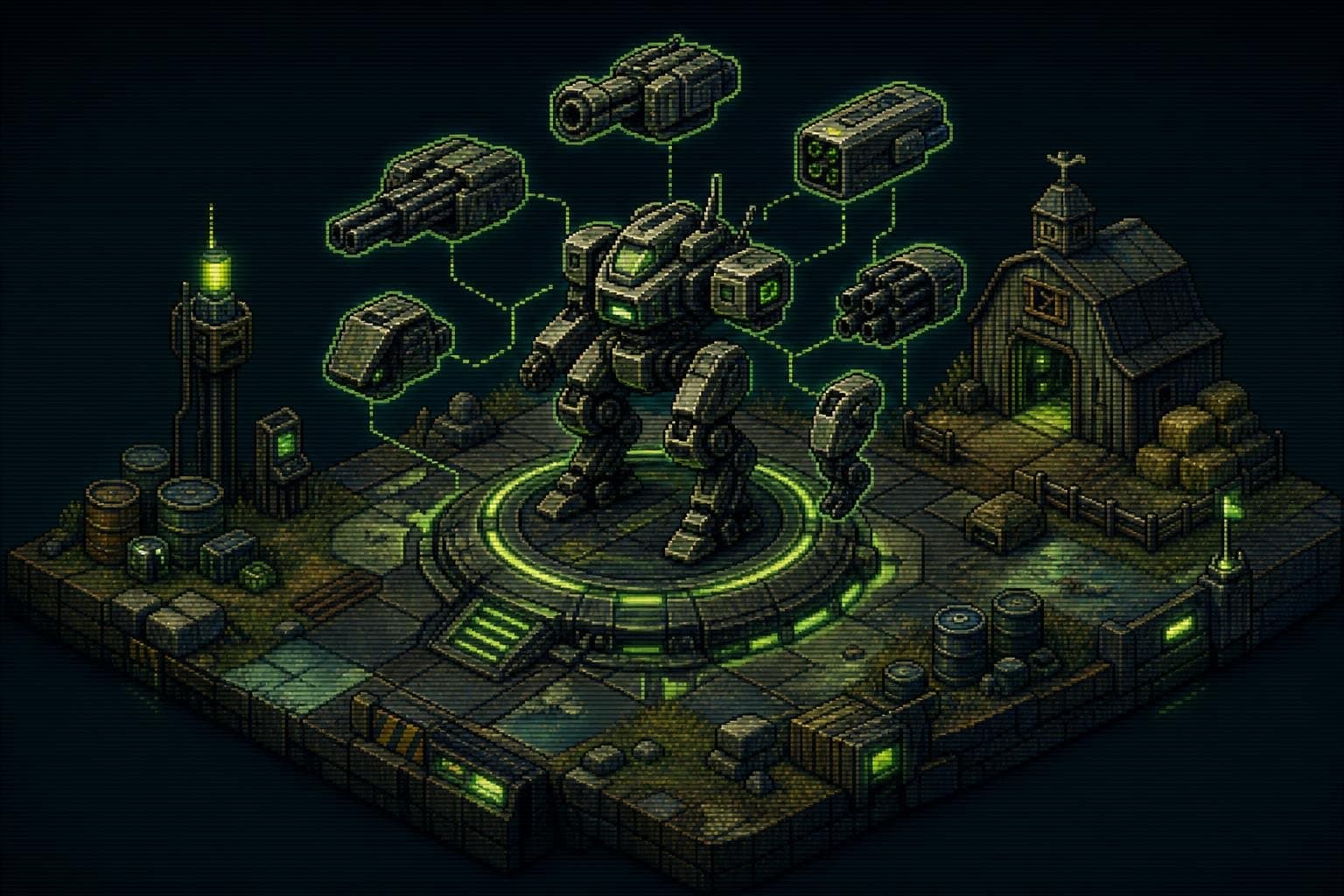
That matters for unit design specifically because Lancer's tabletop system is built around mech "frames" and swappable weapon/system loadouts that create wildly different silhouettes of the same chassis — a customization depth the developers describe as "some of the best damn customization options ever seen in a tactics RPG" on the game's own page. Rather than hand-picking a handful of archetypes the way most tactics games do, Lancer Tactics is trying to hand players the entire combinatorial toolbox from the source material. It's a sharper contrast when you set it against how even a long-running tabletop-adjacent franchise like Blood Bowl is approaching its next iteration — PC Gamer's early look at the Warhammer: Blood Bowl beta describes it as an incremental upgrade rather than a structural rethink, which is exactly the kind of caution a small team porting a full tabletop ruleset doesn't have to indulge. At $20 and currently rated 4.7 out of 5 stars across 191 ratings, it's early access, and the developers are upfront that it's a work in progress rather than a VTT replacement — they're explicit that human-run GM tools aren't on the roadmap because, in their words, good virtual tabletops for Lancer already exist. What's here is a single-player tactics game wearing a mecha-customization engine as its skeleton, and that's a weirder, more interesting bet than most $20 releases make.
Roll & Barrel Bets That the Arena Is a Unit Too
The second project is rougher — a first playable alpha, not a finished release — but the design idea behind it is sharp enough to flag now. Roll & Barrel is a turn-based tactics game built on the open 5th-edition tabletop ruleset, giving you four classic D&D archetypes — Fighter, Cleric, Wizard, Rogue — in short arena skirmishes against bandits. The developer's own framing of the experiment is the interesting part: "the arena should matter as much as your attacks," they write, describing walls that give cover, a hayloft you can climb onto, a brazier you can dip arrows into, and oil barrels that detonate when enemies stand next to them.
That's a different kind of clever unit design than Lancer Tactics' character-building depth — it's less about how many builds your Rogue can take and more about whether the environment itself functions as an extra unit on the battlefield. It's the kind of design risk you don't often see flagged in weekly release roundups like Rock Paper Shotgun's rundown of the week's PC games, which tends to be dominated by horror and bigger genre names. The developer is explicitly asking playtesters whether people actually use the terrain or just default to attacking, which tells you this is a design hypothesis still being stress-tested rather than a finished pitch. It's not a purchase yet, more a public experiment you can poke at for free, but it's the kind of early-stage thinking that's worth watching before it either sharpens into something special or gets abandoned.
The Real Split in Tactics Right Now
Put next to each other, these two projects outline where the genre's actual innovation is happening versus where its attention is. The big releases that Polygon's genre survey rounds up are polishing an already-proven formula with better writing and production values. The small itch.io projects are asking structural questions — how deep can customization go, how much can the map itself behave like a combatant — that a $60 studio release rarely has the freedom to risk. Neither Lancer Tactics nor Roll & Barrel is a finished, airtight product yet. But that's also exactly why they're worth tracking: the interesting design swings in this genre keep showing up in the games still figuring themselves out in public.


