


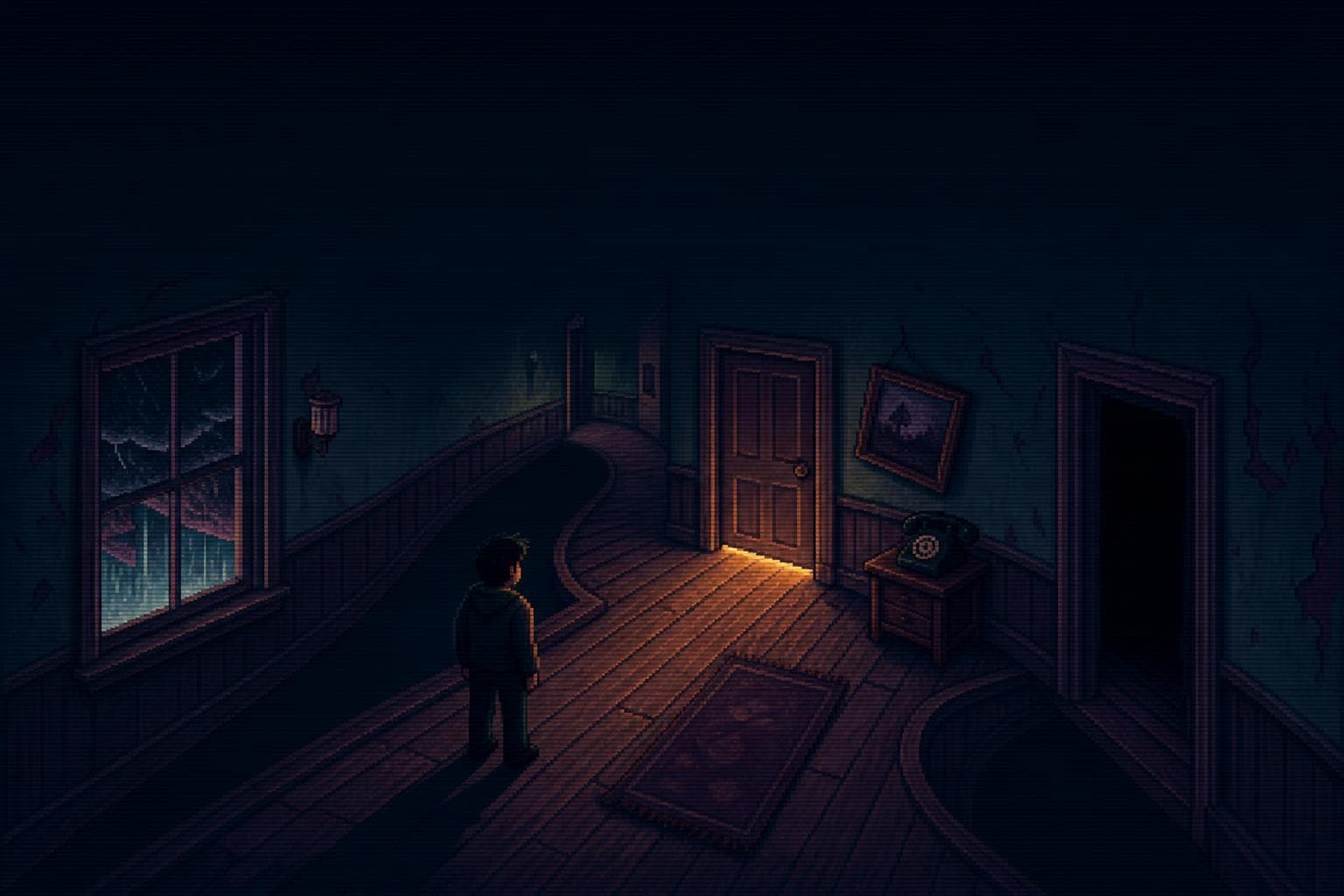

There's a moment in Luto where you realize the hallway you've walked down a dozen times has changed — subtly, wrongly — and you can't identify exactly what's different. No monster lunges. No sound sting fires. The game just lets you stand there, in your own home, feeling like a stranger in it.
That's the thing jump scares can't buy: the slow certainty that something is deeply wrong.
The Jump Scare Is a Cheat Code
Jump scares work. That's the problem. They're so reliable at producing a physical startle response that developers can lean on them instead of doing the harder work of building actual dread. The result is horror games that feel like haunted houses — effective in the moment, forgotten by morning.
The indie games worth your attention this week are doing something more difficult. They're building fear from architecture, from pacing, from the gap between what you expect and what you find.
Luto, reviewed recently by Indie Games Devel, is the clearest current example of this approach working at a high level. You're trapped inside a domestic space — your own home — that loops back on itself, folds in unexpected directions, and refuses to stay consistent. The horror isn't externalised as a clear threat; it's internalised as psychological fracture. Fear comes from what's withheld, not what's shown. The review describes it as "gradual infiltration" — tension that settles into your perception and stays there, sustained by doubt and repetition rather than shock.
What makes Luto interesting as a design object is how it weaponizes familiarity. Home is supposed to be safe. The game understands that inverting that assumption — making the familiar hostile, the domestic claustrophobic — creates a specific kind of unease that no monster could replicate. You can't fight your own house.
Atmosphere Requires Restraint
The other title worth flagging this week is The Last Transmission from Hidden Veil Studios, which takes a different structural approach: you're the last operator at a remote radio station, recording weather reports and fielding increasingly wrong phone calls. The setup is elegant — mundane routine as the container for creeping wrongness.
Indie Game Reviewer's coverage is honest about where it falls short. The atmosphere lands. The transitions are smooth. The small details — a mannequin doll suddenly facing you — work exactly as intended. But the game ultimately doesn't follow through on the dread it builds. The reviewer wanted to be chased, wanted their heart rate to spike, and the game stayed mellow when it should have tightened.
That's a useful failure to examine. The Last Transmission demonstrates that atmosphere alone isn't enough — restraint has to be in service of something. The slow build needs a destination, even if that destination isn't a monster. Luto earns its restraint because the accumulation of wrongness is the horror. The Last Transmission builds tension and then doesn't spend it.
What the Best Atmospheric Horror Actually Does
The games that answer that question well share a few design commitments. They treat space as a narrative instrument, not a backdrop — environments that communicate psychological states rather than just containing them. They pace information through absence, letting players reconstruct meaning from fragments. And they resist the urge to confirm the threat. The moment you see the monster clearly, the imagination stops working. The best horror games keep the imagination working overtime.
Slay the Princess does this through narrative structure rather than environment — every dialogue choice peels back another layer of moral instability, and the horror comes from realizing your assumptions about the story were wrong from the start. Firework does it through cultural folklore and the weight of grief, building unease that's emotional rather than visceral. Different tools, same principle: the scare lives in the player's head, not on the screen.
The indie horror games worth watching over the next few weeks are the ones that understand this. VEIL, a solo-developed first-person psychological horror game currently building momentum on itch.io, is positioning itself squarely in this tradition — atmosphere and slow-building tension as the primary design language. Whether it delivers is still an open question, but the intent is right.
The jump scare will always be there when developers need a quick hit. The games that skip it entirely are betting that you'll remember them longer. Based on the evidence, that bet keeps paying off.