
There's a specific kind of disappointment that hits when you boot up a cozy management sim and realize it's just a spreadsheet wearing a pastel hat. The genre has a real noise problem right now. PC Gamer's Steam Week in Review counted 14 retail sims released in a single week on Steam — and that's with horror games and idle games filtered out. Fourteen. In one week. Most of them rudimentary, most of them reaching an audience anyway, because the appetite for this genre is genuinely enormous and players are willing to take chances.
That appetite is real and it deserves better than it's getting. So when two games in this week's August release window actually have something interesting going on mechanically, it's worth paying attention.
ReStory Earns Its Chill Through Specificity
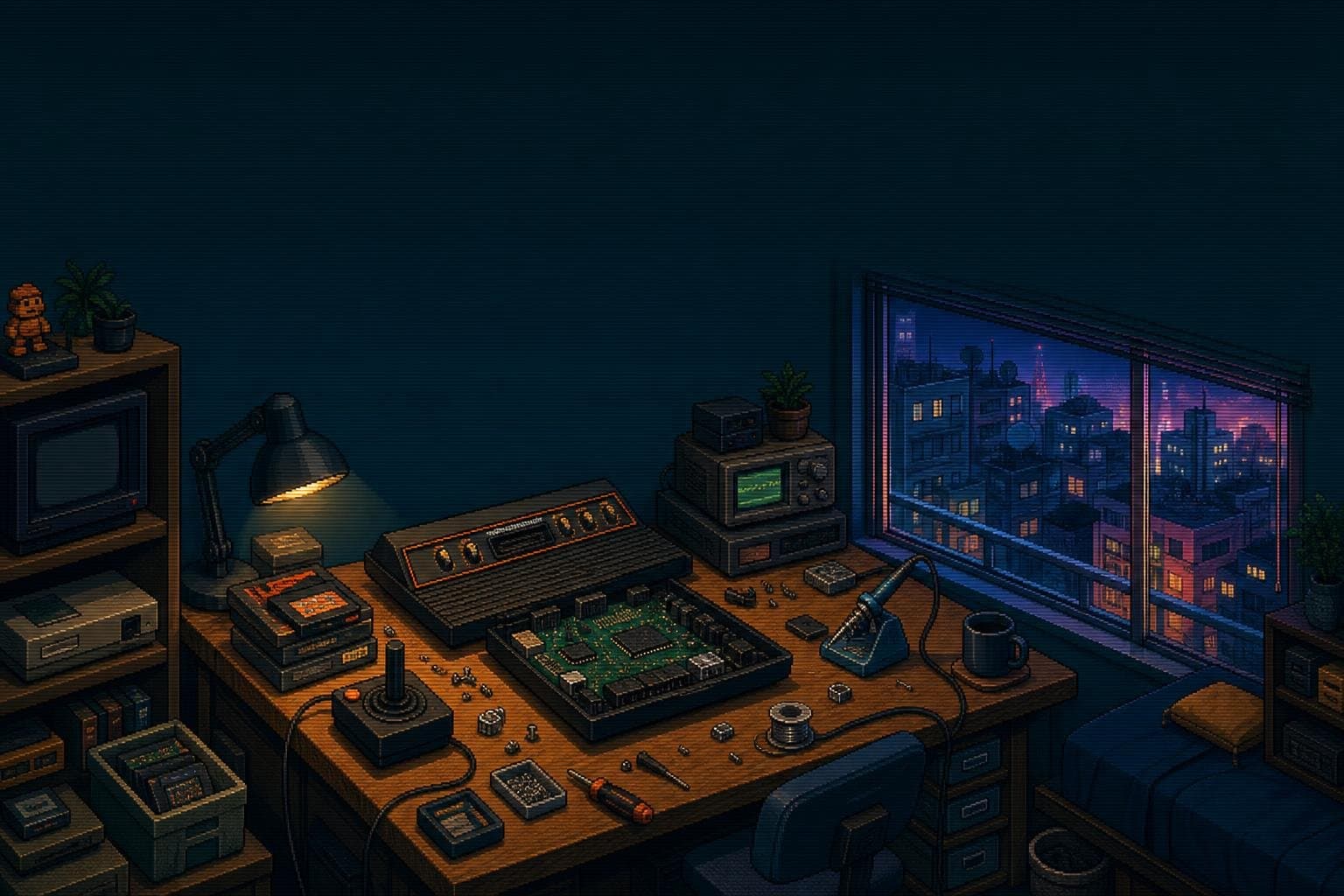
The cozy sim that's caught my attention most this week is ReStory: Chill Electronics Repairs, a story-driven shop management game set in mid-2000s Tokyo. The premise is exactly what it sounds like: you restore old electronics, interact with customers, and let a branching storyline unfold based on your choices.
What makes this more interesting than the average shop sim is the specificity of its setting. Mid-2000s Tokyo isn't just aesthetic dressing — it's a constraint that forces the game to be about something. The electronics you're restoring are inspired by real iconic hardware from that era, and Comfy Cozy Gaming notes the game features officially licensed Atari consoles. That's a meaningful detail. Licensing costs money and signals that the developer made a deliberate choice to ground the nostalgia in something real rather than just gesturing at it with vaguely familiar shapes.
The repair loop itself — pulling items apart, cleaning them up, putting them back together — is the kind of tactile, low-stakes interaction that cozy sims do best when they're working. There's no combat, no fail state looming over your shoulder. The stress, if you can call it that, lives entirely in the branching dialogue: your responses to customers shape the story. That's a smart design choice. It keeps the management layer genuinely relaxing while giving the narrative layer something to do.
Does it execute perfectly? I haven't played it yet — it releases August 6th per the Rock Paper Shotgun weekly roundup. But the design intent is coherent in a way that a lot of genre entries aren't, and coherent design intent is usually a good sign.
Block Block Block Is Doing Something Quieter and Weirder
The other August release worth your attention is Block Block Block, which strips the management layer out almost entirely and asks a simpler question: what if decorating tiny diorama rooms was the whole game?
You control the size of the room, the size of the objects, and how everything is arranged — all through a drag-and-drop system. Bedroom, bakery, castle, whatever you want. The scope is deliberately small and the ambition is deliberately narrow, and that's actually what makes it interesting. Most cozy sims try to be cozy and have progression systems and have narrative and have crafting. Block Block Block appears to have decided that one thing done well beats five things done adequately.
This is the kind of game that's easy to dismiss as a toy rather than a game, and I'd push back on that framing. Some of the most memorable indie experiences I've had have come from games that committed fully to a single interaction and trusted players to find meaning in it. For a recent comparison point, Boba Cafe Simulator on Steam — a management sim that released in late July — has pulled 94% positive reviews across nearly a thousand ratings by doing something similar: committing to one clear fantasy and executing it without bloat. The question for Block Block Block is whether the diorama-building has enough depth to sustain more than an hour of play — and that's genuinely hard to know until you're in it.
The Genre Needs Games That Know What They Are
Here's what connects these two: both of them have a clear answer to the question "what is this game actually about?" ReStory is about nostalgia, repair, and the small human stories that accumulate around old objects. Block Block Block is about the pleasure of arrangement and scale. Neither answer is trying to be everything.
That sounds like a low bar, and in most genres it would be. In the current cozy sim market, where fourteen retail sims can drop in a single week and most of them are functionally interchangeable, knowing what you are is genuinely rare. The games worth your time and money in this genre aren't the ones with the most content or the most systems — they're the ones where the developer made a choice and stuck with it.
Both of these are releasing this week. If you've been burned by cozy sims that promised relaxation and delivered anxiety-inducing optimization loops, these two are worth a closer look.


