
There's a specific moment that separates a good roguelike deck-builder from a great one. It's not when you pull off a massive combo. It's earlier — the moment you realize the game's core rule is doing something you've never seen before, and that everything else flows from it. The genre has been crowded for years, but the games worth your time aren't the ones with the most cards. They're the ones where a single design decision changes how you think about every hand you play.
Two games in the current pool demonstrate exactly this — one a now-canonical benchmark, one a fresh itch.io release still finding its footing — and together they sketch out what the genre's most interesting designers are actually doing.
The Rule That Changes Everything
Balatro is the clearest recent example of a game built on a single transformative rule. The premise sounds almost too simple: it's poker, but with Joker cards that modify how hands score. What makes it work is that the Joker system doesn't just add power — it changes what "a good hand" means. A pair of twos can outperform a royal flush if you've built the right synergies. The game ships with 150 Jokers, 15 Decks, and 22 Tarot card variants, but the number that matters is one: the single rule that winning is about synergy, not hand rank. Every other number in the game is downstream of that.
I covered Balatro back in June and again in late June, so I won't retread the full case for it here. What's worth noting now is that it's become the reference point — the game other designers are consciously working around, whether they say so or not. PC Gamer's 2026 release calendar name-checks Slay the Spire 2 as one of the year's major milestones, which tells you something about how seriously the genre is being taken at the moment — even the sequels are events now.
A New Challenger Builds From the Ground Up
The more interesting thing to talk about this week is Card Crawler, a new itch.io release that takes a genuinely different approach to the same problem: how do you make every card decision feel meaningful?
Card Crawler's answer is structural. The developer describes it plainly: it's "a dungeon crawler whose combat system happens to be a deck" — eight floors, twenty-four enemies, two classes. The deck is a standard 52-card poker deck, no custom frames, no keyword soup. A seven is a seven. But the combat system built on top of that deck is where things get interesting.
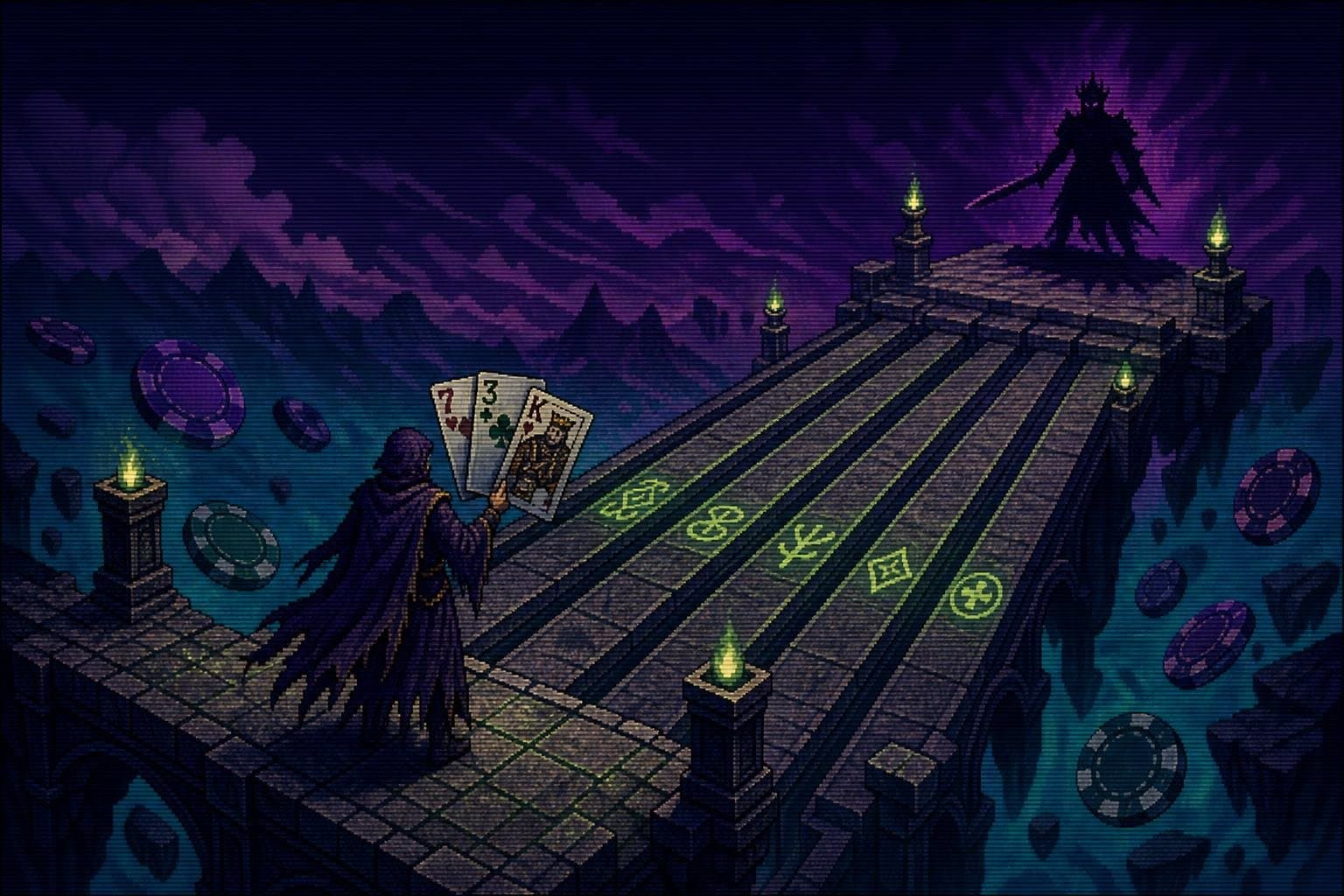
Each fight plays across five lanes. You hold eight cards and deploy up to one per lane. Win a lane and you earn the value of their card, not yours. Here's the rule the whole game turns on, in the developer's own words: you get paid for winning narrow. Two bonus points if you win a lane by one, one point if you win by two, nothing beyond. Dumping your King on their Three is a waste. Every hand becomes a resource allocation puzzle: how little can I spend and still take this lane?
That's a genuinely fresh constraint. Most deck-builders reward maximizing — play your best cards, build the biggest engine. Card Crawler penalizes it. The optimal play is often the second-best card you own, not the first. That single inversion changes how you read your hand, how you evaluate your deck, and how you think about the enemy's face-down cards.
The two classes extend this logic in different directions. The Wise Mage transmutes enemy cards, doubling their value and marking the lane — half his skill tree rewards the lanes he's marked. The Ranger gets more information and more flexibility, but his Aimed Shot forces a lane without paying the narrow bonus, because you didn't earn the margin. Both classes are asking the same question from different angles: how do you win efficiently when efficiency means restraint?
The developer is honest about where the game stands. It's early access, and from the ninth fight onward, the tuning isn't finished — nobody has reached the bottom yet, the developer included. That's a real caveat worth taking seriously. But the core loop is playable and the central mechanic is already doing something I haven't seen elsewhere in the genre.
What This Tells Us About the Genre Right Now
The through-line between Balatro and Card Crawler isn't poker — it's the willingness to take a familiar system (poker hands, a standard deck) and impose a rule that makes you play it wrong on purpose. Balatro makes hand rank irrelevant if your Jokers say so. Card Crawler makes card strength a liability if you deploy it carelessly.
Inscryption did something similar back in 2021 — its blood cost system meant powerful cards had a price that changed how you valued everything else in your deck. It sits at 96% positive across more than 76,000 Steam reviews, a number that has held remarkably steady and speaks to how durable that "one weird rule" approach turns out to be over time.
The budget tier of this genre keeps producing these moments because small teams can afford to bet everything on one weird rule. They don't need to justify the decision to a committee. Card Crawler's narrow-win mechanic is exactly that kind of bet — unpolished at the edges, but built on something real. Keep an eye on how the tuning develops past floor eight.


