


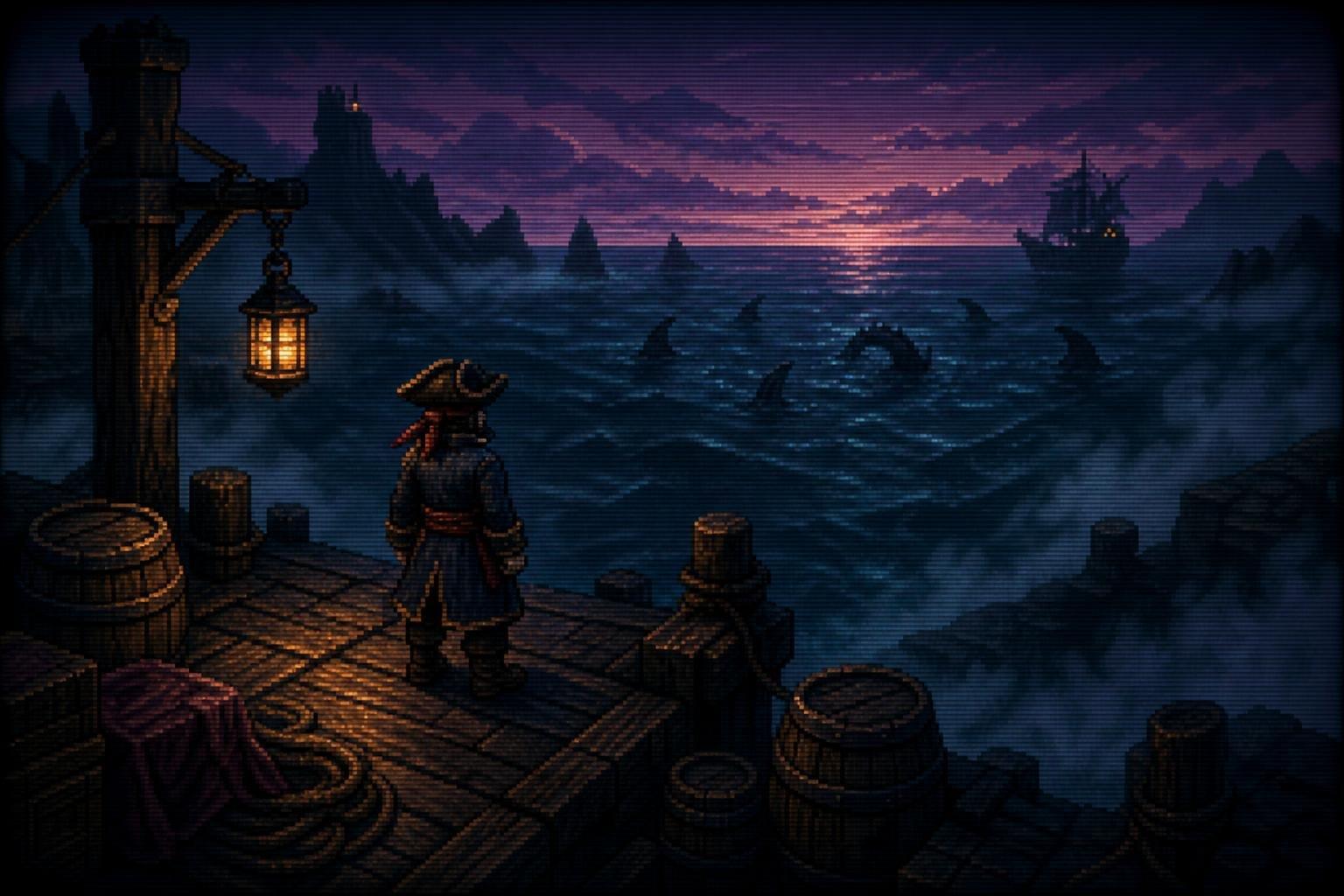

Grand Theft Auto 6 ate the entire release calendar this month, and the funniest consequence is what happened on the Epic Games Store: with console players locked into Vice City and PC owners having nothing to play, Epic quietly handed out Mark of the Deep for free. It's an isometric pirate game that blends Soulslike punishment with Metroidvania exploration, and it's been sitting on Steam since January with a stack of Mostly Positive reviews comparing it — fairly or not — to Death's Door and Tunic. If you've ever wanted to get chewed up by hostile wildlife while searching for a crew called the Angry Mermaids, this is your week.
But the more interesting story in the Soulslike-adjacent indie space right now isn't about combat innovation at all. It's about a chunk of developers deciding combat innovation was never the point.
The King's Field Revival Doesn't Want to Fight You Harder
Everyone assumes "Soulslike" means punishing, technical combat — dodge rolls, stamina bars, bosses that teach you humility. But a new wave of first-person dungeon crawlers is reaching back past Dark Souls to FromSoftware's earlier, slower King's Field era, and the reception suggests plenty of players were hungry for exactly that detour. Queen's Domain launched to an Overwhelmingly Positive Steam rating — roughly 95% of more than 1,500 reviews recommending it as of early November — and critics have singled out its exploration and hidden content rather than any clever new combat trick. RPG Site and The Wand Report both gave it 9/10, with the latter calling it a throwback that feels refreshing instead of derivative.
That's part of a bigger pattern. GameWatcher points to Labyrinth of the Demon King, which folds PS1-style survival horror into first-person dungeon crawling, and Bloodthief, which swaps methodical dread for momentum-based parkour melee — two games with opposite instincts that both got labeled "Soulslike" this year. Newer entries like Dreamspring and Forgotten Blood cite King's Field and Morrowind as touchstones rather than Dark Souls itself. The common thread isn't a combat system at all — it's mystery, slow pacing, and a world that doesn't explain itself. As GameWatcher puts it, the audience "aren't necessarily looking for another Soulslike, but rather a slower, more mysterious style of adventure" — the genre's founding DNA before Hidetaka Miyazaki's studio made combat the headline.
Where the Actual Combat Experiments Are Happening
That doesn't mean nobody's messing with the fighting itself. Mark of the Deep earns its Soulslike tag the traditional way — isometric framing forces you to read enemy attack arcs differently than a standard third-person Souls camera would, and the cursed-island setting keeps throwing new threats at a rookie pirate who's clearly out of his depth. It's the kind of design risk that only makes sense at a smaller scale, where a team can build an entire combat language around one unusual camera angle instead of chasing a AAA template.
Worth noting on the other end of the spectrum: Tainted Grail: The Fall of Avelon gets described by PC Gamer as "no Dark Souls, but it's more Dark Souls than Skyrim" — a skill-based combat system bolted onto an open-world RPG that otherwise plays like a love letter to Bethesda. It's a reminder that "Soulslike" has stretched so far as a descriptor that it now covers everything from brutal isometric pirate action to a first-person RPG that just wants its fights to have real stakes.
What to Actually Watch
If you care about where the genre's combat systems are headed, Mark of the Deep is the one to put hands on this week — it's free through Epic until Thursday, November 26, which is about as close to a risk-free trial as this corner of gaming offers. But I'd keep a closer eye on whether Queen's Domain's reception holds up past its honeymoon period on Steam, because if a slower, less combat-obsessed take on "Soulslike" keeps pulling Overwhelmingly Positive numbers, it tells smaller studios something useful: you don't need to out-engineer Dark Souls' combat to earn the label. You just need to make players feel as lost and small as the genre did before anyone agreed on what it was supposed to be.