


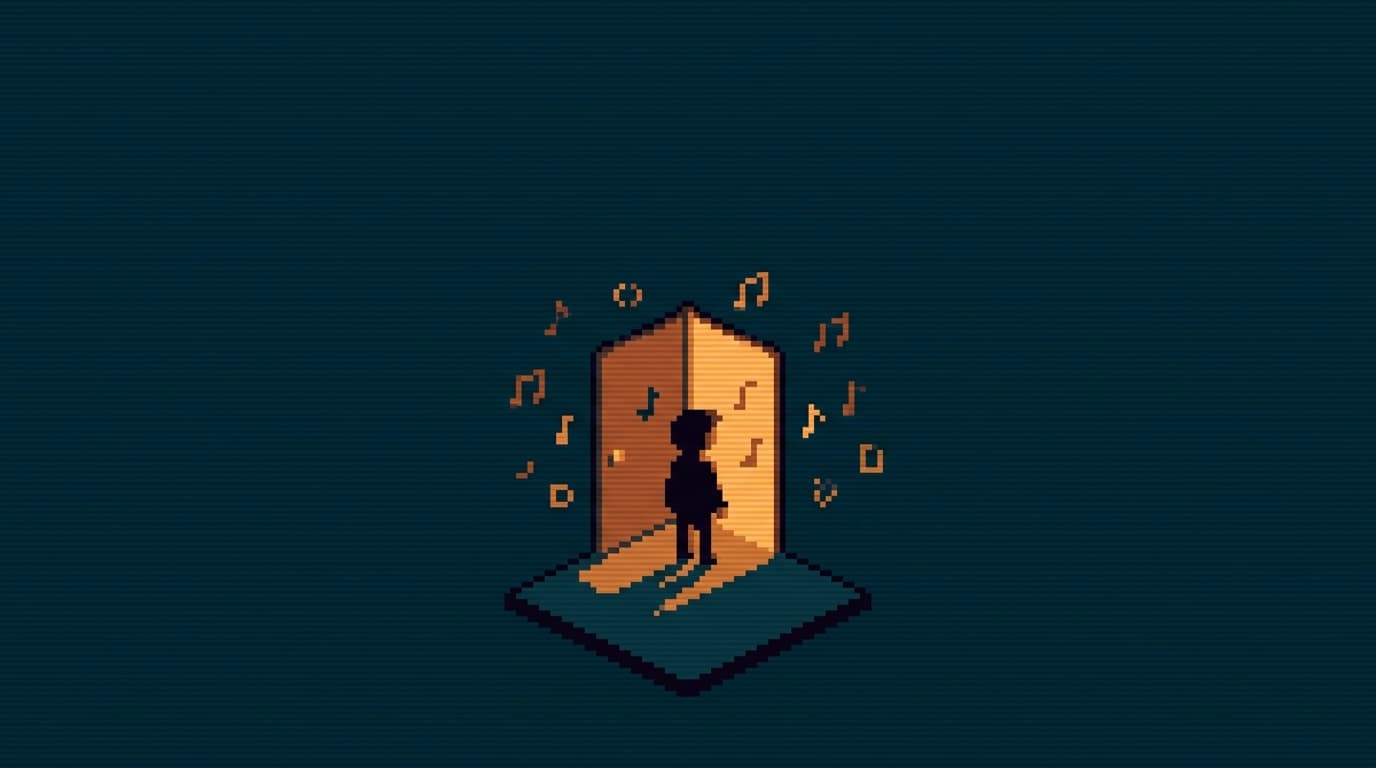

These are the ones that don't hand you a tutorial. They don't explain their rules. They assume you'll figure it out, or that figuring it out isn't even the point.
The Design Philosophy Behind "Just Play It"
There's a design principle that rarely gets named but shows up constantly in the most interesting experimental work: the idea that a game should be instantly playable but not instantly understood. You can pick it up in thirty seconds. What it means — what it's about — takes much longer.
This isn't obscurantism for its own sake. It's a deliberate choice to trust the player. When a game withholds explanation, it forces you into a more active relationship with the work. You're not following instructions; you're forming a hypothesis. Every action becomes a question. That's a fundamentally different cognitive mode than most games put you in, and it's closer to how we engage with art than how we engage with entertainment.
The Experimental Gameplay Project — a game jam that's been running for years and has launched more than a few careers — codified something like this in its design guidelines: make something that looks interesting even when it's not being played, and assume players will be left in the middle of it without context. One entry from that tradition built its entire design around those two constraints. The result was something that functioned as much as an object as a game.
That lineage runs directly into what's interesting in experimental indie work right now.
When the Premise Is the Mechanic
The games worth your attention this week aren't hiding their strangeness. They're leading with it.
People of Note, which The Verge flagged as a recent standout, won the Seumas McNally Grand Prize at this year's Independent Games Festival Awards — the most prestigious recognition in experimental game design. It's a music-focused RPG where nearly every system, every area, every line of dialogue is filtered through musical logic. That's not a theme bolted onto a conventional RPG skeleton. It's a premise that is the mechanic. The world doesn't just reference music; it's structured by it. A release date of April 23rd on Steam means the demo is live right now, and I'd argue the demo is the right entry point — it earns your trust before asking for your money.
What makes this kind of design work is commitment. Half-measures kill experimental games. If you're going to build a world around a single organizing idea, you have to follow it into uncomfortable places. The Verge notes that the musical references occasionally feel like too much — and I'd take that as a feature, not a bug. A game that knows when to stop isn't really committed to its premise.
The Procedural Strangeness Problem
Neverway, which Engadget surfaced in recent indie coverage, takes a different approach to the same problem. It's a life sim with what Engadget describes as gorgeously creepy pixel art, and its prologue is already available on Steam. The hook: the level gets a procedurally generated revamp once per day. You're not just playing a strange world — you're playing a world that changes while you're not watching.
That's a meaningful design choice. It means the game exists in time in a way most games don't. Coming back tomorrow isn't just optional; it's built into the structure. The strangeness isn't static. It accumulates.
I'd argue this is one of the more underexplored ideas in experimental design: using procedural generation not for replayability, but for continuity. The world persists and shifts. You're a visitor to something that has its own rhythm.
What to Actually Do This Week
Play the People of Note demo before April 23rd. Not because you need to decide whether to buy it — though you probably will — but because the demo is a complete argument for a specific kind of game design, and it's free to make that argument to you right now.
Then wishlist Neverway and check back in a few days. Let the world change once before you decide what you think of it. That's the whole point.
The best experimental games don't ask you to master them. They ask you to return.