


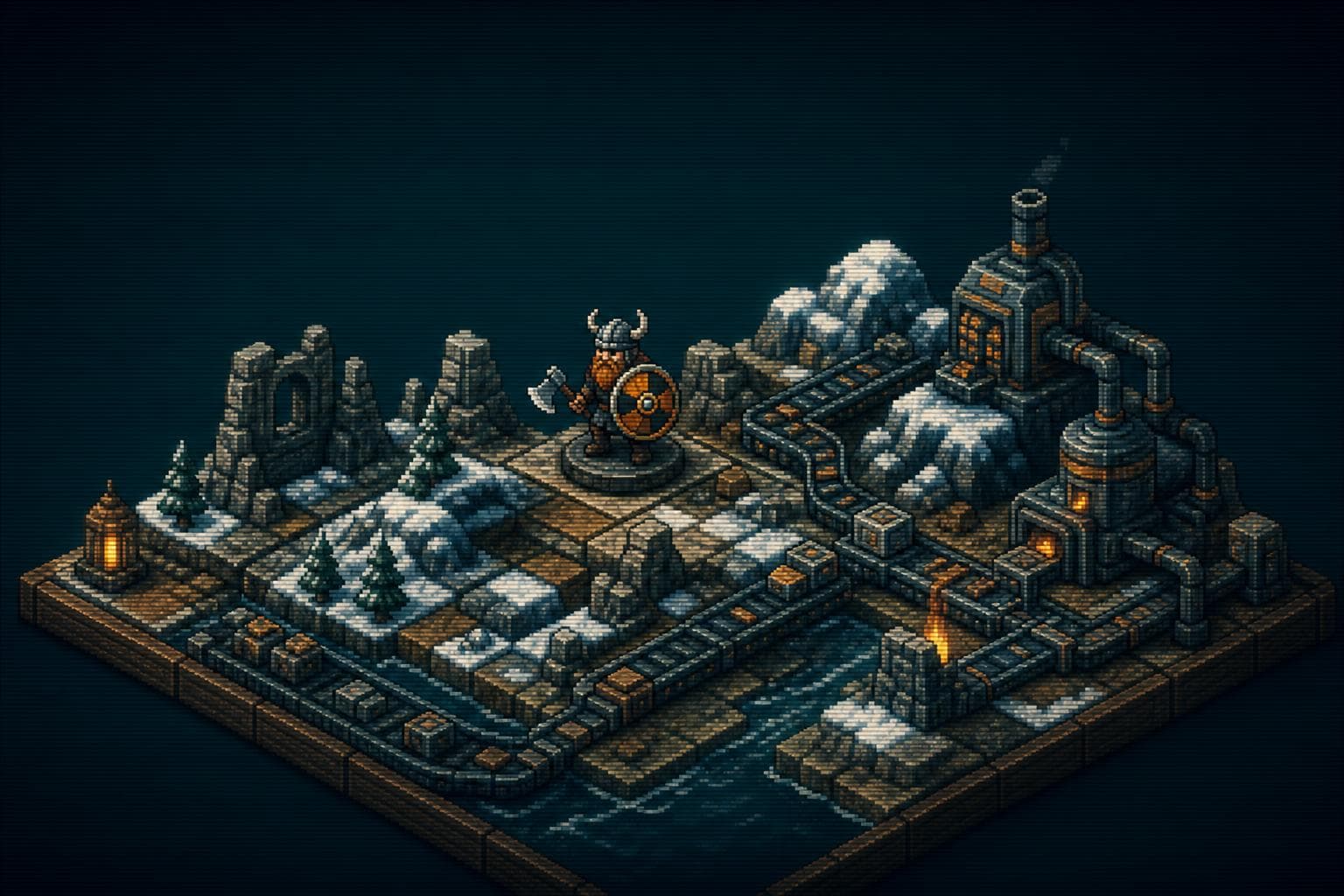

There's a persistent myth in game design circles that complexity costs money. That a deep, rewarding strategy game requires a large team, years of polish, and a $60 price tag to justify itself. Two games sitting in my queue this week make that argument look embarrassing.
Cooldowns Instead of Turns: WARTILE's Hybrid That Actually Works
WARTILE has been on Steam since 2018, but it's been cycling back into conversation lately — and once you understand what it's doing mechanically, it's easy to see why it refuses to stay buried.
The pitch sounds like a design student's thesis: a tactical RPG where units don't take turns, they act on cooldowns. Battles keep flowing in real time, but a Slow Time mechanic lets you pause the chaos and think. The result, as this breakdown from Ailvgames describes it, is a hybrid where "timing, positioning, and short bursts of planning matter more than menu-heavy micromanagement."
That's a genuinely hard design problem to solve. Turn-based tactics can feel static; real-time strategy can feel overwhelming. WARTILE threads the needle by making positioning the primary skill expression — high ground, flanking angles, ability sequencing — while keeping the pace brisk enough that you never feel like you're waiting for the game to let you play.
The visual identity does a lot of work here too. Every battle takes place on a handcrafted diorama board: snowy hills, coastal ruins, miniature Norse warriors that look like they were lifted from a tabletop set. According to the Ailvgames review, Steam players consistently cite the art direction as the primary reason they picked it up — and years after release, it still stands out. That's not decoration. That's a small studio making a deliberate choice to build a world you want to spend time in, rather than spending budget on systems you'll forget.
Current price on Steam: $19.99, with a recorded low of $2.99. If you missed it at launch, the floor is genuinely that low.
Platforms: PC (Steam) | Price: $19.99 (frequent sales) | Playtime: 8–12 hours
Mindustry Proves Free Can Still Mean Deep
If WARTILE is a case study in visual design punching above its weight class, Mindustry is a case study in mechanical ambition with no budget ceiling at all.
Version 8 dropped in April after years of development — the previous major update was November 2022, so this is a substantial release. The game is free and open source, which already breaks the premise that complexity requires a price tag. What it offers is a factory-building RTS with tower defense elements: build production chains, expand across campaign levels, defend against waves, and do all of it solo or in online co-op.
GamingOnLinux describes it as what you'd get if Factorio had a baby with a traditional base-building RTS. That's a useful shorthand, but I'd argue Mindustry earns its own identity through the tower defense pressure — your factory isn't just an optimization puzzle, it's a survival problem. The production lines that feel satisfying to build are also the ones you have to defend, which creates a tension that pure factory games don't have.
The v8 update represents years of iteration by a developer who kept building because the game warranted it, not because a publisher was watching the sales numbers. That kind of sustained creative commitment is rare, and it shows in the depth.
Platforms: PC, Android, iOS (itch.io and direct) | Price: Free | Playtime: 20+ hours
The Pattern Worth Paying Attention To
Both of these games solve the same underlying problem differently. WARTILE finds a mechanical middle ground that bigger studios avoid because it's risky — hybrid systems are hard to market, hard to explain, and easy to get wrong. Mindustry builds complexity through iteration over years, unconstrained by commercial pressure to ship and move on.
The pattern the indie space keeps demonstrating is that budget constraints force creative constraints, and creative constraints produce interesting design. When you can't afford to build a 40-hour campaign, you build a tighter 10-hour one. When you can't afford a full art team, you commit to a single distinctive visual identity and execute it completely. When you're not chasing a market, you solve the design problem you actually find interesting.
WARTILE's cooldown combat exists because Playwood Project wanted to make something that felt like a living board game, not because focus groups approved it. Mindustry's v8 exists because its developer kept caring about it for four years after most studios would have moved on.
That's not a budget story. That's a priorities story — and it's the one indie strategy games keep telling.