


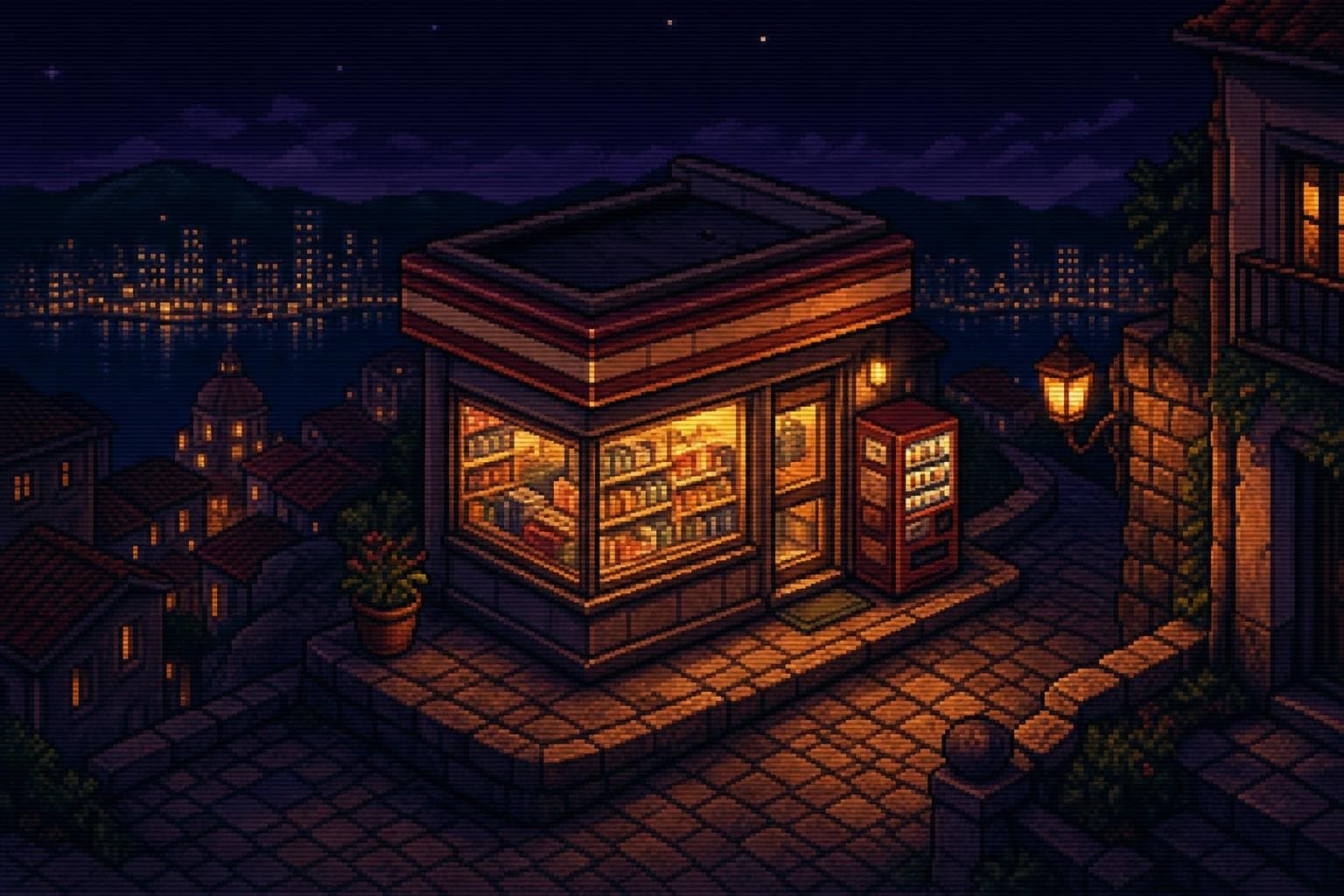

There's a specific moment in every cozy management sim where the game quietly reveals it has been watching you. You've been happily placing shelves, humming along to the ambient soundtrack, and then a customer walks out because your pricing was 8% too aggressive. The vibe doesn't shatter — but something sharpens. You realize the relaxation was always conditional.
That tension is the genre's best trick, and right now there's a genuinely interesting crop of games under $20 doing it well.
I wrote about this dynamic back in June — the way cozy sims use aesthetic softness to smuggle in real strategic stakes. What's caught my attention this week is how two very different games are executing that same idea from opposite directions: one starts with the city-builder's grand ambition and dials it toward warmth, the other starts with idle-game simplicity and quietly builds upward.
The City Builder That Learned to Breathe
Town to City — developed by Galaxy Grove and published by Kwalee — is the more conventionally ambitious of the two. You're building a 19th-century Mediterranean town from scratch, placing and customizing each element as your population grows. The voxel art is warm and colorful, the pacing is unhurried, and the whole thing reads as an invitation to just... arrange things pleasantly.
But the Steam tags tell the real story: City Builder, Strategy, Management, Economy, Resource Management. The user review sentiment backs this up — 97% positive across nearly 4,000 reviews, with recent reviews sitting at 92% positive. That kind of sustained approval across a large sample usually means a game is delivering on both its promises: the relaxing aesthetic and the underlying systems.
What makes Town to City interesting as a design object is that it comes from the creators of Station to Station, a game that understood how to make logistical thinking feel meditative. The resource management here isn't punishing — there's no death spiral, no bankruptcy screen waiting to ambush you — but the decisions compound. Where you place things matters. How your town's growth patterns interact with supply chains matters. The cozy surface is real, but so is the depth underneath it.
For players who bounced off city builders because they felt like spreadsheets with graphics, this is worth a serious look. The under-$20 price point (currently at a 20% discount) makes the experiment low-risk.
The Idle Game That Stays in Frame
Cozy Desktop Konbini works from the opposite premise. It's an idle management game about running a Japanese convenience store — a konbini — that lives at the bottom of your screen while you do other things. Shelves restock themselves. Customers arrive and spend. Money accumulates. You're not really playing it so much as tending it.
That sounds like it shouldn't qualify as strategic depth, and for the first hour, it doesn't. But the customization layer is where the game earns its place in this conversation. You're unlocking new products, adding vending machines, expanding into new sections — including, delightfully, a small gym — and each decision about what to stock and how to arrange the space affects customer flow and revenue. The TapTap listing describes it as "resource management" and "time management" alongside the cozy and idle tags, and that's accurate: the game is teaching you to think about opportunity cost and layout efficiency while you're ostensibly just decorating a tiny shop.
The genius of the format is that the low-pressure presentation makes you more willing to experiment. You're not agonizing over decisions because the stakes feel low — and then you notice that the decisions you made three sessions ago are shaping what's available to you now. The strategic depth arrives without announcing itself.
Why the Disguise Matters
Both games are doing something the genre's critics miss when they dismiss cozy sims as shallow: they're using relaxation as an onboarding mechanism. The soft aesthetic and gentle pacing lower your defenses, make you willing to engage with systems you might find intimidating in a harsher context, and then — gradually — reveal that you've been learning resource management, supply chain logic, or retail economics the whole time.
PC Gamer's July cozy game coverage notes that the genre is having an unusually stacked month, with at least 30 new cozy titles launching. That volume means a lot of noise, and a lot of games that are cozy in aesthetic only — pure vibes, no substance. The ones worth your time are the ones where the relaxation and the strategy are genuinely in conversation with each other, where the calm is earned rather than assumed.
Town to City and Cozy Desktop Konbini both clear that bar, from very different angles. One asks you to build something grand at a gentle pace. The other asks you to tend something small with surprising care. Either way, the game is watching what you do with the space it gives you.
That's the version of cozy worth paying for.