
You already wrote the post about when to split — back in April, the signals were standup bloat and ownership ambiguity. But there's a harder version of this question that comes up during rapid growth, and it's less about "is the team too big" and more about "what exactly breaks when we wait."
The answer is almost never headcount. It's coordination cost.
The Number Is a Symptom, Not the Cause
The conventional wisdom is that teams above a certain size should split. Research and practice point to teams of 7 ± 2 as optimal, and the logic holds: beyond nine people, communication overhead compounds and velocity declines. But that threshold is a proxy. The actual variable is how much time your team spends coordinating versus building.
Comet Studio's structural resilience model puts it plainly: when a team of five becomes a team of fifteen, everything that was implicit becomes insufficient. Communication norms, decision-making authority, code ownership — all of it was running on informal coordination that stops working once the team grows past the point where everyone has ambient context on what everyone else is doing.
The tell isn't standup length. It's when your team leads are spending more time in coordination meetings than in productive work, or when multiple people think they own the same decision. Those are the organizational redesign signals that actually matter. Headcount is just the leading indicator that you're approaching them.
The Trap: Splitting Before the Architecture Is Ready
Here's where most rapid-growth splits go wrong. You feel the coordination pain, you split the team, and then you discover that the system architecture doesn't match the new team structure. Now you have two teams with a shared database, correlated traffic, and cross-team dependencies on every meaningful change.
Devrim Ozcay documented exactly this failure mode: a team that committed to a microservices migration in a fifteen-minute meeting, extracted six of eighteen planned services over eighteen months, and ended up with a distributed monolith — services that couldn't deploy independently because they shared infrastructure, requiring cross-service coordination for every meaningful change. The coordination cost didn't go down. It moved and got harder to see.
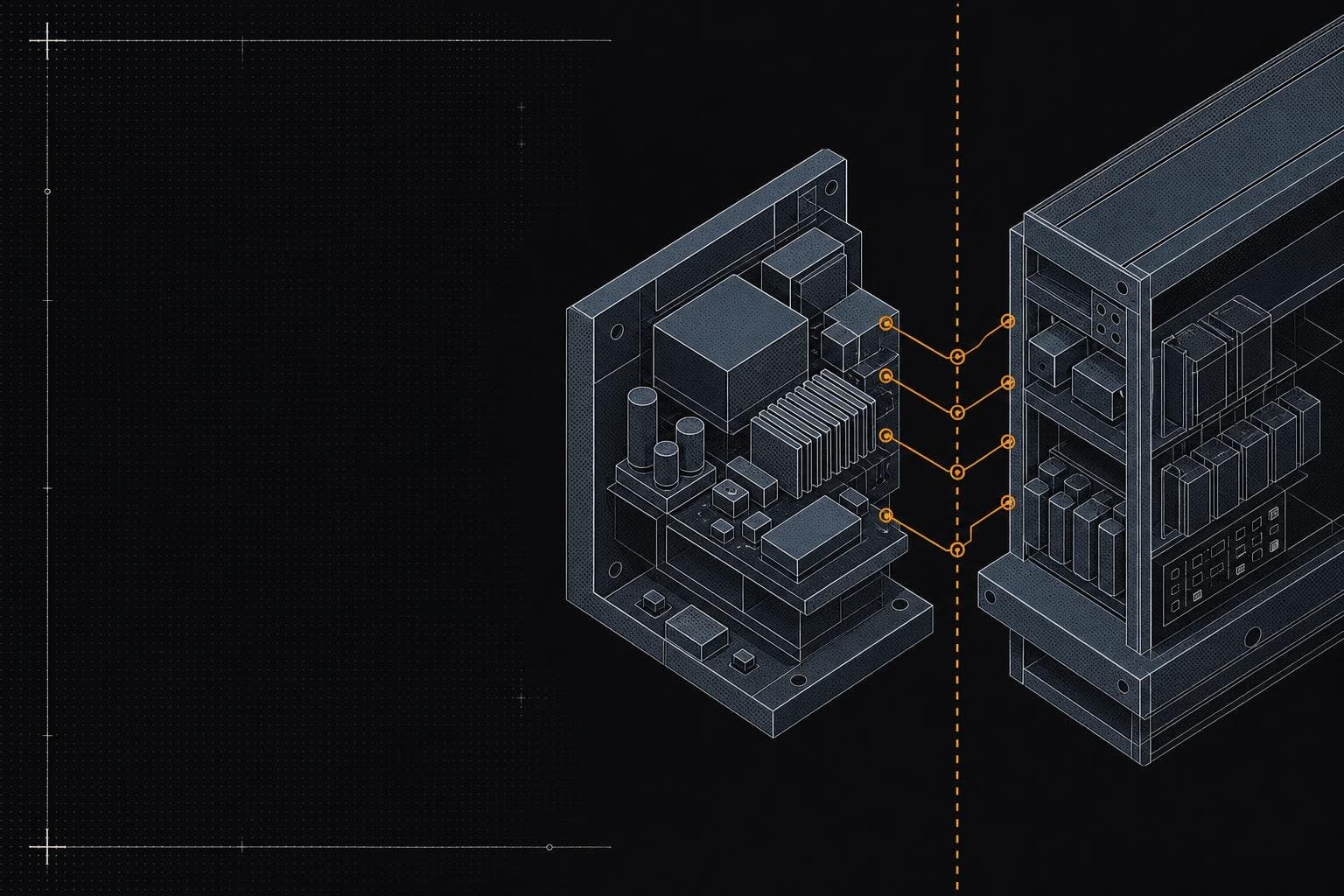
Conway's Law runs in both directions: team structure influences architecture, and architecture influences team dynamics. Splitting the team without splitting the system just relocates the friction. You've traded one big team's coordination overhead for two smaller teams' dependency management overhead — and the second kind is worse because it's invisible until something breaks.
The question to ask before splitting isn't "are we too big?" It's: can we draw a boundary in the codebase that matches the boundary we want to draw in the org chart? If the answer is no, the split will create a distributed monolith of people, not just code.
What "Keeping It Intact" Actually Costs
The other failure mode is waiting too long. TeamChart's analysis of org scaling patterns makes the case that coordination cost grows faster than headcount — adding the fiftieth person doesn't add 1/50th more coordination complexity, it adds connections to forty-nine other people. The compounding is nonlinear, which means the cost of waiting is also nonlinear.
The HBR framing on fast-growing companies identifies the same fault lines: alignment decays, operational complexity compounds, and oversight gaps widen — often before leadership notices. By the time the pain is obvious, you've been under-structured for months.
The practical implication: if you're in rapid growth and you're already feeling the coordination drag, you're probably already late. The question isn't whether to split — it's whether the architecture can support it yet.
The Decision Framework That Actually Works
Before you split, answer three questions:
1. Can you draw a clean ownership boundary in the codebase? Not a perfect one — a clean one. If every proposed boundary has three asterisks and a "except for the shared auth service," the split will create more coordination, not less.
2. Do you have a lead for each resulting team? Splitting a team without a clear owner for each half just redistributes the ambiguity. The LeadDev analysis of how the EM role is evolving is worth sitting with here: the role itself is bifurcating under growth pressure, and the teams that navigate splits well tend to have leads who can hold both technical direction and people management, not just one.
3. What's the coordination mechanism between the two teams post-split? If the answer is "we'll figure it out," you haven't finished the decision. The interface between teams needs to be as deliberate as the interface between systems.
If you can answer all three, split now. If you can't, the work is to get to yes on those questions — not to wait until the pain gets bad enough that you split anyway, with none of them answered.
The split you do deliberately is a structural upgrade. The split you do reactively is just a reorganization of the same problems.


