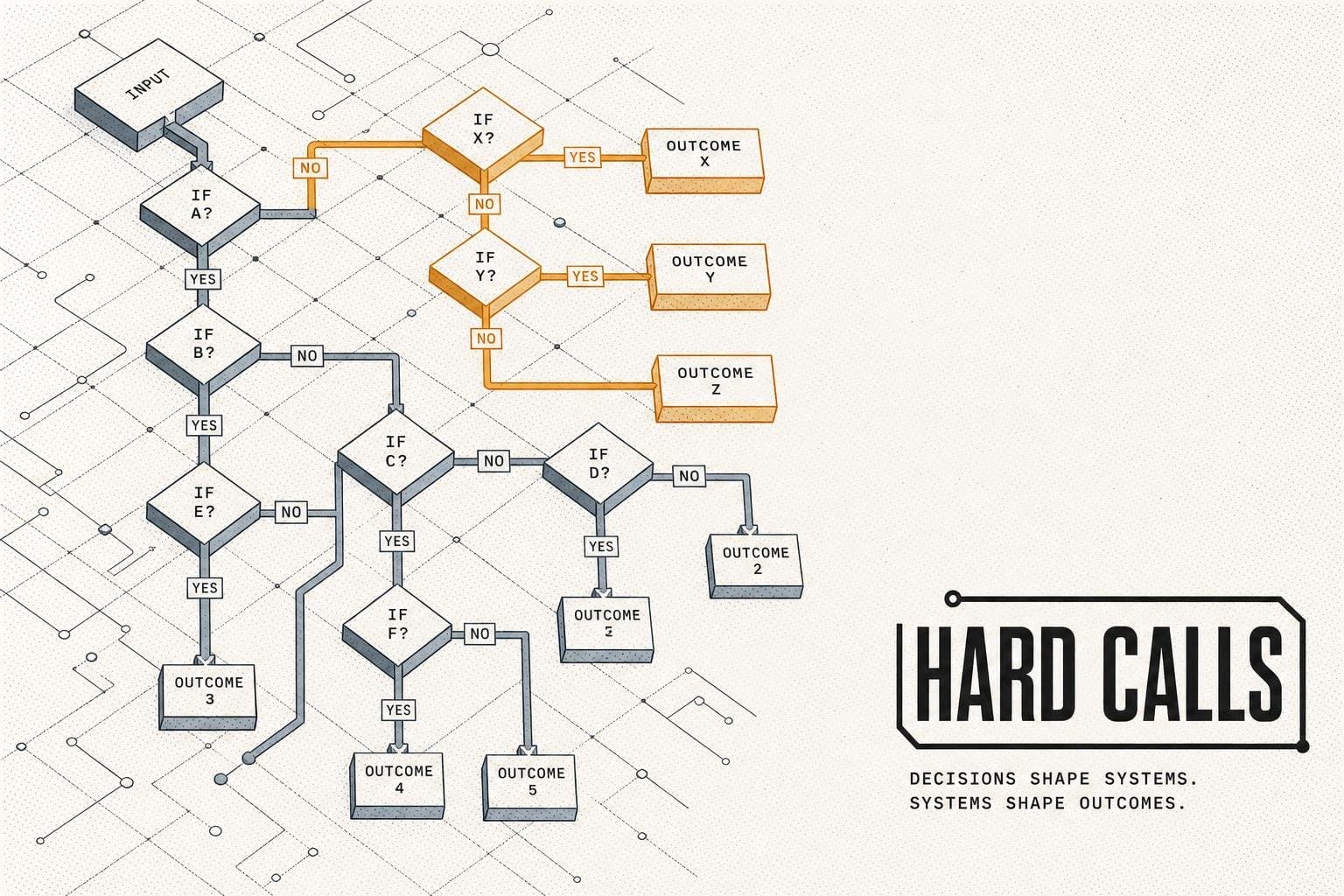

You already wrote about this once — back in July, the argument was that promoting the IC into management is treated as a reward rather than a capability decision. This is the upstream version of that problem: not just who gets promoted, but whether you're even running the right process to decide.
Here's the number that reframes everything: 95% of companies say they have a culture of promoting from within, but only 25% actually fill more than half their open roles internally. That gap isn't hypocrisy exactly — it's what happens when organizations make the decision by default rather than by design. They say "promote from within" in the all-hands and then open an external search the moment a role feels important enough to matter.
For engineering managers at mid-stage startups, this plays out in a specific way. You're not deciding whether to promote a CEO. You're deciding whether to put your senior IC into a team lead role, or whether to hire a manager from outside when your team hits fifteen people and coordination starts breaking down. The stakes feel lower. The defaults run deeper.
The Bias Runs in Both Directions
The standard framing on this decision is that companies systematically undervalue internal candidates — and the data supports that. Wharton research cited by The Interview Guys found that external hires got paid more, performed worse, and washed out faster than internal promotions. The mechanism is almost unfair: internal candidates get judged on their known gaps, while external candidates get evaluated on a polished resume where, as the research puts it, you don't get to see the potential problems yet.
But there's a mirror bias that doesn't get talked about as much. Some managers default to internal promotion not because they've assessed the candidate carefully, but because it's easier — no recruiting process, no negotiation, no onboarding drag. Refactor Talent's framework makes the point directly: defaulting to either internal or external is inadvisable. The right question isn't "who do we have?" or "who's out there?" — it's "what does this role actually need to do over the next two to three years, and has that changed since we last filled it?"
That second question is the one most managers skip. A team lead role that was primarily about technical mentorship twelve months ago might now require someone who can run cross-functional planning, manage stakeholder relationships, and hold the line on scope. Your best IC might be excellent at the first and genuinely unready for the second. That's not a judgment on their potential — it's a mismatch between what the role demands now and what they've had the chance to develop.
What You're Actually Optimizing For
The Board Practice's analysis of CEO succession — which operates at a different scale but maps cleanly onto this decision — frames it as a question of organizational lifecycle. Internal candidates carry continuity value: institutional knowledge, established relationships, lower transition risk. External candidates carry independence and transformation capacity. Neither is inherently superior. The question is which type of value the organization needs most right now.
For mid-stage startups, this usually breaks down into two scenarios:
Continuity roles — the team is performing, the challenge is sustaining momentum and execution, and the primary risk is disruption. MeritTrac's breakdown puts it plainly: internal first when the role demands deep company knowledge, when you need speed, and when promoting from within would signal that growth paths exist. The classic example they cite is Satya Nadella's promotion at Microsoft — a 22-year company veteran chosen over an external search because the strategic direction was set and execution was the priority.
Capability gap roles — the role requires something that genuinely doesn't exist on the team yet. MeritTrac flags the trap clearly: promoting your only cloud architect to manager and then wondering who will do the architecture is a rite of passage best skipped. When you're scaling from 15 to 30 engineers — the window practitioners consistently identify as where informal systems collapse — you may need management experience that nobody on the team has had the chance to build yet.
The honest version of this analysis is uncomfortable: it requires you to assess your internal candidates against what the role actually demands, not against what they've done so far. That's harder than running an external search, because you have to tell someone you know well that they're not ready — or that the role has changed in ways that don't match their current strengths.
The Decision You're Avoiding Is Already Made
The Critical Thought Lab's framing on hard calls applies here more directly than it might seem: postponed decisions don't disappear, they compound. If you default to external hiring because the internal assessment feels awkward, you've made a choice — you've just made it without examining it. If you default to internal promotion because it's faster, same problem.
The signal that you're in default mode: you already know which way you're leaning before you've defined what the role needs to do. Start there instead. Write down the two or three things this role has to get right over the next year. Then ask whether your internal candidate can get there in time — not eventually, but in time. That answer tells you more than any framework will.


