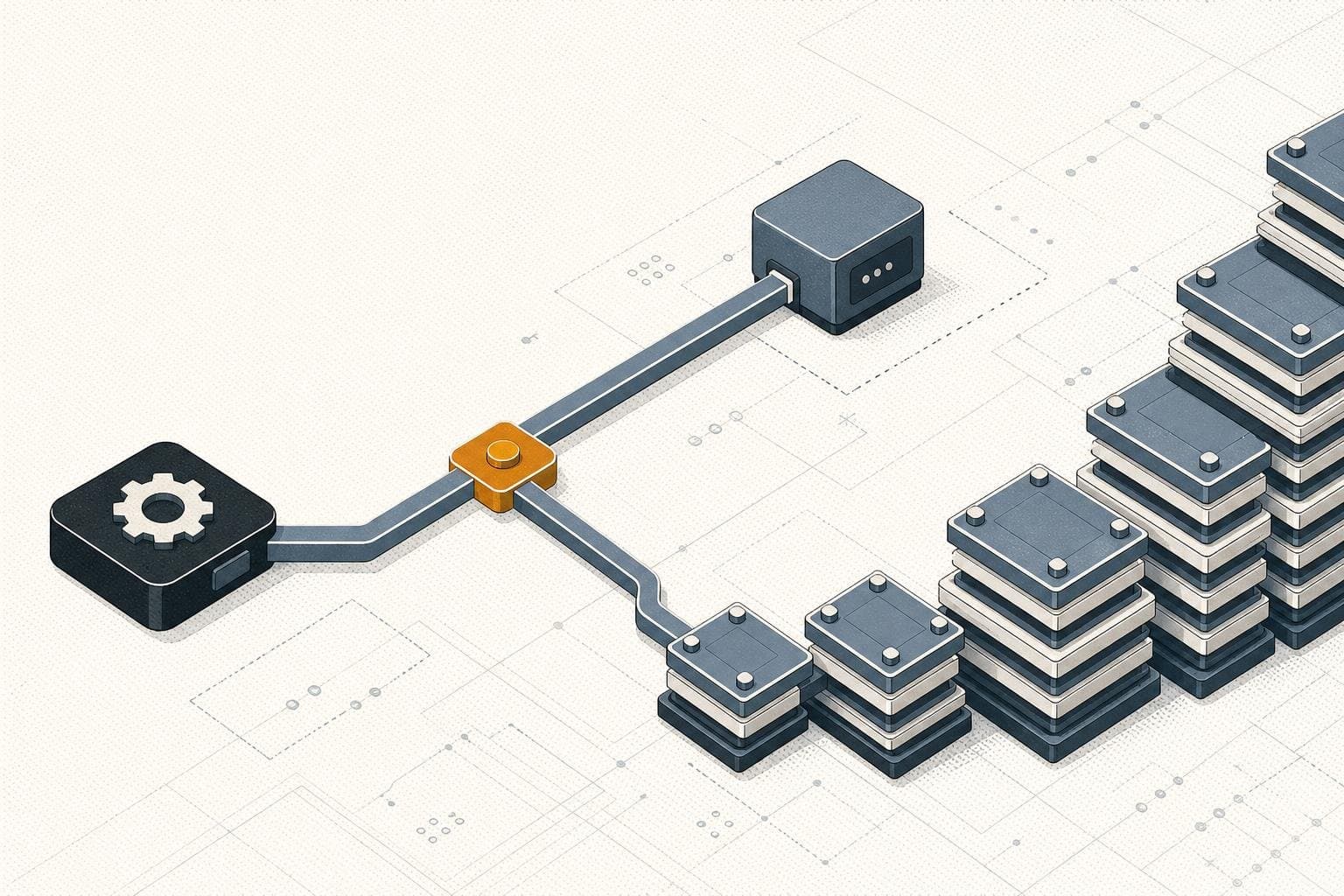

Every team that decides to build internal tooling thinks they're making an engineering decision. They're not. They're signing a long-term maintenance contract — and most of them don't read the fine print.
The classic version plays out like this: a team identifies friction in their deployment pipeline, their alerting setup, or their internal data tooling. Someone estimates three weeks to build a fix. They're probably right about that. What they're wrong about is what comes after. As one practitioner essay from DEV Community puts it: "The three-week estimate usually covers only Version 1." The real cost accumulates in Version 2, Version 3, and in the quiet tax of every engineer who has to understand the system before they can change anything else.
This is the question that actually matters: do you want to own this for the next five years?
The Ownership Trap Looks Like Success
Here's what makes this decision genuinely hard. The early signals are positive. You built the thing, it works, other teams start using it. Adoption grows. Now you have internal users with expectations, and the tool has graduated from "engineering utility" to "dependency." You're no longer a team that built a useful thing — you're a team that runs a product, whether you wanted to be or not.
The same DEV Community piece describes watching internal systems evolve this way over years: some became genuine strategic assets, others became years of maintenance overhead that nobody planned for. The difference wasn't the quality of the initial build. It was whether the capability was actually core to how the organization competed, or just something that felt faster to build than to evaluate.
The trap is that both paths look identical at the start.
When the Math Has Actually Changed
There's a real shift worth acknowledging here. AI-assisted development has compressed build timelines meaningfully. A CIO analysis from CIO.com notes that productivity surveys of AI-assisted developers put the gain in the 70–90% range on routine engineering tasks, and that prototypes requiring formal six-figure engagements can now be produced by small teams in a sprint. That changes the economics of the initial build.
But — and this is the part that gets glossed over in the AI-productivity discourse — it doesn't change the economics of ownership. Daniel Zahavi, co-founder of AI analytics platform Arito, put it directly: "Writing the code is only the first part. Maintenance is a way, way bigger part of creating it the first time. I'm not even talking about security and privacy." Building faster means you reach the ownership problem faster. It doesn't make the ownership problem smaller.
The teams getting this wrong right now are the ones treating lower build cost as a reason to build more things, without asking whether they want to own more things.
The Variables That Actually Determine the Call
So how do you think through a specific decision? Three questions do most of the work.
Does this touch how you compete, or just how you operate? Crystalloids' analysis of the build-vs-buy shift draws a useful line: most organizations shouldn't rebuild their finance system or HR platform, but internal tooling that sits directly on top of proprietary data and workflows — reporting layers, activation pipelines, custom segmentation — is worth scrutinizing. If the tool encodes something genuinely specific to your business, ownership has upside. If it's a wrapper around a generic workflow, you're probably paying to maintain commodity infrastructure.
Who will own this when the person who built it leaves? This is the question teams almost never ask at decision time. Internal tools built by one engineer with deep context become archaeology projects eighteen months later. If you can't name the team that will maintain this and describe how they'll onboard to it, that's a signal.
What's the actual alternative? The build-vs-buy framing implies a clean binary, but the logic-square.com framework is right that the real question is whether the off-the-shelf option forces a meaningful compromise on a workflow that matters. If the SaaS tool fits 90% of your needs and the remaining 10% is friction you can absorb, buy it. If that 10% is the part that actually differentiates how your team operates, the ownership cost of building may be worth it.
The teams that make this well aren't the ones with the best build-vs-buy framework. They're the ones who've been honest about what they're actually signing up for. The engineering decision is the easy part. The ownership decision is what you're living with.
Watch for where your internal tools are accumulating undocumented dependencies — that's usually the first sign you made the call without reading the contract.


